

 Français
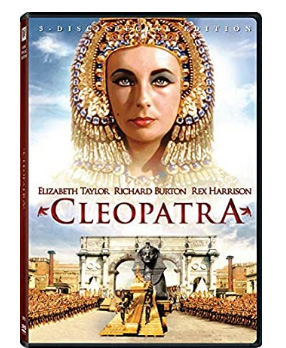
Cleopatra
Synopsis
This sweeping historical epic chronicles the legendary life, political cunning, and tragic downfall of Cleopatra VII, the last active ruler of the Ptolemaic Kingdom of Egypt. Navigating the treacherous waters of Roman politics, she forms powerful alliances and passionate romances with Julius Caesar and Mark Antony to secure the independence of her empire. Set against the backdrop of ancient Mediterranean warfare and majestic royal courts, the narrative explores her unmatched intellect and indomitable ambition. It is a grand, visually lavish tale of power, love, and imperial destiny.
The Making of the Film
The project stemmed from an enduring cinematic fascination with antiquity and the desire to portray Egypt's iconic queen with historical depth and epic scale. The filmmakers sought to resurrect the lost splendor of ancient Alexandria and Rome through meticulous set design and sweeping storytelling. Inspiration was drawn from classical texts, historical accounts by Plutarch and Suetonius, and archaeological studies of the Hellenistic period. The creative team aimed to craft a monumental television film that honored her fierce political agency rather than reducing her to a mere romantic footnote.
Critical Reception
Critics offered generally favorable reviews, praising the film's massive visual scale, elaborate costume design, and ambitious dramatic scope. Reviewers noted that the production successfully captured the complex geopolitical chess matches between Egypt and the expanding Roman Republic. The central performance as the queen received praise for highlighting her intellectual brilliance, linguistic mastery, and diplomatic acumen. While some felt the narrative pacing occasionally struggled to contain such a vast historical timeline, the overall epic presentation remained compelling.
Audience reception was enthusiastic among admirers of historical epics and classical antiquity, drawing strong viewership numbers upon its initial release. Viewers commended the lavish banquet scenes, spectacular naval battles, and the dramatic intensity of the royal romances. Fans of grand-scale historical television appreciated the dedication to recreating ancient Mediterranean architecture and court customs. It earned a lasting reputation as a memorable and ambitious small-screen epic dedicated to a legendary sovereign.
Awards season brought notable recognition, particularly in technical and artistic categories, honoring the production's stunning costume creations and elaborate set decorations. Industry guilds praised the art direction team for transforming modern soundstages into convincing ancient palaces and senate chambers. Furthermore, the musical score received critical appreciation for its soaring orchestral themes that evoked the ancient world. These accolades cemented its status as a distinguished achievement in historical television production.
Behind-the-Scenes Stories
The director drew aesthetic inspiration from classical Greek sculpture, Roman frescoes, and archaeological blueprints of ancient Mediterranean monuments. Every palace interior, marketplace, and war galley was constructed with painstaking detail to evoke the sensory richness of the ancient world. The production team collaborated closely with historians to ensure that royal attire, religious rituals, and military strategies reflected authentic Hellenistic practices. These artistic choices created a fully realized, immersive ancient environment.
Production presented monumental logistical challenges, including building massive outdoor courtyard sets under intense weather conditions and coordinating thousands of background extras. The costume department handcrafted over a thousand period-accurate garments representing Egyptian royalty, Roman senators, and military legions. Actors underwent extensive training in classical posture, sword fighting, and ancient etiquette to convincingly portray historical figures. Additionally, managing complex digital effects to expand the ancient cityscapes required rigorous technical coordination.
During the filming of the dramatic naval battle sequences, the crew utilized specialized water tanks and mechanical gimbal rigs to simulate violent sea storms and combat. To convey genuine tension, the director worked closely with the lead cast to maintain high emotional stakes amidst chaotic physical action. The stunt coordinators ensured strict safety protocols during complex sword-fighting and riot scenes involving hundreds of performers. This meticulous execution resulted in thrilling, visually arresting sequences.
Casting focused on assembling an international ensemble of talented dramatic actors who could project royal authority and fierce intellectual presence. The lead actress was chosen for her striking screen presence and ability to convey both seductive charm and ruthless political calculation. Supporting roles were filled with respected European and American actors who portrayed Julius Caesar and Mark Antony with gravitas. This deliberate casting strategy ensured that the political rivalries felt urgent and credible.
Themes Explored
The narrative deeply explores themes of political sovereignty, female leadership in a patriarchal world, and the corrupting nature of absolute power. It examines the intersection of personal romance and cold geopolitical strategy. Additionally, it highlights cultural preservation, betrayal, and the inevitable fall of great empires. Ultimately, the film reflects on legacy, ambition, and the eternal allure of legendary figures.
Ending Explained
The story reaches its tragic climax following the defeat at the Battle of Actium, culminating in the suicides of Mark Antony and Cleopatra to avoid Roman captivity and humiliation. As the queen embraces her fate with royal dignity, the final scenes symbolize her refusal to be paraded as a conquered trophy through the streets of Rome. This poignant resolution cements her immortality in history as a sovereign who ruled on her own terms.
Meaning of the Title
The title directly denotes the historical name of the legendary Egyptian queen, symbolizing her singular dominion over an era of empires.
Similar Films
Films sharing similar historical epic and ancient world themes include Cleopatra (1963), Gladiator (2000), and Alexander (2004).