

 Français
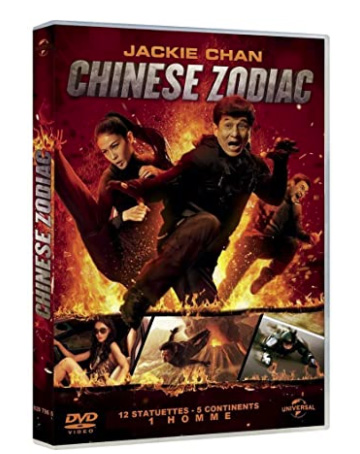
Chinese Zodiac
Synopsis
Asian Hawk, a seasoned treasure hunter and martial artist, is hired by a multinational corporation to track down and recover the missing bronze animal head sculptures from the legendary Old Summer Palace looted during the nineteenth century. Traveling across the globe from Paris and Latvia to Vanuatu and active volcanoes, Hawk and his team navigate treacherous traps, rival antique syndicates, and corporate double-crosses. Along the way, Hawk undergoes a moral evolution, transforming from a greedy profit-driven mercenary into a passionate protector of cultural heritage. This high-energy action-comedy showcases classic Jackie Chan stunt work.
The Making of the Film
Jackie Chan spent years developing and directing Chinese Zodiac (CZ12) as a monumental tentpole action film designed to serve as his final major grand-scale physical action project. Chan drew inspiration from real-life international controversies surrounding the repatriation of looted Chinese imperial artifacts from Western museums. Wanting to combine his trademark slapstick comedy with high-stakes international treasure hunting reminiscent of Armour of God, Chan directed, produced, and starred in the production. The film utilized cutting-edge 3D camera technology to capture dynamic action sequences.
Critical Reception
Upon its release, the film received mixed reviews from professional critics who noted its convoluted plot and uneven pacing, while universally praising Jackie Chan's remarkable physical stamina and death-defying stunts at age 58. Audiences in Asian markets turned the film into an enormous box-office behemoth, praising its nostalgic blend of comedy, martial arts, and globe-trotting adventure. Reviewers highlighted the inventive roller-skating suit action sequence as a standout cinematic highlight. It reaffirmed Chan's enduring legacy as a global action icon.
Behind-the-Scenes Stories
Jackie Chan performed numerous dangerous stunts himself, including rolling down a mountain road in a custom bodysuit covered in rollerblade wheels. The production traveled across multiple continents, filming on location in France, Latvia, Vanuatu, China, and Taiwan under demanding logistical conditions. Chan utilized his own professional stunt team, the Jackie Chan Stunt Team, to coordinate intricate martial arts choreography and precision gear-rigging. During filming, Chan broke several world records for the most credits earned by a single individual on a feature film.
Themes Explored
The film explores cultural heritage repatriation, the ethics of looting historical antiquities, and national pride. It examines personal redemption, greed versus morality, and the maturation of a lifelong adventurer. Furthermore, it highlights international cooperation and environmental protection.
Explication_fin
After surviving a perilous battle inside an active volcano in Vanuatu where the final bronze head is nearly destroyed, Hawk successfully secures the artifact and realizes the importance of returning stolen history to its homeland. Rather than selling the collection for immense wealth, Hawk and his associates donate the recovered zodiac heads to a national museum, earning public honor and closure. In the final cheerful scenes, Hawk enjoys a peaceful reunion with his team and family. The conclusion celebrates moral redemption and cultural restitution.
Meaning of the Title
The English title Chinese Zodiac refers directly to the twelve animal heads representing the traditional Chinese zodiac signs that serve as the primary MacGuffin and historical treasures of the plot. It establishes an exotic, adventurous tone. The title highlights the cultural significance of the lost artifacts.
Armour of God, Police Story, The Tuxedo, Rush Hour