

 Français
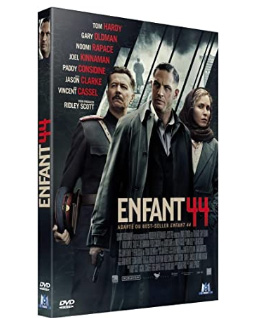
Child 44
Synopsis
Set in 1953 Soviet Russia during the height of Joseph Stalin's paranoid totalitarian regime, Leo Demidov is a decorated MGB secret police officer and war hero who fiercely believes in Communist party ideals. When Leo refuses to denounce his loyal schoolteacher wife Raisa as a political traitor, he is stripped of his rank and exiled to a grim, industrial provincial outpost. There, Leo discovers a horrifying string of child serial murders that the dogmatic Soviet state officially insists cannot exist in a socialist paradise, since murder is deemed a capitalist disease. Teaming up with a local general, Leo investigates the killer independently while evading secret police assassins. This gritty historical thriller explores totalitarian terror and gruesome serial murder.
The Making of the Film
Producer Ridley Scott optioned Tom Rob Smith's acclaimed 2008 historical crime novel Child 44, which was loosely inspired by the real-life Soviet serial killer Andrei Chikatilo. Director Daniel Espinosa was brought on board to helm the prestige production, injecting a bleak, muddy Stalinist atmosphere and tense police procedural pacing. Screenwriter Richard Price adapted the complex political novel. Summit Entertainment and 20th Century Fox backed the high-budget historical thriller.
Critical Reception
Professional critics gave generally unfavorable reviews, criticizing the convoluted political plot, heavy accents, and brutal violence that overshadowed the detective procedural elements. However, Tom Hardy's intense, committed lead performance received praise from reviewers. The film underperformed significantly at the box office.
Public reception was mixed, with thriller fans appreciating the dark historical setting and gritty atmosphere, while general audiences found the grim tone depressing and dense. It carved out a niche as an atmospheric historical noir on home video.
Awards and recognition were absent due to its box office misfire and critical panning. Tom Hardy earned praise from genre enthusiasts. The film remains a notable dark historical misfire in an acclaimed cast's filmography.
Filming Anecdotes
- Inspirations: The director drew inspiration from real-life Soviet history, Stalinist paranoia, and dark European serial killer thrillers like Zodiac.
- Difficulties: Production challenges included being outright banned from filming in Russia by government cultural ministers due to sensitive historical themes, forcing the production to relocate snowy industrial shoot locations to Prague, Czech Republic. Managing complex Soviet military wardrobe and accents required intense preparation.
- Anecdote: A memorable anecdote involves Tom Hardy and Noomi Rapace enduring freezing, muddy forest conditions during grueling manhunt scenes. Gary Oldman brought quiet gravitas to his role as the sympathetic general. The crew maintained a bleak, serious atmosphere.
- Casting: The casting process secured Tom Hardy to anchor the lead detective role, alongside Noomi Rapace, Gary Oldman, Joel Kinnaman, and Vincent Cassel. Joel Kinnaman played Leo's vicious rival. The ensemble brought heavy dramatic weight to the script.
Themes Explored
The themes explored include totalitarian suppression of truth, state paranoia, serial murder, marital redemption, and moral awakening. The story examines how an obedient secret-police officer can rediscover his humanity when forced to choose between party dogma and protecting innocent children. It also highlights Stalinist fear.
Explanation of the Ending
The ending shows Leo and Raisa tracking the deranged child killer to a muddy railway encampment, engaging in a brutal, exhausting fistfight in the pouring rain before finally overpowering and arresting him. Returning to Moscow with proof of the serial killer, Leo refuses to back down, forcing the Soviet ministry to quietly acknowledge domestic crime while reinstating Leo to a modest provincial police post where he can protect the innocent. The film concludes on a grim, resolute historical note.
Title Significance
The title 'Child 44' refers chillingly to the state's official registry number of solved child murder cases, highlighting the bureaucratic coldness of a totalitarian regime that refused to acknowledge serial killers. It is dark and suspenseful. The name sets a historical-noir tone.
The film is frequently discussed in retrospectives analyzing historical crime thrillers and cinematic depictions of the Soviet era.
Zodiac, The Secret in Their Eyes, Citizen X, Tinker Tailor Soldier Spy