

 Français
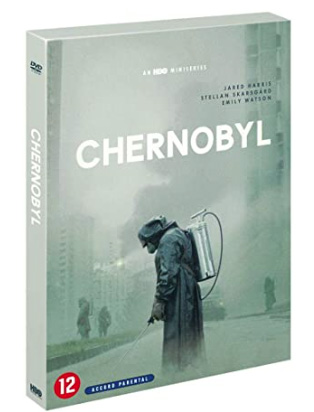
Chernobyl
Synopsis
Chernobyl is a historical television miniseries depicting the 1986 nuclear disaster at the Chernobyl Nuclear Power Plant in Soviet Ukraine. After a reactor explodes during a safety test, firefighters, engineers and government officials struggle to understand the scale of the catastrophe. Scientist Valery Legasov and other specialists attempt to identify the cause while facing political pressure and a culture of secrecy. The series follows the human consequences of the explosion, from the evacuation of nearby communities to the dangerous work carried out by those trying to contain the radiation. It is a dramatised account inspired by real events and the people who experienced them.
The Making of the Film
Chernobyl was created and written by Craig Mazin, who became interested in the disaster after reading accounts of the people who had lived through it. He wanted to understand not only the technical causes of the reactor explosion but also the institutional and human failures that allowed the catastrophe to develop. Mazin researched historical documents, interviews, testimonies and accounts from survivors and witnesses. The series was strongly influenced by the book Voices from Chernobyl by Svetlana Alexievich, which collects personal testimonies from people affected by the disaster. Director Johan Renck helped translate this research into a restrained visual style that emphasises the everyday reality of the Soviet environment. The production was designed to recreate the atmosphere of the late Soviet period without turning the story into a conventional action thriller. Although many characters are based on real people, some were combined or fictionalised to make the narrative easier to follow. The creators aimed to show how secrecy, institutional pressure and individual courage shaped the disaster and its aftermath. The result is a historical drama focused on both scientific responsibility and the human cost of political failure.
Critical Reception
Professional Reviews
Chernobyl received exceptional critical acclaim and was widely praised as one of the strongest television productions of 2019. Critics highlighted its meticulous historical atmosphere, controlled direction and powerful performances. Jared Harris was particularly praised for his portrayal of Valery Legasov, while Stellan Skarsgård and Emily Watson also received strong reviews. The series was recognised for making complex scientific and political issues accessible without losing their seriousness. Its sound design, production design and cinematography contributed to an atmosphere of sustained tension. Some historians and viewers questioned certain historical details and the way specific events were dramatised. Nevertheless, the overall critical response was overwhelmingly positive.
Audience Reception
The series attracted a large international audience and generated considerable discussion about the Chernobyl disaster. Viewers praised its ability to communicate the danger of radiation and the consequences of official secrecy. Many were particularly affected by the stories of firefighters, plant workers, miners and ordinary residents. The production also encouraged renewed interest in the history of the Soviet Union and the real events of 1986. Its intense subject matter made it difficult viewing for some audiences, but its emotional and historical impact contributed to its popularity. Chernobyl quickly became one of the most talked-about television dramas of the year.
Awards
Chernobyl won numerous major television awards. At the 2019 Primetime Emmy Awards, it received ten awards, including Outstanding Limited Series, Outstanding Lead Actor in a Limited Series for Jared Harris and Outstanding Supporting Actress for Emily Watson. It also won the Golden Globe for Best Television Limited Series or Motion Picture Made for Television. Stellan Skarsgård received the Golden Globe for Best Supporting Actor in a Series, Miniseries or Television Film. The series was also recognised by the BAFTA Television Awards and several international critics' organisations. Its awards success confirmed its status as one of the most acclaimed historical television dramas of its decade.
Behind the Scenes
Director Inspirations
Johan Renck approached the series with a documentary-like visual sensibility. He wanted the Soviet setting to feel authentic and ordinary rather than artificially stylised. Craig Mazin's research into survivor testimonies and historical records shaped the tone of the production. The creators also sought to avoid presenting the disaster as an inexplicable accident, instead examining the institutional culture and decisions that contributed to it. Their intention was to make the audience understand how a technical failure could become a national and international catastrophe.
Production Challenges
Recreating the Soviet Union of the 1980s required extensive research into architecture, clothing, vehicles, industrial equipment and everyday objects. The production was filmed primarily in Lithuania, including locations in Vilnius and at the Ignalina Nuclear Power Plant. Ignalina was particularly useful because its reactors were of a similar Soviet design to the one at Chernobyl. The crew had to create convincing industrial environments while ensuring that the sets and costumes reflected the correct historical period. Another challenge was representing radiation and its effects without relying on exaggerated visual effects. The filmmakers used sound, lighting, make-up and restrained performances to communicate the danger.
A Particular Scene
The sequence showing firefighters arriving at the burning reactor is one of the series' most disturbing moments. The men initially treat the incident as an ordinary industrial fire because they do not understand the invisible danger of radiation. Their exposure becomes increasingly apparent through their physical condition and the reactions of medical staff. The scene illustrates how a lack of information can turn an already dangerous situation into a fatal one. Its impact comes from the contrast between the apparent normality of the firefighters' work and the extraordinary hazard surrounding them.
Casting
Jared Harris was cast as Valery Legasov, the scientist whose testimony and investigations are central to the story. Stellan Skarsgård portrays Boris Shcherbina, a senior Soviet official who gradually recognises the scale of the disaster. Emily Watson plays Ulana Khomyuk, a fictional scientist created to represent the work of numerous researchers involved in understanding the accident. The cast also includes Jessie Buckley, Paul Ritter and Barry Keoghan. The decision to use a fictional composite character allowed the series to represent scientific contributions that could not easily be attributed to one individual.
Themes
Truth and institutional responsibility are the central themes of Chernobyl. The series shows how the refusal to acknowledge mistakes can turn a technical accident into a much larger catastrophe. Political pressure encourages officials to protect their reputations rather than communicate the danger honestly. Scientific integrity becomes essential because understanding the disaster requires people to challenge established explanations. The story also explores courage, particularly among firefighters, engineers, soldiers and ordinary citizens who accept enormous risks to protect others. Sacrifice is presented as both an individual and collective responsibility. The consequences of the explosion reveal how environmental disasters can affect generations long after the initial event. Another important theme is the relationship between knowledge and power: information can save lives, but it can also threaten institutions that depend on secrecy. The series questions the cost of obedience when authority demands that people ignore evidence. Ultimately, it argues that truth is not merely an abstract principle but a condition of public safety.
Ending Explained
The final episode reconstructs the investigation into the causes of the reactor explosion and presents the technical explanation behind the disaster. Legasov explains how the reactor design, particularly the behaviour of its control rods under certain conditions, contributed to the explosion. The trial demonstrates that the accident was not simply the result of one operator's mistake but was connected to deeper design flaws and a culture that discouraged criticism. The testimony exposes the institutional decisions that prevented the risks from being properly acknowledged. Legasov's willingness to speak openly comes at a considerable personal cost, as the authorities seek to protect the reputation of the Soviet system. The series also shows that the consequences of the disaster extend far beyond the courtroom, affecting the health and lives of many people. Its closing reflections underline the importance of scientific honesty and the preservation of historical memory. The ending reminds viewers that disasters are not only caused by physical failures but can also be made worse by human decisions and political systems.
Meaning of the Title
The title Chernobyl refers to the Ukrainian city near the nuclear power plant where the 1986 disaster occurred. The name has become internationally associated with the explosion, radioactive contamination and the evacuation of surrounding communities. By using the place name alone, the series connects its narrative to a real historical event whose consequences extended far beyond the region. The title also represents the people who lived and worked in the area before the disaster. It evokes the transformation of an inhabited landscape into one of the world's most recognisable symbols of nuclear catastrophe. The name has become a reminder of the importance of safety, transparency and responsibility in the use of nuclear technology.
Original Soundtrack
The original score was composed by Hildur Guðnadóttir, who created much of the music using recordings made inside a functioning nuclear power plant. These industrial sounds were transformed into an unsettling musical landscape that reinforces the series' atmosphere of danger. The soundtrack avoids conventional heroic themes and instead uses low frequencies, metallic textures and distant mechanical sounds. This approach makes the music feel connected to the physical environment of the disaster. Guðnadóttir's work received major recognition and won several awards, including an Emmy and a BAFTA. The score is one of the most distinctive elements of the series.
Similar Films
- The Days (2023), a Japanese drama series about the Fukushima nuclear disaster.
- When They See Us (2019), a historical drama examining institutional failures and their human consequences.
- The Looming Tower (2018), a television miniseries about intelligence failures before September 11.
- The Impossible (2012), a disaster drama based on a family's experience of the 2004 Indian Ocean tsunami.
- The Spy (2019), another historical miniseries exploring secrecy, political pressure and personal sacrifice.