

 Français
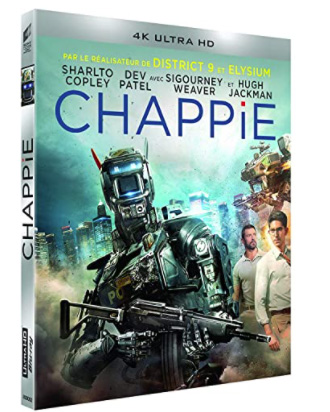
Chappie
Synopsis
In a dystopian near-future Johannesburg plagued by crime, a heavily armored robotic police force keeps fragile order under the control of a private weapons corporation. A brilliant young engineer secretly develops a sentient artificial intelligence prototype designed to feel emotions, think independently, and learn like a human child. When his experimental AI robot—named Chappie—is stolen by a trio of desperate low-level gangsters, the machine is raised amidst criminal chaos while struggling to understand morality and existence. As corporate mercenaries hunt down the robot to destroy his groundbreaking consciousness, Chappie fights for his right to live. This gritty sci-fi action film explores consciousness and humanity.
Genesis_of_the_Film
The concept for Chappie was conceived by writer-director Neill Blomkamp, who was inspired by his love for Japanese robotics, science fiction, and his own upbringing in South Africa. Blomkamp wanted to explore the philosophical implications of artificial intelligence and sentient machine consciousness through the raw, unfiltered lens of a childlike robot learning about human nature from street criminals. The production team drew visual inspiration from the gritty, graffiti-strewn urban landscapes of Johannesburg. The filmmakers utilized advanced robotic stunt puppetry combined with CGI tracking to bring Chappie to life with tactile realism.
Critical Reception
Professional critics gave mixed-to-negative reviews to Chappie, criticizing its chaotic tone, uneven script, and implausible character motivations while praising Sharlto Copley's motion-capture performance and the impressive robot visual effects. Reviewers noted that while visually striking and ambitious, the narrative struggled to balance goofy gangster comedy with deep philosophical sci-fi ethics. The public response was moderate at the box office, generating decent international ticket sales and developing a loyal sci-fi cult following. Audiences enjoyed the emotional bond between Chappie and his makeshift criminal family. The film received Saturn Award nominations for its visual effects.
Filming Anecdotes
Director Neill Blomkamp drew heavy inspiration from classic cyberpunk anime like Ghost in the Shell and real-world robotics development in South Africa. Production took place entirely on location in gritty industrial neighborhoods of Johannesburg, incorporating local gang culture and real street environments. During the filming of the action sequences, actor Sharlto Copley wore a grey tracking suit on set to interact physically with the actors before digital animators painted Chappie's metallic body over him. Before the final cast was assembled, Blomkamp cast members of the South African rap-rave group Die Antwoord to play fictionalized versions of themselves.
Main Themes
The film explores deep themes of artificial intelligence, consciousness, mortality, parental neglect, morality, and what it truly means to be human. It highlights how capacity for empathy and love can bloom in the most corrupted and unlikely environments. Additionally, it critiques corporate militarization and technological hubris.
Ending Explanation
The climax resolves the corporate military assault when Chappie defeats the villainous corporate mecha pilot and rescues his creator and gangster family from deadly mercenaries. Fatally damaged in the battle and facing imminent battery failure, Chappie uses a nearby helmet scanner to upload his creator's consciousness into a spare robot body, and later successfully transfers his own dying artificial mind into another robotic chassis using experimental tech. Having achieved digital immortality and saved his loved ones, Chappie reunites with his creator in secret. The film ends on a hopeful, philosophical note of machine transcendence and survival.
Title Significance
The title directly references the name given to the sentient artificial intelligence robot protagonist by his street-smart criminal guardians, reflecting his innocent, childlike identity.
NULL
NULL
District 9, Elysium, Short Circuit, A.I. Artificial Intelligence