

 Français
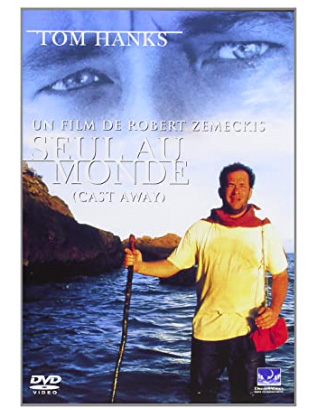
Cast Away
Synopsis
Chuck Noland is a FedEx systems engineer whose life is governed by deadlines, schedules and constant travel. During a flight over the Pacific Ocean, his plane crashes during a violent storm, leaving him stranded on a remote island. With no contact with the outside world, he must learn to find food, make shelter and survive in complete isolation. As the months pass, his physical and psychological endurance are tested by loneliness and uncertainty. His struggle to return to civilization becomes a profound journey about survival, time, love and the human need for connection.
Film Origins
The idea for Cast Away developed from a concept that Tom Hanks had discussed with screenwriter William Broyles Jr. They were interested in exploring what would happen if a person accustomed to modern technology and constant communication suddenly lost access to civilization. Hanks wanted to create a survival story that would rely primarily on one actor and the natural environment. Robert Zemeckis became involved as director, bringing experience in combining technical innovation with accessible storytelling. Broyles researched the practical challenges of surviving on an uninhabited island and undertook an extended period of preparation. The story was designed around a dramatic contrast between a life controlled by schedules and a world in which time has almost no practical meaning. Helen Hunt was selected to play Kelly, the woman whose relationship with Chuck gives the story its emotional foundation. The project also required an unusual production schedule because Hanks had to undergo a major physical transformation during filming. The result was a minimalist adventure film built around performance, visual storytelling and the psychology of isolation.
Critical Reception
Professional critics generally praised the film, particularly Tom Hanks's performance and the technical achievement of its survival sequences. Many reviewers admired the way the story maintains audience interest despite the limited number of characters during its central island section. Hanks received particular attention for communicating physical exhaustion, loneliness and emotional change with relatively little dialogue. Robert Zemeckis's direction was also appreciated for balancing adventure with introspective drama. Some critics considered the final section less powerful than the island narrative, but the overall response was positive.
Audiences responded enthusiastically, making the film a major commercial success. The story of an ordinary man forced to survive alone proved accessible to a wide range of viewers. The image of Chuck speaking to the volleyball Wilson became one of the film's most recognizable cultural references. Many viewers were moved by the contrast between his determination to survive and the personal life that continues without him. The film has remained popular through television broadcasts and home-video releases.
The film received several major award nominations. Tom Hanks was nominated for the Academy Award for Best Actor, recognizing the physical and emotional demands of his performance. The film also received nominations from other international award organizations and critics' groups. Although it did not win a large number of major awards, its leading performance and technical craftsmanship were widely recognized. Its reputation as one of the most memorable survival dramas of its period has endured.
Behind the Scenes
Tom Hanks and William Broyles Jr. wanted the survival story to feel physically convincing. To prepare for the screenplay, Broyles spent time alone in a remote environment and experimented with basic survival tasks. This research helped the filmmakers understand the difficulties of finding food, making fire and creating shelter without modern equipment. The director and actor wanted the island sequences to communicate the gradual transformation of a person forced to rely entirely on himself.
The production was divided into separate periods to allow Tom Hanks to lose a substantial amount of weight and grow his hair for the later stages of the story. The crew filmed the opening and closing portions before taking an extended break. During that interval, Hanks underwent the physical transformation required to portray Chuck after years of isolation. This unusual schedule made the production more complicated and required careful planning to preserve continuity.
Wilson, the volleyball that becomes Chuck's imaginary companion, is one of the film's most memorable elements. The character was created to give the protagonist a way to express thoughts and emotions during long periods without human contact. The object gradually becomes a symbolic friend rather than simply a piece of equipment. Its presence allows the film to explore loneliness without relying on constant narration or flashbacks.
Tom Hanks was central to the casting and development of the project. Helen Hunt plays Kelly, whose relationship with Chuck provides the emotional connection to the world he has lost. The supporting cast includes Nick Searcy and other performers who help establish Chuck's professional and personal life before the crash. FedEx allowed the production to use its name and aircraft imagery, although the company did not simply treat the film as a conventional paid product-placement campaign.
Themes
The film explores survival as both a physical and psychological challenge. Chuck must learn to find food, make fire and protect himself from the natural environment, but his greatest struggle is maintaining the will to continue living. Isolation forces him to confront fears and emotions that were previously hidden beneath his busy professional routine. His survival depends on adaptability, patience and the ability to find meaning in small achievements.
Time is another major theme. Before the crash, Chuck measures his life through deadlines and schedules. On the island, conventional time loses much of its importance, and he must learn to live according to natural rhythms. His return to civilization reveals that the world has continued without him, creating a painful separation between his former identity and his new reality.
The film also examines love, loss and the difficulty of accepting change. Chuck's relationship with Kelly gives him a reason to imagine returning home, but the passage of years transforms their circumstances. His eventual return does not restore the life he once knew. The story suggests that survival sometimes requires accepting that the past cannot be recovered, even when its emotional importance remains unchanged.
Ending Explained
After finally escaping the island, Chuck returns to a world that has moved on without him. He discovers that Kelly has built a new life and that the relationship they once shared cannot simply be resumed. Their emotional reunion confirms that love can remain powerful even when circumstances make a shared future impossible. Chuck must accept this loss while recognizing that his survival has given him another opportunity to live. In the final sequence, he stands at a crossroads in an unfamiliar landscape, holding a package that he had originally intended to deliver. The open road suggests that his future remains uncertain but full of possibilities. The image echoes the film's opening, in which his life was controlled by schedules and destinations. Now he has the freedom to choose his own direction. The ending is deliberately open, emphasizing resilience and the possibility of beginning again after profound loss.
Meaning of the Title
The title Cast Away refers to Chuck's physical situation after the plane crash: he is cast away from civilization and left on a remote island. The expression also suggests emotional abandonment and separation from the life he once knew. His isolation forces him to reconsider the values and relationships that previously defined him. The title therefore describes both his literal survival situation and the deeper emotional journey that follows.
Soundtrack
The original score was composed by Alan Silvestri, whose long collaboration with Robert Zemeckis includes several major films. The music is used sparingly during the island sequences, allowing natural sounds and silence to communicate Chuck's isolation. When orchestral music does appear, it reinforces the emotional scale of his journey and the importance of his relationships. The restrained approach helps distinguish the survival experience from the more conventional adventure-film soundtrack. Silvestri's score supports the film's themes of endurance, loss and hope.
Similar Films
- The Red Turtle (2016), an almost wordless story about isolation and survival on a remote island.
- The Revenant (2015), a physically demanding survival drama set in a hostile natural environment.
- All Is Lost (2013), a minimalist survival film centered on a single man facing overwhelming circumstances.
- The Martian (2015), a story about ingenuity, resilience and survival in an environment far from civilization.