

 Français
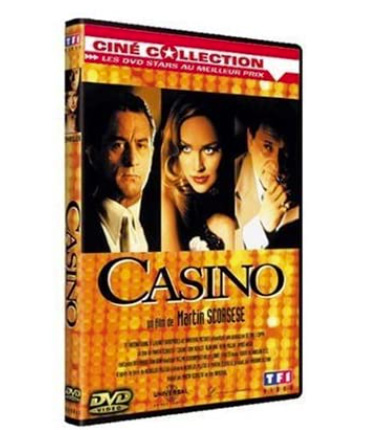
Casino
Synopsis
In 1970s Las Vegas, professional gambler Sam Ace Rothstein is appointed to manage a major casino controlled by organized crime. His business success is threatened by his turbulent marriage to Ginger McKenna and the increasingly violent behavior of his childhood friend Nicky Santoro. As money, addiction and criminal ambition undermine the operation, the casino becomes the center of a dangerous power struggle. Inspired by real events, the film portrays the rise and collapse of a criminal empire in Las Vegas.
The film's origins
Casino is based on the nonfiction book Casino: Love and Honor in Las Vegas by journalist Nicholas Pileggi. Pileggi researched the book through interviews and investigations into the influence of organized crime on Las Vegas during the 1970s and 1980s. The story draws heavily on the lives of casino executive Frank Rosenthal and mobster Anthony Spilotro, although the film changes their names and modifies certain events. Martin Scorsese became interested in the material because it offered an opportunity to examine the relationship between business, organized crime and American popular culture. He had previously collaborated with Pileggi on Goodfellas, which also adapted a book about real criminal activity. The two writers developed the screenplay around the rise and collapse of a casino operation controlled by powerful criminal interests. Scorsese wanted the film to function almost like a historical chronicle of a particular period in Las Vegas. The result combines a crime story, a tragic marriage and a detailed portrait of a city undergoing profound economic and cultural change.
Critical reception
Professional critics generally praised Casino for its ambitious scale, performances and detailed reconstruction of Las Vegas. Martin Scorsese's direction and Robert De Niro's portrayal of Sam Rothstein were widely appreciated. Sharon Stone received particularly strong praise for her performance as Ginger McKenna, a character whose emotional instability becomes central to the tragedy. Joe Pesci was also recognized for his portrayal of the violent and unpredictable Nicky Santoro. Some critics felt that the film repeated elements of Goodfellas, especially its narration, editing and depiction of organized crime. Others considered its length and abundance of characters demanding, but the film's technical confidence and performances were widely admired.
Audience reception was strong, particularly among viewers interested in gangster films and stories inspired by real events. The film became an enduring favorite for its portrayal of Las Vegas during a period when organized crime exerted considerable influence over the casino industry. Its memorable dialogue, elaborate costumes and detailed production design helped establish a distinctive atmosphere. Sharon Stone's performance became one of the most discussed elements of the film. Over time, Casino has gained a reputation as one of Scorsese's major crime dramas.
Casino received several important award nominations, most notably Sharon Stone's Academy Award nomination for Best Actress. She also won the Golden Globe for Best Actress in a Motion Picture Drama. The film received additional recognition from critics' associations and industry organizations for its performances and technical achievements. It did not win an Academy Award, but Stone's performance remains one of the most celebrated aspects of the production. The film's long-term reputation has grown through repeated critical reassessment and its influence on later crime dramas.
Behind-the-scenes stories
Martin Scorsese and Nicholas Pileggi wanted the film to reflect the historical atmosphere of Las Vegas during the 1970s and 1980s. Their research drew on interviews with people connected to casinos and organized crime. Pileggi had spent considerable time investigating the real events behind the story before writing the book. Scorsese used this material to create a detailed portrait of a criminal business operation rather than focusing exclusively on individual gangsters. The film also reflects the director's interest in the relationship between violence, money and American entertainment.
The production paid exceptional attention to costumes and the visual appearance of the casino world. Robert De Niro wore a large number of different costumes to reflect Sam Rothstein's changing professional and personal status. Sharon Stone's wardrobe was also designed to communicate Ginger's glamour, insecurity and increasingly unstable life. The costumes help establish the film's period atmosphere and distinguish the characters within the crowded casino environment. Production design and cinematography were equally important in recreating the scale and spectacle of Las Vegas.
The film's narration and rapid editing give the audience a detailed look at how the casino operates. The opening sequences explain the movement of money, the organization of the gaming floors and the relationship between the casino and its hidden owners. Scorsese uses these passages to make the business itself feel like a major character. The contrast between the glittering public spaces and the violent private world behind them becomes increasingly important as the story develops. The soundtrack also reinforces the period setting through a large collection of popular songs.
Themes
Casino explores the relationship between money, power and the corruption of ambition. Sam Rothstein believes that careful management and professional expertise can maintain order even within a criminal organization. His confidence gradually proves misplaced as personal emotions and violent interests undermine the business. The film also examines the destructive consequences of addiction, particularly through Ginger's dependence on drugs, money and emotional manipulation. Nicky Santoro represents uncontrolled aggression and the belief that violence can solve every problem. The casino itself becomes a symbol of American capitalism, where enormous wealth is generated through systems that conceal their human costs. The story also contrasts public glamour with private misery, showing how the appearance of success can hide fear and instability. Loyalty is repeatedly tested by greed, jealousy and the desire for control. Ultimately, the film portrays the collapse of a world in which everyone believes they can profit from a system that is already destroying them.
Ending explained
As the casino operation becomes increasingly unstable, the criminal organization decides that Sam and Nicky have become liabilities. Nicky's violent behavior attracts unwanted attention, while Sam's personal problems make him difficult to control. Their relationship deteriorates until the men are no longer able to work together. Nicky and his brother are eventually murdered by members of the criminal organization, bringing their violent partnership to a brutal end. Sam survives an assassination attempt when his car explodes, although he narrowly escapes death. Ginger's life also collapses under the pressure of addiction, betrayal and criminal involvement. The casino operation is eventually taken away from the people who had controlled it, and the wider criminal network loses its influence over the industry. Sam returns to gambling, living a much less glamorous existence than the one he once enjoyed. The final narration reflects on the disappearance of an era and the transformation of Las Vegas into a more corporate and commercial entertainment destination. The ending suggests that the criminal world has not disappeared, but has simply been replaced by a different form of power.
Meaning of the title
Casino refers to the central location around which the entire story is organized. The casino is not merely a place where people gamble, but a complex business operation involving money, influence and organized crime. It represents the glamorous public face of Las Vegas and the hidden systems that sustain its wealth. The title is deliberately direct because the film treats the casino as the central character in its historical portrait. The establishment brings together Sam's professional ambition, Nicky's criminal influence and Ginger's desire for money and security. It also symbolizes a world in which risk and reward are constantly calculated. By using a simple title, Scorsese places the emphasis on the institution and the era rather than on one individual character.
Original soundtrack
Casino features a carefully selected soundtrack rather than relying primarily on a newly composed musical score. The songs help recreate the atmosphere of Las Vegas during the 1960s, 1970s and early 1980s. The music includes recordings by artists such as The Rolling Stones, Dean Martin, Louis Prima, Muddy Waters and other performers associated with the period. These tracks accompany the film's narration, casino sequences and changes in the characters' personal lives. The soundtrack is an essential part of the film's historical identity and helps create the feeling of a city built around entertainment and excess. Its use of popular music also reinforces the contrast between the casino's glamorous surface and the violence taking place behind it.
Similar films
Goodfellas is the closest companion to Casino, sharing Martin Scorsese's direction, Nicholas Pileggi's writing and a detailed portrait of organized crime. The Irishman explores the long-term consequences of loyalty and violence within criminal organizations. Once Upon a Time in America offers another ambitious story about friendship, crime and the passage of time. American Gangster examines the relationship between organized crime, business and law enforcement. Donnie Brasco focuses on the infiltration of a criminal organization and the personal costs of living a double life. For another film centered on gambling, ambition and self-destruction, The Gambler is also worth considering.