

 Français
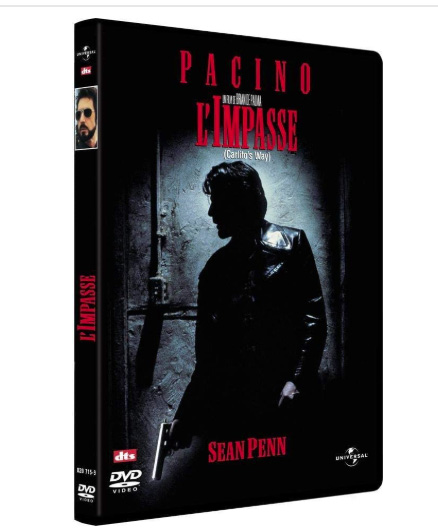
Carlito's Way
Synopsis
Carlito Brigante is a former New York drug dealer who has just been released from prison after serving five years of a thirty-year sentence. Determined to leave his criminal past behind, he dreams of saving enough money to start a new life in the Caribbean. However, his old connections, the streets of Spanish Harlem and his friendship with an increasingly reckless lawyer keep pulling him back into danger. As Carlito tries to protect his future and rebuild his relationship with Gail, he discovers how difficult it is to escape the world that once defined him.
The film is based on two novels by Edwin Torres, a former New York State Supreme Court judge whose stories draw on the atmosphere of East Harlem. Al Pacino became interested in the character of Carlito Brigante after meeting Torres in the early 1970s. He later helped bring the project to the screen with producer Martin Bregman, who had worked with him on several previous films. Brian De Palma was attracted to the material because it offered an opportunity to create a tragic crime story shaped by memory and fate. Screenwriter David Koepp adapted the novels into a narrative that begins near the end of Carlito's life and follows his memories of the events that brought him there. The film combines the conventions of gangster cinema with the structure of a personal tragedy. Its central question is whether someone can truly escape a violent past when the people and circumstances around him refuse to change.
Critics generally praised the film for its direction, performances and carefully constructed suspense. Al Pacino was widely appreciated for giving Carlito a combination of dignity, regret and vulnerability. Sean Penn attracted particular attention for his transformation into the unstable lawyer David Kleinfeld, a character very different from his earlier screen roles. Brian De Palma's visual style, especially the elaborate final chase, was also frequently highlighted. Some critics considered the film less groundbreaking than Scarface, but many regarded it as a more mature and tragic examination of criminal life. Audiences responded positively, although its theatrical performance was more modest than that of some other major gangster films of the period. Over time, the film has developed a strong reputation among crime-film enthusiasts. Its memorable performances and highly regarded final sequence have helped secure its status as one of De Palma's important works.
Al Pacino had been interested in Carlito Brigante for many years before the film entered production. Brian De Palma decided to emphasize the character's tragic destiny and frame the story through his memories. Filming began in New York in March 1993, but the production had to change its initial schedule when Pacino arrived on crutches. The crew therefore began with the pool hall sequence rather than the planned climax at Grand Central Station. De Palma devoted considerable attention to the elaborate pool hall scene, even though some studio executives felt that it was too long. The final chase through the subway and railway station required complex choreography and careful coordination between actors, extras and camera crews. The production used New York locations to give the film a strong sense of place. Its visual approach combines realistic street environments with the heightened suspense associated with De Palma's thrillers.
Themes Explored
The film explores redemption and the difficulty of escaping a criminal identity. Carlito wants to change, but the people around him continue to see him as the man he used to be. Loyalty is another central theme, particularly through his relationship with Kleinfeld, whose reckless behavior threatens everything Carlito hopes to achieve. The story also examines fate, regret and the limits of personal freedom. Carlito believes that money and distance will allow him to begin again, yet his past continues to influence his decisions. His love for Gail represents the possibility of a different life, while the criminal world represents the forces that keep him trapped.
Ending Explained
The final sequence reveals the tragic consequences of Carlito's attempt to leave his criminal past behind. After trying to protect himself from the consequences of Kleinfeld's actions, Carlito becomes the target of men who want revenge. He runs through a crowded station and attempts to reach the train that could take him away from New York. Although he fights desperately to survive, he is shot before he can escape. The film then returns to the opening image, in which Carlito is already wounded and imagining the future he will never experience. His vision of a peaceful life with Gail becomes a final expression of hope rather than a reality. The ending emphasizes the gap between the life Carlito wants and the consequences of the world he has inhabited.
Meaning of the Title
The title refers to the personal path followed by Carlito Brigante as he attempts to leave crime behind. His way is not simply a route through the streets of New York, but a difficult moral journey toward redemption. The expression also suggests that every person has a path shaped by past decisions and present circumstances. Carlito wants to choose a different direction, yet the world around him continually pulls him toward his former life. The title therefore carries both a sense of personal determination and an awareness of tragic inevitability.
Original Soundtrack
The soundtrack was composed by Patrick Doyle, whose score combines orchestral passages with a strong sense of melancholy. The music reinforces Carlito's nostalgia for a life that he hopes to leave behind. The film also makes memorable use of contemporary Latin and dance music, especially in scenes connected with New York nightlife. Its opening and closing musical atmosphere contributes to the feeling that Carlito is looking back on his life from the edge of death.
Fans of character-driven crime dramas may also enjoy Scarface, Once Upon a Time in America, Donnie Brasco, A Bronx Tale, Goodfellas and The Irishman. These films explore loyalty, criminal identity, ambition and the personal cost of life within organized crime.