

 Français
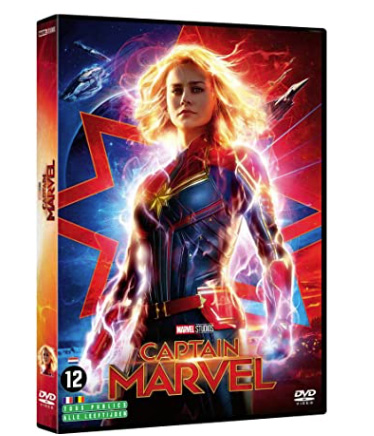
Captain Marvel
Synopsis
Carol Danvers is a powerful warrior serving with an alien military force known as Starforce. After a mission goes wrong, she finds herself on Earth in the 1990s and begins uncovering fragments of a forgotten past. With the help of a young Nick Fury, she investigates a conflict involving the Kree and the shape-shifting Skrulls. As her memories return, Carol discovers that the truth about her identity is very different from what she has been told. She must learn to trust herself and embrace the full extent of her abilities.
The film's origins
Captain Marvel is based on the Marvel Comics character Carol Danvers, who first appeared in the late 1960s before eventually becoming one of the publisher's most important superheroes. The character has undergone several transformations in the comics, with the Captain Marvel identity becoming a defining part of her modern history. Marvel Studios developed the film as the first solo feature in the Marvel Cinematic Universe centered on a female superhero. Anna Boden and Ryan Fleck were selected to direct the project, bringing experience in character-driven dramas to a large-scale superhero production. The filmmakers drew inspiration from Kelly Sue DeConnick's influential comic-book interpretation of Carol Danvers. They wanted the story to explore confidence, independence and the process of discovering one's own identity. Setting the film in the 1990s allowed the story to take place before the events of the earlier Avengers films. This period also offered opportunities for nostalgic references and a different visual style from the contemporary Marvel adventures.
Critical reception
Professional reviews were generally positive, although the response was more divided than for some of the most celebrated Marvel films. Critics appreciated Brie Larson's portrayal of Carol Danvers and the film's emphasis on female empowerment. Samuel L. Jackson's younger version of Nick Fury and the relationship between the two characters were also frequently praised. Some reviewers enjoyed the 1990s setting, humor and action sequences, while others felt that the screenplay lacked emotional depth or a sufficiently distinctive villain. The film was nevertheless recognized as an important addition to the Marvel Cinematic Universe.
Audience reception was strong, and the film became a major international box-office success. Many viewers welcomed the introduction of Carol Danvers as one of the most powerful heroes in the Marvel universe. The 1990s references, including music, technology and popular culture, helped give the film a recognizable atmosphere. The relationship between Carol and Nick Fury also became a popular element of the story. Some audience reactions were divided by debates surrounding the character and the film's themes, but its commercial performance demonstrated substantial worldwide interest.
Captain Marvel did not receive major Academy Award nominations. It nevertheless earned recognition from several popular entertainment and visual-effects award organizations. The film's success was particularly significant for Marvel Studios because it introduced a central female superhero shortly before Avengers: Endgame. Its commercial performance established Carol Danvers as an important character in the wider franchise. The production also received attention for its visual effects, costume design and musical use of 1990s songs.
Behind-the-scenes stories
The filmmakers deliberately chose the 1990s because this period had not been explored extensively in the Marvel Cinematic Universe. Kevin Feige explained that the setting allowed the story to take place before Nick Fury knew about extraterrestrial threats and superheroes. It also gave the directors an opportunity to draw on action films from the decade, including science-fiction and military adventures. The period setting influenced everything from clothing and technology to the music and visual references. It also created a narrative bridge between Carol Danvers' origin and the later formation of the Avengers.
Brie Larson was selected after Marvel Studios became interested in her potential to portray Carol Danvers. The actress was already familiar with the character from the comics and underwent physical preparation for the demanding action role. The production used extensive stunt work, wire work and visual effects to portray Carol's extraordinary abilities. Several scenes were filmed in practical locations around California, including deserts, lakes and industrial environments. These locations helped create a convincing contrast between the everyday world and the larger science-fiction conflict.
The Blockbuster video-store sequence is one of the film's most recognizable 1990s references. The production found an old shopping mall that could be transformed into a convincing retail environment from that period. The location was redesigned to reproduce the appearance of a video-rental store before streaming and digital entertainment became common. The filmmakers used this setting to combine humor, nostalgia and the introduction of the film's central mystery. It also helped establish the contrast between the ordinary world of the 1990s and the extraordinary events unfolding around Carol.
Themes
Captain Marvel explores identity and the importance of discovering the truth about oneself. Carol has been trained to believe that her emotions make her weak, but her journey gradually reveals that emotional strength is one of her greatest qualities. The film also examines manipulation and the danger of allowing powerful institutions to define an individual's identity. The conflict between the Kree and the Skrulls challenges the idea that history is always told by the people who claim to be victorious. Female empowerment is a central theme, particularly through Carol's refusal to accept the limitations imposed on her. Friendship and trust develop through her relationship with Nick Fury and her reunion with Maria Rambeau. The story also emphasizes resilience, showing that setbacks do not determine a person's ultimate potential. Ultimately, the film argues that true strength comes from self-knowledge rather than obedience to someone else's expectations.
Ending explained
Carol eventually discovers that the Kree have manipulated her memories and concealed the truth about her past. She learns that the Skrulls are not simply the enemies she was trained to fight, but a displaced people seeking refuge from persecution. This revelation changes her understanding of the conflict and forces her to reconsider everything she has been taught. During the final confrontation, Carol rejects the limitations imposed by the Kree and fully embraces her powers. She defeats the immediate threat and helps the Skrulls search for a safe home. Her decision to leave Earth is motivated by the desire to help other displaced people and prevent further oppression. Before departing, she gives Nick Fury a communication device that will allow him to contact her in an emergency. The film ends by showing how this encounter influences Fury's decision to develop a response to extraterrestrial threats. The post-credits scenes connect Carol directly to the events surrounding the disappearance of half the universe in Avengers: Infinity War.
Meaning of the title
Captain Marvel refers to the heroic identity adopted by Carol Danvers. The title connects her to the wider Marvel Comics mythology and to the legacy of the original Captain Marvel character. In the film, the name becomes a symbol of independence and self-determination rather than simply a military designation. Carol must discover that her abilities and identity do not belong to the organization that trained her. The title therefore represents the moment when she defines herself on her own terms. It also identifies her as a central figure in the future of the Marvel Cinematic Universe. The word Captain suggests leadership, while Marvel evokes the extraordinary potential that she eventually learns to embrace.
Original soundtrack
The score was composed by Pinar Toprak, making her the first woman to compose the music for a Marvel Cinematic Universe film. Her work combines orchestral superhero themes with electronic elements and a sense of 1990s action-adventure nostalgia. The film also uses a selection of popular songs from the decade, including tracks by No Doubt, Nirvana and Garbage. These songs help establish Carol's personality and the historical atmosphere of the story. The musical choices are particularly important during the Earth-based sequences, where they contrast with the science-fiction setting. The combination of original score and period music gives Captain Marvel a distinctive sound within the Marvel franchise.
Similar films
Wonder Woman is a natural companion because it also presents a powerful female superhero discovering her place in a larger conflict. Captain America: The First Avenger explores the origins of a hero whose identity becomes central to the future of the Marvel universe. Guardians of the Galaxy combines science-fiction adventure with a strong musical identity and a group of displaced characters. The Avengers provides the next major stage in the story of the heroes introduced across the Marvel Cinematic Universe. Alita: Battle Angel offers another science-fiction adventure centered on a powerful woman discovering her past. For another story involving alien conflict and military secrecy, Edge of Tomorrow is also worth watching.