

 Français
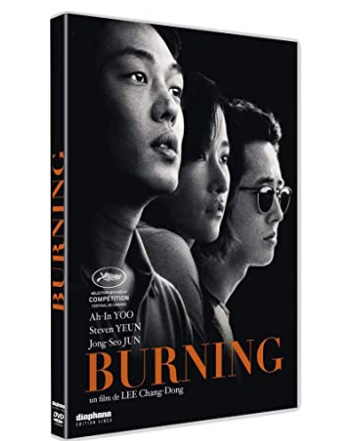
Burning
Synopsis
Jong-su, a part-time deliveryman, unexpectedly runs into Hae-mi, a former neighborhood acquaintance who asks him to feed her cat while she travels to Africa. When Hae-mi returns, she introduces Jong-su to Ben, a mysterious, wealthy young man with an enigmatic lifestyle and a peculiar secret hobby. As the three spend time together, Jong-su becomes increasingly suspicious of Ben's true intentions and growing detachment from reality. When Hae-mi suddenly disappears without a trace, Jong-su embarks on an obsessive, agonizing quest to uncover the truth behind her vanishing.
The Making of the Film
Director Lee Chang-dong adapted the film from Haruki Murakami's short story 'Barn Burning', expanding its narrative scope to reflect contemporary societal anxieties in South Korea. The filmmaker was drawn to the themes of youthful alienation, economic despair, and the invisible class divides plaguing modern generations. He wanted to craft a slow-burn psychological mystery that leaves room for ambiguity rather than offering neat, definitive answers. The production involved meticulous script development to translate Murakami's literary minimalism into a deeply cinematic experience.
Critical reception
Professional reviews were overwhelmingly positive, with many international critics hailing the film as a masterpiece of modern psychological mystery and cinematic storytelling. Reviewers praised its haunting atmosphere, exquisite cinematography, and the brilliant, subtle performances of the cast, particularly Steven Yeun. It achieved historic acclaim at the Cannes Film Festival, securing high praise from critics worldwide for its profound thematic depth and masterful pacing.
Public reception matched critical enthusiasm, drawing strong audiences in South Korea and art-house cinemas globally who appreciated its layered narrative and haunting ambiguity. Viewers engaged deeply in online discussions and analytical breakdowns of the plot's hidden clues and psychological symbolism. Word-of-mouth solidified its status as one of the defining cinematic works of its release year.
Awards and honors were numerous, including critical association prizes and international festival accolades, cementing its place in contemporary cinema history. It set records for high critical ratings in various international film polls and remains celebrated as a landmark achievement in East Asian filmmaking.
Shooting anecdotes
Director Lee Chang-dong drew inspiration from classic literature, existential philosophy, and the quiet alienation experienced by youth in hyper-capitalist societies. He deliberately chose a naturalistic visual style, utilizing changing weather and lighting to mirror the psychological state of the protagonist.
Production encountered logistical challenges related to capturing authentic rural landscapes and unpredictable weather conditions during the crucial agricultural scenes in the Korean countryside.
During the filming of the mesmerizing sunset dance sequence, the actors performed outdoors in real-time twilight, creating an organic, deeply emotional atmosphere that required minimal takes to capture its poetic power.
Initial casting sought actors who could embody extreme psychological subtlety, leading to the selection of a breakout lead alongside an internationally acclaimed star to create a palpable tension between contrasting social classes.
Themes explored
The film explores profound themes of class inequality, youthful rage, existential alienation, and the elusive nature of truth. It examines the invisible barriers separating the wealthy elite from struggling working-class youth in modern society. Furthermore, it delves into jealousy, obsession, and the psychological impact of powerlessness.
Explanation of the ending
The ending leaves the ultimate fate of Hae-mi and the truth behind Ben's actions intentionally ambiguous, forcing the viewer to interpret Jong-su's final, desperate act of retribution. It suggests a tragic climax born from overwhelming grief and a society that leaves its youth burning with unanswered questions.
Meaning of the title
The title refers both to the literal mysterious burning of plastic greenhouses mentioned in the story and to the internal rage, passion, and despair consuming the characters' inner lives.
The haunting and minimalist musical score by Mowg received widespread critical acclaim for perfectly amplifying the film's pervasive atmosphere of mystery, unease, and psychological tension.
In the Mood for Love, Caché, Zodiac, Parasite