

 Français
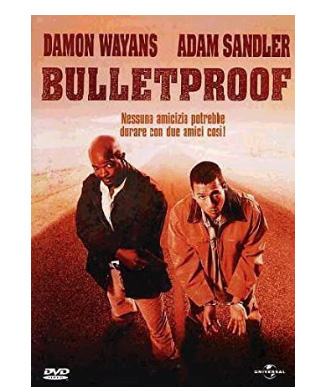
Bulletproof
Synopsis
A police officer and his childhood friend, a small-time crook, find their long friendship tested when a heist goes terribly wrong and one of them is shot. Soon after, the crook becomes the target of ruthless crime boss Frank Colton, and the cop is assigned to protect him. The two men, who barely tolerate each other, must travel across the country while dodging hit men. This buddy comedy mixes action, wisecracks and a surprising amount of loyalty.
The Making of the Film
Bulletproof is a 1996 buddy-cop action comedy, written by Joe Gayton and Lewis Colick and directed by Ernest R. Dickerson. Dickerson had made his name as the cinematographer of Spike Lee's early films before moving into directing with Juice. The project paired two rising comic talents, Damon Wayans, then a star of television comedy, and Adam Sandler, who was becoming a household name thanks to Saturday Night Live. The idea was to take the familiar formula of two mismatched partners forced to work together and to add a layer of friendship, betrayal and forgiveness. Veteran actor James Caan was hired to play the villain, bringing weight to the cast. The studio saw the film as a way to benefit from the popularity of action comedies of the era. Dickerson, who was known for more serious work, took on the challenge of mixing explosive action with broad humour. The result was a film that tried to be both a thriller and a comedy.
Reviews and reception
Professional critics' summary
Critics were largely unkind, finding that the film struggled to balance its action and comedy. Many reviewers felt that the jokes were crude and the story too routine for the genre. Some noted that the two leads had a real chemistry, but that the script did not give them enough good material. The direction was described as competent, though many wondered what had happened to the promise of Dickerson's earlier work.
Audience reception
The film was not a commercial success and came and went quickly in theatres. Over the years, it has gained a small following among fans of Adam Sandler's early career and of 1990s action comedies. In France, it has often been shown on television, where it has remained a minor favourite for viewers who enjoy light entertainment. Its reputation remains mixed.
Filming anecdotes
Director's inspirations
Ernest Dickerson drew on the buddy-cop films of the 1980s, such as 48 Hrs. and Lethal Weapon, which had built their appeal on the contrast between two partners. His background as a cinematographer meant that he paid close attention to the film's visual style. He wanted to make an energetic film in which the action scenes moved at a rapid pace. The relationship between the two leads was meant to be the emotional centre.
Originally planned casting
Damon Wayans and Adam Sandler were cast as a pairing that combined two very different comic styles, Wayans being more physical and Sandler more deadpan. James Caan took the role of the villain Frank Colton, bringing his experience in crime dramas. Kristen Wilson and Bill Nunn rounded out the main cast.
Themes explored
The film is built around the theme of friendship under pressure. It asks what two people owe to each other after one has betrayed the other, and whether loyalty can survive violence. It also plays with the contrast between the law and the street, since one friend became a police officer while the other stayed in the world of petty crime. The story shows how fear can push people into dangerous decisions. Another theme is forgiveness, as the two men slowly come to accept their mistakes. The film also uses the road movie structure to bring them together. Beneath the jokes, it is a story about trust and second chances.
Ending explained
The finale brings the two friends back to confront the crime boss who has been hunting them. In an explosive showdown, they must work together to survive, finally putting aside their quarrels. The villain is defeated, and the threat that hung over them is lifted. The ending confirms that the friendship has survived, and that it is stronger than before. As is typical for the genre, the film closes with a final joke rather than a heavy emotional note. It leaves the audience with the sense that the duo will keep arguing, but will always have each other's back.
Meaning of the title
The title Bulletproof refers to the idea of being protected from gunfire, which suits a story about a man who survives being shot. It is also a figure of speech about invulnerability, as the characters seem to survive impossible situations. In a more subtle sense, it describes a friendship that withstands the worst that can happen. The word carries a tough, action-movie sound that fits the genre. In French, it was released as A l'epreuve des balles, which conveys the same meaning. The title therefore combines the literal and figurative sense of resilience.
Similar Films
48 Hrs. and Lethal Weapon are the classic buddy-cop movies that inspired this film. Rush Hour and Bad Boys offer more successful takes on the formula. The Last Boy Scout and Midnight Run mix action and comedy with a road trip structure. Other Adam Sandler films, such as Big Daddy and The Wedding Singer, show a different side of his comedy.