

 Français
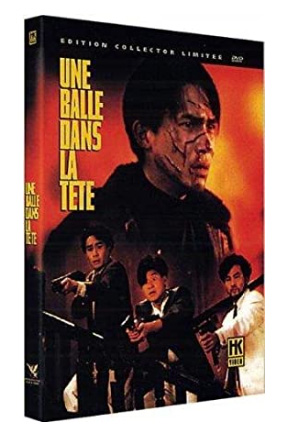
Bullet in the Head
Synopsis
In 1967, three childhood friends from Hong Kong become involved in a violent criminal incident that forces them to flee their hometown. Their journey takes them to war-torn Saigon, where they become involved in smuggling and the dangerous underground economy surrounding the Vietnam War. Their friendship is gradually destroyed by greed, betrayal and the brutal circumstances in which they find themselves. As the conflict intensifies, each man must confront the consequences of his decisions and the terrible transformation of his own character.
The film's origins
John Woo developed Bullet in the Head as a deeply personal project that reflected his interest in friendship, loyalty and the destructive consequences of violence. The filmmaker wanted to move beyond the stylized action of his earlier Hong Kong productions and create a darker historical drama. The screenplay was influenced by the political atmosphere of the Vietnam War and the social transformations experienced by Hong Kong during the 1960s. Woo also drew upon the emotional structure of classical tragic narratives, particularly stories in which friendship is gradually destroyed by conflicting ambitions. The characters were designed to represent different responses to fear, greed and moral compromise. The film was not adapted from a specific historical memoir, although it incorporates the atmosphere and circumstances of a real conflict. Its development became increasingly ambitious as Woo sought to combine a personal tragedy with large-scale action sequences. The result is one of the director's most emotionally intense works.
Critical reception and audience response
Professional reviews: Critics have often praised the film for its powerful emotional intensity and its ambitious portrayal of friendship during wartime. John Woo's direction combines spectacular action with a tragic exploration of betrayal and moral collapse. The performances of Tony Leung, Jacky Cheung and Waise Lee contribute significantly to the emotional credibility of the story. Some reviewers criticized its extreme violence and occasionally uneven narrative structure. Nevertheless, it is frequently regarded as one of Woo's most personal and uncompromising films.
Audience reception: The film developed a strong reputation among fans of Hong Kong action cinema. Its combination of spectacular gunfights, historical drama and tragic friendship attracted viewers looking for something more emotionally complex than a conventional action film. Although it was not universally successful with mainstream audiences at the time of its release, its reputation grew considerably over the following years. It is now regularly discussed as one of the essential works of John Woo's Hong Kong period.
Awards: The film received recognition at the Hong Kong Film Awards and other regional film events. Its editing attracted particular attention, reflecting the importance of rhythm and visual composition in Woo's action sequences. The production also became associated with the international reputation of Hong Kong action cinema during the early 1990s. Its influence has endured through its combination of emotional storytelling and highly stylized violence.
Behind-the-scenes stories
Director's inspirations: John Woo wanted to make a film that reflected his own memories of friendship and the changing social atmosphere of Hong Kong. He was also interested in the tragedy of individuals who become corrupted by circumstances beyond their control. The Vietnam War provided an especially powerful setting because it allowed him to explore moral disintegration against a background of extreme political and human violence.
Production challenges: The production was considerably more ambitious than many contemporary Hong Kong action films. Recreating the atmosphere of wartime Saigon required extensive sets, costumes and large-scale action sequences. The filming schedule and budget became increasingly demanding as Woo expanded the scope of the project. Creative disagreements and financial pressures also affected the production, contributing to a difficult filmmaking process. The final result nevertheless retained the director's original tragic vision.
Memorable scene: The sequences set in the Vietnamese prison are among the film's most disturbing and unforgettable moments. The characters are subjected to extreme violence and humiliation, revealing how far their friendship has deteriorated. These scenes combine claustrophobic staging, brutal action and intense performances. They demonstrate that the film's violence is intended to communicate the destruction of human dignity rather than simply provide spectacle.
Original casting: Tony Leung Chiu-wai, Jacky Cheung and Waise Lee portray the three childhood friends. Simon Yam also appears as a significant character within the story. The casting brought together actors capable of expressing both the vulnerability and brutality required by the screenplay. Their contrasting performances are essential to the emotional development of the narrative.
Themes explored
Friendship and betrayal are the central themes of the film. The three protagonists begin with shared dreams and mutual loyalty, but their relationship gradually collapses under the pressure of greed and violence. The Vietnam War represents a world in which conventional moral boundaries become increasingly difficult to maintain. The film also examines the corrupting influence of money and the way fear can transform ordinary individuals into dangerous people. Exile and displacement are important elements, as the characters leave their familiar environment and lose their sense of belonging. The story questions whether friendship can survive when personal ambition becomes more important than collective responsibility. Violence is presented as a destructive force that affects both victims and perpetrators. Ultimately, the film portrays the tragic loss of innocence and the impossibility of returning to the people one once was.
Ending explained
The final confrontation reveals the complete destruction of the friendship that originally brought the three protagonists together. Their experiences in Vietnam have transformed them into individuals who can no longer trust one another. The violence that once appeared to be a means of survival has become an expression of their deepest moral collapse. The film deliberately avoids a reassuring resolution because the consequences of their choices cannot simply be undone. The fate of the surviving characters reflects the permanent psychological damage caused by war, greed and betrayal. Their original dreams of a better life have been replaced by bitterness and regret. The ending reinforces the film's tragic vision of friendship destroyed by circumstances and personal weakness. It leaves the viewer with a profound sense of loss.
Meaning of the title
The title Bullet in the Head evokes the extreme violence that dominates the film and the devastating consequences of its characters' decisions. A bullet represents physical destruction, but it also suggests the irreversible nature of moral and psychological damage. The expression can be understood as a metaphor for a mind overwhelmed by fear, hatred and the trauma of war. It also captures the film's uncompromising approach to violence, which refuses to present conflict as an exciting or harmless spectacle. The title reflects the tragic destiny of individuals who become trapped in a cycle of brutality. Its directness is consistent with the film's harsh visual style and emotional intensity.
The original music, composed by Romeo Díaz, supports the film's dark and emotionally charged atmosphere. Rather than relying on a conventional heroic action score, the music reinforces the tragedy of the characters' experiences. Its dramatic passages accompany the most intense confrontations, while more restrained moments emphasize the loss of friendship and innocence. The soundtrack contributes to the film's distinctive combination of action and emotional despair. The music is less widely recognized than the film's visual style, but it remains an important element of its dramatic construction.
Similar films
The Deer Hunter explores the psychological destruction caused by the Vietnam War and its impact on friendship. Platoon offers another powerful portrayal of moral conflict and violence during the same historical period. The Killer, also directed by John Woo, combines stylized action with themes of loyalty and sacrifice. A Better Tomorrow examines friendship, betrayal and the possibility of redemption within the criminal underworld. City on Fire explores the conflict between personal loyalty and criminal violence. Once Upon a Time in America presents another tragic account of friendship destroyed by ambition and time. Heat explores loyalty and criminal identity through intense confrontations between opposing characters. These films share a fascination with violence, moral compromise and the fragile nature of human relationships.