

 Français
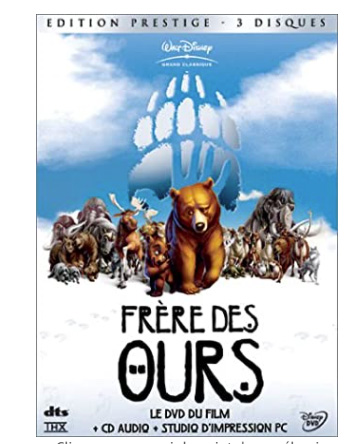
Brother Bear
Synopsis
Set in the majestic wilderness of post-ice-age Pacific Northwest, an impulsive young Native American hunter named Kenai harbors a fierce hatred for bears after a tragic encounter takes his older brother's life. Seeking reckless vengeance, he kills a bear, but the ancient Spirits punish his act of arrogance by magically transforming him into a bear himself. To regain his human form, he must journey to a mystical mountain where the northern lights touch the earth, guided by an orphaned bear cub named Koda. This emotionally resonant animated adventure explores brotherhood, empathy, and nature.
The Making of the Film
The genesis of Brother Bear came from Walt Disney Feature Animation's desire to craft a grand, traditional wilderness epic steeped in indigenous mythology and animal perspectives. Directors Aaron Blaise and Robert Walker wanted to explore the transformative power of empathy by forcing a human hunter to experience life from the viewpoint of his most hated prey. The production team spent extensive time researching Native American folklore and traveling to the Alaskan wilderness to capture authentic landscapes, lighting, and wildlife behavior. The film was one of the final major traditionally hand-drawn animated features produced by Disney before their temporary transition to full computer animation.
Critical Reception
Professional critics gave mixed-to-positive reviews to Brother Bear, praising its breathtaking hand-drawn animation, majestic orchestral score, and emotional core while noting its narrative similarities to previous Disney animal features. Reviewers commended the film for exploring grief and spiritual transformation with sincerity and visual splendor. The public response was strong, resulting in a solid box office success and enduring affection on home video. Audiences connected deeply with the touching sibling dynamic between Kenai and the talkative cub Koda. The film received an Academy Award nomination for Best Animated Feature, marking a proud achievement for Disney's traditional animation division.
Filming Anecdotes
Directors Aaron Blaise and Robert Walker drew heavy inspiration from traditional indigenous mythology, majestic national park landscapes, and wildlife documentaries to construct the natural world. Production utilized a unique artistic visual shift where the aspect ratio and color saturation widened and brightened the moment Kenai transformed into a bear, reflecting his awakening perception of nature. During the recording sessions, Joaquin Phoenix and little Jeremy Suarez improvised much of the witty brotherly banter between Kenai and Koda. Before the final plot was locked in, early story versions focused on an older human mentor character before streamlining the focus onto the bear cub companion.
Main Themes
The film explores deep themes of empathy, perspective-shifting, brotherhood, grief, forgiveness, and humanity's interconnected relationship with nature. It highlights how true maturity comes from understanding the pain of others and letting go of blind hatred and vengeance. Additionally, it celebrates family bonds that transcend species.
Ending Explanation
The climax resolves the spiritual journey when Kenai reaches the mystical mountain and prepares to be turned back into a human by the Spirits, but realizes he cannot abandon Koda, who needs protection and desperately misses his lost mother. In a selfless act of true love, Kenai chooses to remain a bear forever so he can adopt and raise Koda as his brother. The Great Spirits approve of his sacrifice, restoring human-bear harmony and honoring his transformation in the sky with a new constellation. The film ends on a serene, beautiful note of eternal brotherhood in the wild.
Title Significance
The title directly highlights the core emotional journey of the narrative: a human hunter discovering that wild animals are his brothers, culminating in an eternal bond with a young bear cub.
The film features a magnificent, critically acclaimed musical score composed by Mark Mancina and Phil Collins, highlighted by soulful songs like "No Way Out" and the uplifting anthem "Great Spirits."
NULL
The Lion King, Tarzan, Pocahontas, The Fox and the Hound