

 Français
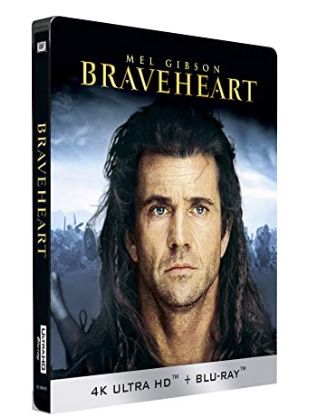
Braveheart
Synopsis
Braveheart tells the story of William Wallace, a Scottish warrior who becomes a central figure in the struggle against English domination during the late thirteenth century. After English soldiers destroy his peaceful existence and murder his beloved wife, Wallace turns his grief into a determination to fight for Scotland's independence. His courage and military successes inspire increasing numbers of Scots to join his rebellion. As the conflict intensifies, he must confront powerful political enemies, internal divisions and the brutal reality of medieval warfare. The film follows his transformation from a private individual seeking justice into a legendary symbol of resistance and national freedom.
The film's origins
The origins of Braveheart can be traced to screenwriter Randall Wallace's fascination with the historical figure of William Wallace. During research connected with his Scottish ancestry, Randall Wallace became interested in the legendary warrior and the stories surrounding Scotland's struggle for independence. His research revealed that the historical record was incomplete and that many accounts of Wallace's life came from later legends and traditional narratives. He developed a screenplay inspired by the Scottish hero, combining historical events with dramatic interpretation. Mel Gibson became interested in the project and eventually took on the roles of director and leading actor. The film draws on the historical conflict between Scotland and England during the reign of Edward I, although many characters, relationships and events have been substantially altered. It is not a direct adaptation of a single modern novel, but is influenced by historical accounts and medieval traditions surrounding William Wallace. Gibson wanted to create a large-scale historical epic that would emphasize the emotional force of the independence struggle. The production combined romantic drama, spectacular battle sequences and a powerful narrative about freedom and sacrifice.
Reviews and reception
Critical reception:
Braveheart received generally positive reviews, although critics were divided over its historical accuracy and its graphic portrayal of medieval warfare. Mel Gibson was praised for directing large-scale battle sequences with considerable energy and visual ambition. The performances, cinematography and production design were also widely recognized. Some historians and reviewers criticized the film for simplifying complex historical events and presenting several fictionalized relationships as historical facts. Nevertheless, its emotional intensity and spectacular presentation helped make it one of the most influential historical epics of the 1990s.
Audience reception:
The film became a major international box-office success and attracted audiences through its combination of action, romance and historical drama. Its portrayal of William Wallace as a symbol of resistance resonated with viewers interested in stories about national identity and freedom. The battle sequences and memorable speeches contributed significantly to its popularity. Its success also helped establish Mel Gibson as a major director of large-scale historical productions. The film has maintained a strong following through television broadcasts, home-video releases and subsequent generations of viewers.
Awards and recognition:
Braveheart won five Academy Awards at the 1996 ceremony, including Best Picture and Best Director for Mel Gibson. It also received Oscars for Best Cinematography, Best Makeup and Best Sound Effects Editing. The film received additional nominations and awards from the BAFTAs and other professional organizations. James Horner's musical score was also widely recognized and received major award nominations. These achievements established Braveheart as one of the defining historical productions of its decade.
Behind-the-scenes stories
Director's inspirations:
Randall Wallace's interest in William Wallace began after encountering historical references to the Scottish hero during research into his family background. He became fascinated by the contrast between the limited historical evidence and the extraordinary legends that had developed around Wallace. Mel Gibson wanted to create a film that would make audiences feel immersed in medieval battles rather than simply observing them from a distance. His approach emphasized physical intensity, emotional commitment and the human cost of war. The director also wanted the Scottish landscape to become an important part of the film's visual identity.
Production challenges:
The production involved large-scale battle sequences requiring hundreds of extras, horses and carefully coordinated stunt performers. Filming began in Scotland in June 1994 before continuing at other locations, including Ireland. The filmmakers constructed medieval villages and recreated historical environments with extensive production design. One major challenge was coordinating large groups of performers during complex combat scenes while maintaining the visual continuity of the action. The production also required significant costume and makeup work to represent the different armies and social classes of the period.
A memorable scene:
The Battle of Stirling Bridge is one of the film's most famous historical episodes, although the movie does not accurately reproduce the bridge as it existed in the actual battle. The sequence demonstrates Wallace's ability to use strategy and knowledge of the terrain to defeat a larger English force. Its dramatic presentation emphasizes the courage and determination of the Scottish fighters. The battle also marks a major turning point in Wallace's transformation into a national symbol. Its scale and visual intensity helped establish the film's reputation as an ambitious historical epic.
Originally considered casting:
Mel Gibson eventually became closely associated with William Wallace, both as director and leading actor. The project was developed with Gibson in mind as the central figure, although the production involved a substantial supporting ensemble. Sophie Marceau, Patrick McGoohan and Catherine McCormack were selected for important roles. Reliable documentation does not establish a definitive alternative casting list for the principal character.
Themes explored
Freedom and independence: William Wallace's rebellion represents the struggle of a people determined to govern themselves.
Sacrifice and courage: The protagonist accepts extraordinary personal risks in pursuit of a cause larger than his own survival.
Love and loyalty: His relationship with Murron provides the emotional motivation for his resistance.
National identity: The film explores the importance of shared history, language and collective memory in the formation of a nation.
Betrayal and political ambition: Internal divisions and personal interests threaten the unity of the Scottish resistance.
Justice and revenge: Wallace's initial desire for personal revenge gradually develops into a broader struggle against oppression.
The human cost of war: The battle sequences reveal the brutality and suffering behind heroic narratives of military victory.
Ending explained
The final part of Braveheart follows William Wallace after his capture by English forces. Despite being offered the possibility of mercy if he submits to English authority, he refuses to abandon his convictions. His execution is presented as an act of extraordinary physical suffering and personal resistance. Rather than begging for mercy, Wallace uses his final moments to reaffirm his commitment to freedom. His death becomes a powerful source of inspiration for the Scottish forces. Robert the Bruce, who has previously struggled between political loyalty and personal conviction, ultimately embraces the cause of independence. The film concludes with the Scottish army preparing to continue the struggle, suggesting that Wallace's sacrifice has given the movement a renewed sense of purpose. Although the ending is highly dramatized, it emphasizes the idea that an individual's courage can influence the destiny of an entire nation.
Meaning of the title
The title Braveheart refers to the courage and determination associated with William Wallace. It suggests a person whose strength comes not only from physical bravery but also from an unwavering commitment to personal convictions. In the film, the expression becomes a symbol of resistance against oppression and political domination. The title also emphasizes the emotional dimension of Wallace's struggle, which is motivated by love, grief and a desire for freedom. It transforms the protagonist into a symbolic figure whose legacy extends beyond his historical life.
Original soundtrack
The original score was composed by James Horner and is widely regarded as one of the most memorable elements of the film. Its orchestral arrangements combine sweeping strings, traditional Celtic-inspired instruments and powerful choral passages. The use of bagpipes, Irish whistles and other folk-inspired sounds gives the music a distinctive atmosphere associated with Scotland and the medieval setting. The main themes reinforce the emotional weight of Wallace's struggle and the film's images of freedom and sacrifice. Horner's work received an Academy Award nomination and remains particularly popular among fans of cinematic orchestral music.
Similar films
The Last Samurai (2003): A historical epic about honor, cultural identity and the struggle to preserve a threatened way of life.
Gladiator (2000): A dramatic historical adventure centered on revenge, political betrayal and personal sacrifice.
Kingdom of Heaven (2005): A historical epic examining religious conflict, leadership and the moral consequences of war.
The Patriot (2000): A story about resistance against colonial domination and the personal cost of fighting for independence.
Rob Roy (1995): A Scottish historical adventure exploring loyalty, justice and resistance against powerful enemies.