

 Français
Boy from Heaven
Synopsis
Adam, the son of a humble fisherman, is offered the ultimate privilege of studying at the prestigious Al-Azhar University in Cairo, the epicenter of Sunni power. Shortly after his arrival, the institution's grand imam suddenly dies, plunging the campus into a vicious power struggle. Adam unwittingly finds himself recruited as a pawn in a ruthless political and religious game orchestrated state security officers. Navigating this labyrinth of corruption and faith, he must fight to survive and protect his own soul.
The Making of the Film
Director Tarik Saleh drew inspiration from his own complex relationship with Cairo and his fascination with institutions that wield immense spiritual and political authority. He wanted to explore how young, innocent individuals become entangled in the machinery of state power and institutional corruption. The script was meticulously researched, drawing upon historical power dynamics within religious education centers. Saleh aimed to craft a gripping political thriller that operates like a classic noir detective story while addressing deep societal themes.
Critical Reception
Critics hailed the film as a masterclass in political suspense, praising its tense atmosphere, sharp writing, and immersive depiction of Cairo's hidden corridors of power. Reviewers particularly commended Tawfeek Barhom's nuanced lead performance as a young man caught between competing ideological forces. The film's ability to balance intricate geopolitical themes with a deeply human character study earned widespread international acclaim.
Audiences were captivated by the unflinching look at institutional corruption and the high-stakes chess match between religious authorities and secret police. Viewers noted that the pacing kept them on the edge of their seats from start to finish. The authentic portrayal of the university's architecture and daily student life added a layer of gritty realism that resonated strongly with global viewers.
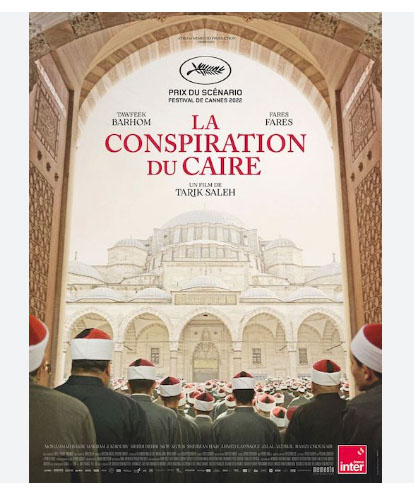
At the Cannes Film Festival, the film won the prestigious Best Screenplay award, cementing its status as a critical darling of the cinematic year. It went on to receive numerous international nominations, including submissions for Best International Feature Film. Critics' associations worldwide praised its fearless approach to sensitive subjects and exceptional directorial command.
Behind-the-Scenes Stories
Tarik Saleh was inspired to write the story after reflecting on the secretive nature of leadership elections within major religious institutions and how external political forces influence them. He spent years consulting with former insiders and researching bureaucratic procedures to ensure the depiction of state security interference felt chillingly realistic. The director wanted the film to feel like an espionage thriller set inside an ancient sanctuary.
Production faced immense logistical hurdles because filming could not take place inside the actual Al-Azhar University due to sensitive political restrictions. The crew had to scout alternative locations across different countries that could convincingly mirror Cairo's grand architecture and dusty courtyards. This required extensive set design and digital wizardry to recreate the specific atmospheric textures of the Egyptian capital.
During the filming of a tense interrogation scene in a basement archive, the lighting crew intentionally used harsh, flickering bulbs to induce genuine claustrophobia in the actors. This heightened the psychological tension, resulting in a take that made it directly into the final cut. The sound design team meticulously recorded ambient noises of Cairo street traffic to blend subtly with the echoing footsteps inside marble halls.
Casting the lead role of Adam required an exhaustive international search to find an actor who could project innocence, intelligence, and underlying terror simultaneously. Tawfeek Barhom was chosen after a series of grueling auditions that tested his emotional range. Veteran actor Fares Fares was brought in to play the cynical state security officer, creating an electric dynamic between the two leads.
Themes Explored
Corruption within powerful institutional hierarchies is a dominant theme, exposing how idealism is frequently crushed by political expediency. The film examines the fragile intersection between religious devotion and state surveillance, questioning where true loyalty should lie. Loss of innocence is portrayed through Adam's rapid disillusionment with the adults who claim to guide him. Furthermore, individual agency versus systemic oppression highlights the struggle of ordinary citizens trapped in grand geopolitical schemes.
Ending Explained
Adam manages to outmaneuver his handlers by leveraging secret knowledge he uncovered during his time at the university, securing his escape from immediate danger. However, the victory is bittersweet, as he realizes the overarching system remains entirely unchanged and corrupt leaders simply replace one another. His departure from Cairo symbolizes a permanent loss of his former pious simplicity, leaving him scarred by the harsh realities of the world. The final lingering shots emphasize that the machinery of power continues to grind on regardless of individual tragedies.
Meaning of the Title
The original Arabic title translates to Cairo Conspiracy, reflecting the political machinations at play, while the international title points to the spiritual origins and ultimate fate of the protagonist.
Similar Films
Operation Red Sea, The Nile Hilton Incident, The Report, A Prophet, Spotlight.