

 Français
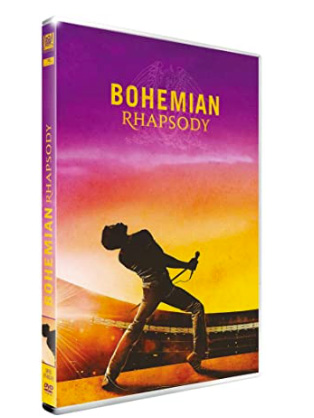
Bohemian Rhapsody
Synopsis
Bohemian Rhapsody tells the story of Freddie Mercury, from his early days as an aspiring musician to his rise as the legendary frontman of Queen. As the band develops its distinctive sound, Mercury becomes one of the most charismatic performers in rock music. His growing fame brings artistic success but also personal struggles, complicated relationships and periods of isolation. The story builds towards Queen's celebrated performance at Live Aid in 1985, a defining moment in the band's history.
The Making of the Film
The project originated from a long-standing desire to bring the story of Freddie Mercury and Queen to the big screen. Brian May and Roger Taylor, two founding members of the band, were closely involved in developing the film and ensuring that its musical history was represented. Early versions of the project considered Sacha Baron Cohen for the role of Mercury, but disagreements over the tone and direction of the screenplay led to his departure. Rami Malek was eventually cast after the filmmakers recognised his ability to portray Mercury's distinctive stage presence and complex personality. The screenplay was written by Anthony McCarten, who had previously worked on several biographical dramas. Bryan Singer was initially hired to direct, although he was dismissed before the end of production and replaced by Dexter Fletcher. The film combines documented events with dramatic simplifications and changes to the chronology of Queen's history. Its central ambition was to introduce Mercury's life and music to a broad international audience while celebrating the band's extraordinary cultural influence.
Critical Reception
Professional Reviews
Bohemian Rhapsody received mixed reviews from professional critics, despite its considerable popularity with audiences. Rami Malek's performance as Freddie Mercury was widely praised, particularly for his physical transformation and recreation of the singer's stage mannerisms. The musical sequences and the recreation of Queen's concerts were also frequently highlighted as major strengths. However, several critics felt that the screenplay followed a conventional biographical formula and simplified important aspects of Mercury's life. The film was also criticised for altering the chronology of certain events and presenting a dramatised version of the band's history. Nevertheless, many reviewers recognised its entertainment value and the emotional impact of its musical performances.
Audience Reception
The film became a major international box-office success, attracting both Queen fans and viewers who were discovering the band's music for the first time. Audiences responded particularly enthusiastically to the concert sequences and the recreation of the Live Aid performance. Rami Malek's portrayal of Mercury was a major factor in the film's popularity. The soundtrack also benefited from renewed interest in Queen's catalogue, with several songs returning to streaming and sales charts. Some fans debated the historical liberties taken by the screenplay, but the film nevertheless established itself as one of the most successful music biopics of its time.
Awards
Bohemian Rhapsody received five Academy Award nominations and won four Oscars, including Best Actor for Rami Malek, Best Film Editing, Best Sound Editing and Best Sound Mixing. It also won the Golden Globe for Best Motion Picture – Drama. Malek received numerous additional awards for his portrayal of Freddie Mercury, including recognition from major actors' and critics' organisations. The film was also honoured at the BAFTA Awards, where it received several nominations and won for sound. Its awards success was particularly notable given the divided critical response. The recognition confirmed the impact of Malek's performance and the film's technical achievements.
Behind the Scenes
Director Inspirations
The filmmakers wanted to celebrate Queen as a band whose music crossed generations and musical genres. The story was shaped with the involvement of Brian May and Roger Taylor, who provided first-hand knowledge of the group's history. Their participation helped the production recreate the atmosphere of recording sessions, rehearsals and major concerts. The film also draws on the visual language of concert documentaries, particularly in its effort to reproduce Mercury's extraordinary relationship with live audiences.
Production Challenges
One of the production's major challenges was recreating the Live Aid concert at Wembley Stadium. The original event was reconstructed with remarkable attention to detail, including the stage, costumes, instruments and movements of the performers. The production team used a combination of large sets, visual effects and carefully choreographed camera movements to reproduce the scale of the concert. Rami Malek also had to learn Mercury's gestures, posture and distinctive way of moving on stage. The film required extensive musical preparation so that the actors could convincingly portray members of one of the most recognisable rock bands in history.
A Particular Scene
The Live Aid sequence is the film's most famous set piece. The production recreated Queen's 1985 performance at Wembley, including the piano, microphone stand and Freddie Mercury's characteristic movements. The actors performed to carefully prepared recordings that combined Mercury's original vocals with reconstructed musical elements. The sequence was designed to reproduce the energy and atmosphere of the historic concert. Its detailed staging makes it one of the film's most memorable moments.
Casting
Sacha Baron Cohen was initially attached to play Freddie Mercury, but he left the project after disagreements about the screenplay and the portrayal of the singer. Ben Whishaw was also considered during the development process. Rami Malek was ultimately selected for the role, while Gwilym Lee, Ben Hardy and Joseph Mazzello portrayed Brian May, Roger Taylor and John Deacon. The final ensemble was built around the physical resemblance and musical preparation required to recreate Queen.
Themes
Identity and self-expression are central to Bohemian Rhapsody. Freddie Mercury is portrayed as a performer who uses music and the stage to express parts of himself that remain difficult to communicate in everyday life. The film explores the tension between public fame and private loneliness, showing how admiration from millions of people does not necessarily provide emotional security. Friendship and artistic collaboration are also important themes, particularly through Mercury's relationship with the other members of Queen. The band's creative process illustrates how different personalities can produce something extraordinary when they work together. The story also examines the search for belonging, as Mercury struggles with his family background, personal identity and relationships. Love, acceptance and the need for genuine human connection become increasingly important as his career develops. His experiences reveal the emotional cost of excess and isolation. Ultimately, the film celebrates the freedom to be different and the power of music to bring people together.
Ending Explained
The film culminates in Queen's performance at Live Aid in July 1985. Before the concert, Mercury has reconciled with the band and informed his fellow musicians about his HIV diagnosis. The group then takes the stage and delivers a performance that becomes a defining moment in its history. The sequence symbolises Mercury's return to the collective spirit of Queen after a period of personal and professional separation. It also shows how music allows him to communicate with an enormous audience despite the private difficulties he faces. The concert is presented as a triumph, although the audience knows that Mercury's life will eventually be cut short by illness. The film closes by emphasising his artistic legacy and the lasting influence of Queen's music. Historically, the screenplay takes liberties with the timing of certain events, including the chronology of Mercury's diagnosis. The ending is therefore best understood as an emotional celebration rather than a strictly accurate reconstruction of the band's history.
Meaning of the Title
The title Bohemian Rhapsody comes from Queen's famous song of the same name, released in 1975. The expression combines the idea of a rhapsody, a musical composition with contrasting sections, with the word bohemian, associated with unconventional lifestyles and artistic freedom. The song itself is known for its unusual structure, moving between ballad, opera and hard rock. Its refusal to follow conventional musical rules reflects the creative identity of Queen and Freddie Mercury. The title also captures the film's interest in individuality, experimentation and the freedom to challenge expectations. By choosing the name of the band's most recognisable songs, the filmmakers connect the story directly to its musical legacy.
Original Soundtrack
The soundtrack is one of the film's defining features and brings together many of Queen's most famous recordings. It includes Bohemian Rhapsody, We Will Rock You, We Are the Champions, Another One Bites the Dust and Somebody to Love. The album also features recordings connected to the Live Aid performance and other important moments in the band's career. Rather than relying on a conventional orchestral score, the film uses Queen's music to structure much of its emotional and dramatic impact. The soundtrack became a major commercial success and introduced the group's catalogue to a new generation of listeners.
Similar Films
- Rocketman (2019), a musical biopic about Elton John and his rise to international fame.
- Walk the Line (2005), a portrait of Johnny Cash and the personal struggles behind his musical career.
- Elvis (2022), a biographical drama about the life and cultural influence of Elvis Presley.
- The Doors (1991), Oliver Stone's film about Jim Morrison and the legendary rock band.
- Straight Outta Compton (2015), a music biopic about the rise of the influential hip-hop group N.W.A.