

 Français
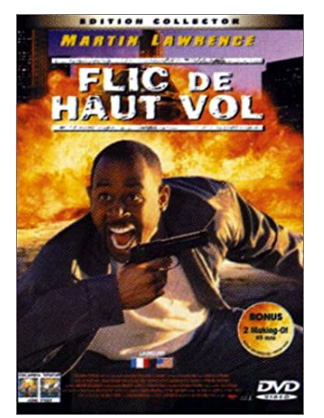
Blue Streak
Synopsis
Miles Logan is a skilled jewel thief who participates in the theft of a valuable diamond. When the robbery goes wrong, he hides the precious stone inside a construction site before being arrested. After spending two years in prison, he returns to retrieve his treasure, only to discover that the site has become a high-security police station. To recover the diamond, Miles disguises himself as a police detective and infiltrates the department. His criminal experience unexpectedly helps him solve cases and impress his colleagues, creating an increasingly complicated situation in which he must maintain his false identity while avoiding suspicion.
The film's origins
Blue Streak was developed as an action comedy built around a familiar but effective premise: a criminal who must pretend to be a police officer in order to accomplish a personal objective. Screenwriters Michael Berry and John Blumenthal developed the story around the character of Miles Logan, a professional thief whose intelligence and criminal experience become unexpectedly useful inside a police department. Director Les Mayfield was attracted to the combination of action, disguise and comedy, which offered opportunities for both physical humor and elaborate police sequences. Martin Lawrence was selected for the central role because of his energetic comic personality and his ability to create humor through improvisation and dialogue. The filmmakers also wanted to contrast Logan's unconventional methods with the more traditional approach of the officers around him. The story was conceived as an original fictional screenplay rather than an adaptation of a novel or a specific real-life event. Its central situation allowed the production to combine the conventions of the heist film with those of the police buddy comedy. The resulting film uses mistaken identity as the foundation for a succession of comic and action-driven situations.
Reviews and reception
Professional critical reviews:
Blue Streak received mixed reviews from professional critics. Martin Lawrence's energetic performance was generally recognized as one of its strongest elements, particularly his ability to create comic situations from an otherwise familiar action premise. Some reviewers appreciated the film's entertaining pace and the chemistry between Lawrence and Luke Wilson. Others considered its plot predictable and its humor dependent on conventional action-comedy formulas. The film was not regarded as particularly innovative, but its straightforward entertainment value was widely acknowledged.
Audience reception:
The film performed successfully with audiences, especially younger viewers attracted by Martin Lawrence's comedy and the police-action setting. It opened at the top of the North American box office in September 1999, earning approximately $19.2 million during its opening weekend. Its mixture of action, disguises and humorous misunderstandings proved commercially effective. The film subsequently maintained a recognizable presence through television broadcasts and home-video releases. Its popularity was strengthened by its accessible premise and the contrast between the two principal characters.
Awards and recognition:
Blue Streak did not receive major Academy Award or Golden Globe recognition. Its principal achievement was its commercial performance and its popularity as an action comedy. Martin Lawrence's performance helped reinforce his position as a successful leading actor in the genre during the late 1990s. The film also attracted attention for its musical selections and energetic presentation. Although its awards record was limited, it remains a recognizable example of the police comedies released during that period.
Behind-the-scenes stories
Director's inspirations:
Les Mayfield approached the project as an opportunity to combine the conventions of the heist movie with those of the police comedy. The central character was designed to be a criminal whose professional skills would unexpectedly make him effective as a detective. The director was interested in the humor created by the difference between what Miles knows about criminal behavior and what his new colleagues believe about him. This contrast provides the foundation for much of the film's comedy.
Production challenges:
The production needed to recreate a convincing police station while maintaining the fast rhythm of an action comedy. Numerous scenes required coordination between actors, vehicles, stunt performers and background police personnel. The filmmakers also had to make Miles's false identity believable enough to sustain the story while ensuring that his criminal behavior remained visible to the audience. The action sequences and comic misunderstandings required careful timing to preserve the film's entertainment value.
A memorable scene:
The sequence in which Miles begins acting like an experienced police detective is particularly important to the film's humor. His criminal knowledge allows him to recognize situations and anticipate suspicious behavior in ways that surprise his colleagues. Instead of simply trying to avoid attention, he gradually becomes involved in police operations and earns an unexpected reputation. This reversal is central to the comedy because the very skills that made him a successful thief help him appear to be an excellent investigator.
Originally considered casting:
Martin Lawrence was selected to lead the film as Miles Logan, while Luke Wilson was cast as his police partner, Carlson. The contrast between Lawrence's energetic personality and Wilson's more restrained performance was an important element of the casting approach. There is insufficient reliable public documentation to establish a definitive list of alternative actors initially considered for these principal roles.
Themes explored
Identity and deception: Miles must constantly maintain a false identity, revealing the complicated relationship between appearances and reality.
Crime and justice: The film explores the irony of a criminal using his knowledge of illegal activities to become an effective police investigator.
Intelligence and adaptability: Miles demonstrates that observation, experience and the ability to adapt can be valuable in unexpected environments.
Friendship and trust: His relationship with Carlson gradually develops despite being founded on a deception.
Ambition and survival: The diamond represents both Miles's desire for financial security and his determination to recover what he believes is rightfully his.
Professional ethics: The story creates comic situations around the contrast between criminal instincts and the responsibilities associated with law enforcement.
Ending explained
The final part of the story brings Miles closer to recovering the diamond that he originally hid before his arrest. His false identity has become increasingly difficult to maintain because his colleagues now trust him and expect him to behave like a genuine detective. The investigation and the search for the jewel eventually converge, forcing Miles to confront the consequences of his deception. His relationship with Carlson also becomes more complicated because the rookie detective has developed genuine respect for his supposed partner. The resolution demonstrates that Miles's experience and quick thinking have allowed him to succeed in an environment that should have exposed him as an impostor. At the same time, his journey has changed his understanding of responsibility and human relationships. The film concludes by resolving the central diamond plot while preserving the comic spirit of a character who has spent the entire story pretending to be someone else.
Meaning of the title
The title Blue Streak refers to the informal association between police officers and the blue uniforms traditionally worn by law enforcement personnel. The expression also suggests speed and constant movement, reflecting the film's energetic action-comedy style. The protagonist spends much of the story attempting to move quickly between his criminal objective and his invented police identity. The title therefore evokes both the police environment and the fast-paced rhythm of the narrative. It is a concise expression that connects the film's central setting with its action-oriented personality.
Original soundtrack
Blue Streak features a soundtrack that contributes significantly to its energetic urban atmosphere. The music includes selections associated with artists such as Jay-Z, Foxy Brown and Tyrese, alongside contributions involving Heavy D. These tracks reinforce the film's contemporary late-1990s setting and complement the action sequences. Rather than relying exclusively on an orchestral score, the production uses popular music to create a recognizable urban identity. The soundtrack is an important part of the film's presentation and helps distinguish it from more traditional police comedies.
Similar films
Beverly Hills Cop (1984): An action comedy about an unconventional investigator who disrupts established police procedures.
National Security (2003): A comedy involving police work, misunderstandings and an unlikely partnership.
The Other Guys (2010): A police comedy built around unconventional detectives and unexpected investigative abilities.
Rush Hour (1998): An action comedy combining crime investigations, cultural misunderstandings and the chemistry between two very different partners.
Bad Boys (1995): A police action comedy featuring energetic performances, criminal investigations and humorous confrontations.