

 Français
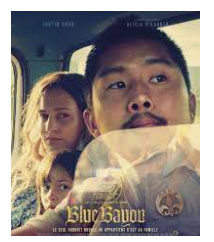
Blue Bayou
Synopsis
Antonio LeBlanc is a Korean-born man who was adopted by an American family as a child and has lived in Louisiana all of his life. He is trying to build a stable life with his wife Kathy and her daughter, and they are expecting another child. An unfortunate encounter with the police brings him into contact with immigration authorities. Antonio discovers that his legal status is not what he thought, and that he could be deported from the only country he has ever known.
The Making of the Film
Blue Bayou was written and directed by Justin Chon, who also stars as Antonio. The film was inspired by the real stories of international adoptees in the United States who were never granted citizenship because of gaps in the law and were later deported. Chon said that he wanted to bring attention to a little-known injustice, and he shot the film in New Orleans on 16 mm film. Alicia Vikander plays Kathy, and Linh Dan Pham, Mark O'Brien and Emory Cohen appear in supporting roles. The film premiered in the Un Certain Regard section at the Cannes Film Festival in 2021 and was released in the United States in September of that year.
Critical Reception
Summary of professional reviews
Critics were generally positive. They praised the emotional force of the story, the performances of Justin Chon and Alicia Vikander, and the film's grainy, tactile visuals. Some felt that the plot leaned too heavily on melodrama, but most agreed that it was a moving and important film.
Public reception
The film had a modest release but found an appreciative audience, many of whom were moved by its subject. It helped to raise awareness of the issue of adoptee deportation in the United States.
Themes Explored
The film is about identity, belonging and the arbitrary nature of borders. Antonio is American in every way but on paper, and the story shows how a legal technicality can threaten to destroy a family. It also explores the memory of childhood trauma, fatherhood and love in the face of injustice. Racism and the failings of the immigration system are at the heart of the drama. The setting of the Louisiana bayou gives the story a poetic and melancholy atmosphere.
Ending Explained
After a last attempt to prove his place in the country fails, Antonio is taken by immigration officers and deported. The film ends with a heartbreaking farewell to his wife and daughter, who are left behind. The final scenes use dreamlike images of the bayou to evoke his memories and his sense of loss, ending on a note of grief rather than resolution.
Meaning of the Title
The title refers to the song Blue Bayou, a classic of American popular music that evokes a longing for home. In the film, it becomes a symbol of the place that Antonio feels he belongs to, and that he is in danger of losing.
Original Soundtrack
The film uses the song Blue Bayou, in the style of the beloved version by Linda Ronstadt, as an emotional anchor. The music underlines the story's themes of longing and home.
Similar Films
For other films about immigration and belonging, try Minari, Lion and Beasts of the Southern Wild. Justin Chon's earlier film Gook is another work from the same director. Brooklyn and The Namesake also explore characters between two worlds.