

 Français
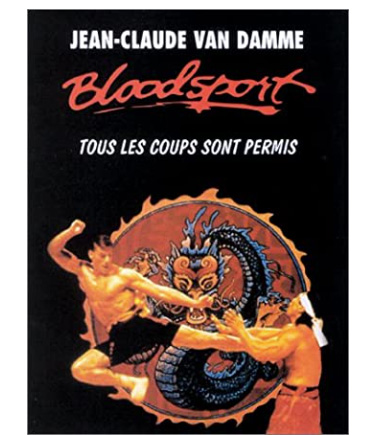
Bloodsport
Synopsis
Frank Dux is a martial artist who travels to Hong Kong to participate in an underground fighting tournament known as the Kumite. There, fighters from different countries compete in brutal matches governed by few conventional rules. Dux faces increasingly dangerous opponents while developing a rivalry with the powerful champion Chong Li. As the tournament progresses, he must rely on his training, discipline and determination to survive. The film is inspired by claims made by martial artist Frank Dux, although important parts of his story have been disputed.
The film's origins
Bloodsport was inspired by the story told by martial artist Frank Dux, who claimed to have participated in a secret international fighting competition called the Kumite. The filmmakers adapted these claims into an action screenplay centered on an American fighter entering an underground tournament in Hong Kong. Sheldon Lettich developed the screenplay with Christopher Cosby and Mel Friedman, creating a structure that allowed the story to focus on a series of increasingly difficult martial arts confrontations. Producer Mark DiSalle recognized the potential of a relatively inexpensive martial arts film featuring a charismatic physical performer. Jean-Claude Van Damme was selected for the leading role, and the project became an important opportunity to showcase his martial arts abilities. Director Newt Arnold helped shape the tournament into a succession of visually distinct fights. The story uses elements of martial arts mythology, personal honor and athletic competition. Although the film presents itself as being based on real events, several of Dux's historical claims have been questioned and could not be independently verified.
Critical reception
Professional reviews were mixed when Bloodsport was released. Some critics considered its plot simplistic and its dialogue conventional, while others appreciated the clarity and energy of its martial arts sequences. The film was frequently described as a straightforward tournament adventure rather than a sophisticated dramatic production. Jean-Claude Van Damme's physical performance and fighting skills attracted particular attention. Its limited budget was visible in certain production elements, but the action sequences gave the film a distinctive identity.
Audience reception was much more enthusiastic among martial arts fans. The film became a cult favorite thanks to its memorable tournament structure, colorful opponents and spectacular fights. Viewers particularly enjoyed the contrast between Dux's disciplined approach and Chong Li's brutal fighting style. The movie helped introduce Van Damme to a large international audience and became one of the defining titles of his early career. Its popularity continued through home video, television broadcasts and repeated references in martial arts culture.
Bloodsport did not receive major Academy Award recognition or become a significant awards contender. Its importance is primarily connected to its influence on martial arts action cinema and the development of Van Damme's career. The film helped revive interest in tournament-based martial arts stories in American commercial cinema. Its reputation grew considerably after its original theatrical release, especially among audiences who appreciated practical fighting choreography. Today, it is remembered more for its cult status and action sequences than for formal awards.
Behind-the-scenes stories
Newt Arnold and the production team wanted the film to have an international atmosphere that would distinguish it from conventional American action movies. The original story placed the Kumite in the Bahamas, but the filmmakers chose Hong Kong because its streets, architecture and martial arts reputation offered a more exciting visual setting. The city also provided an environment that was not yet overused in American action productions of the period. The production began filming in Hong Kong in October 1986. It was reported as the first American feature film shot there since 1969.
The production had to organize numerous martial arts sequences involving performers with different fighting styles. Each opponent needed a recognizable physical identity so that the tournament would feel like a progression of increasingly difficult challenges. Van Damme's experience in martial arts allowed him to perform many of the movements himself. The relatively modest budget required the crew to concentrate resources on the fights rather than elaborate sets or large-scale action effects. The result is a film whose visual appeal depends heavily on physical performance and choreography.
The tournament sequences are the film's most memorable feature. The fight between Frank Dux and Chong Li is particularly important because it transforms the competition into a personal confrontation. Chong Li uses intimidation and brutal tactics, while Dux attempts to maintain discipline and composure. The filmmakers use the audience surrounding the fighting platform to create the atmosphere of an underground sporting event. The final match brings together the film's central ideas of courage, endurance and self-control.
Themes
Bloodsport explores discipline, perseverance and the meaning of martial arts beyond physical strength. Frank Dux must learn that winning requires more than technical ability and aggression. The tournament places him against opponents who use very different approaches to combat, forcing him to adapt. The film also contrasts honor with cruelty through the rivalry between Dux and Chong Li. Friendship and loyalty are represented by Dux's relationship with fellow fighter Ray Jackson. The story presents martial arts as a combination of physical training, mental concentration and personal responsibility. It also uses the tournament as a symbolic test of identity, where each competitor must reveal what motivates them. Ultimately, the film suggests that true mastery involves controlling oneself rather than simply defeating others.
Ending explained
The final match places Frank Dux against Chong Li, the tournament's most feared competitor. Chong Li initially dominates the confrontation through his strength and willingness to use brutal tactics. He blinds Dux temporarily by throwing a substance into his eyes, creating an apparently decisive advantage. Dux must then rely on his training and memory rather than his normal visual perception. He gradually regains control of the fight and defeats Chong Li. His victory is not presented merely as the triumph of physical power, but as proof of discipline under extreme pressure. The tournament organizers recognize him as the champion, confirming that he has passed the ultimate test. The ending also resolves the rivalry between Dux and Chong Li while reinforcing the importance of perseverance. It closes the story as a classic martial arts triumph in which determination and self-control overcome intimidation.
Meaning of the title
Bloodsport refers to the brutal nature of the Kumite, where fighters compete in violent matches that can result in serious injury. The word combines the idea of sport, with its rules and competitive structure, with the danger of bloodshed. This contradiction captures the atmosphere of the tournament. The participants are athletes, but their competition is far removed from ordinary sporting events. The title also suggests that the film is concerned with physical sacrifice and the extreme limits of human endurance. It is direct, memorable and immediately communicates the violent action at the center of the story.
Similar films
Enter the Dragon is an essential companion for viewers interested in underground martial arts tournaments and international fighting styles. Kickboxer also features Jean-Claude Van Damme in a story about training, revenge and martial arts discipline. The Quest, another film starring Van Damme, explores a dangerous international fighting competition. Best of the Best focuses on martial artists representing their country in a high-pressure tournament. Ong-Bak offers spectacular physical combat and practical martial arts choreography. For a more modern tournament-based action film, Undisputed II: Last Man Standing is also a strong recommendation.