

 Français
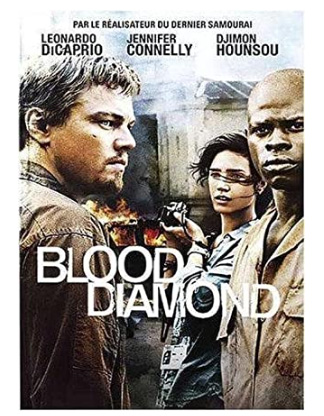
Blood Diamond
Synopsis
During the civil war in Sierra Leone in 1999, former soldier and diamond smuggler Danny Archer discovers that a fisherman named Solomon Vandy has found an exceptionally valuable pink diamond. Solomon has hidden the stone after being forced to work in a rebel-controlled diamond mine, where he witnessed terrible violence. Hoping to find his missing son, who has been recruited as a child soldier, Solomon reluctantly agrees to cooperate with Archer. The two men are joined by journalist Maddy Bowen, who wants to expose the international networks financing the conflict through illegal diamond trading. Their dangerous journey reveals the human cost behind the global diamond industry. As their interests gradually converge, each man must decide what he is willing to sacrifice for a better future.
The Film's Origins
Blood Diamond was developed from an original screenplay by Charles Leavitt, inspired by the civil war in Sierra Leone and the international trade in conflict diamonds. The project emerged during a period of growing international attention surrounding the role of diamonds in financing armed conflicts in Africa. Producer Paula Weinstein and the creative team wanted to combine a political thriller with a personal story about survival and moral responsibility. Director Edward Zwick was particularly interested in exploring the relationship between Western consumer demand and violence in developing countries. The screenplay draws on historical realities, although its principal characters and their individual adventures are fictional. Leonardo DiCaprio became involved as Danny Archer, while Djimon Hounsou was cast as Solomon Vandy. Jennifer Connelly joined the production as journalist Maddy Bowen. Filming took place in South Africa and Mozambique, which provided locations resembling the landscapes of Sierra Leone. The film was released in 2006 and helped bring the issue of conflict diamonds to a wider international audience.
Critical Reception
Professional Reviews: Blood Diamond received generally favorable reviews, particularly for its performances and its treatment of an important political issue. Leonardo DiCaprio was widely praised for his convincing South African accent and his portrayal of a morally compromised diamond smuggler. Djimon Hounsou received considerable recognition for his emotionally powerful performance as Solomon Vandy. Critics also appreciated Edward Zwick's ability to combine large-scale action with an examination of humanitarian suffering. Some reviewers considered the film overly conventional in its thriller structure and criticized certain aspects of its political presentation. Nevertheless, its central subject and strong performances made it an important production of 2006.
Audience Reception: The film attracted considerable attention from international audiences and performed successfully at the box office. Viewers responded strongly to its depiction of the human consequences of the diamond trade and the civil war in Sierra Leone. The relationship between Archer and Solomon provided the emotional foundation of the story. Its action sequences and dramatic tension also helped attract audiences who might not normally watch political dramas. The film contributed to broader public discussions about ethical diamond sourcing and the Kimberley Process. Its reputation remains closely associated with its humanitarian message.
Awards and Recognition: Blood Diamond received five Academy Award nominations, including Best Actor for Leonardo DiCaprio and Best Supporting Actor for Djimon Hounsou. It was also nominated for Best Film Editing, Best Sound Editing, and Best Sound Mixing. The film received additional recognition from several international critics' organizations. Its performances and technical achievements were widely acknowledged during the 2007 awards season. Although it did not win an Academy Award, its nominations confirmed its position as one of the year's most significant political thrillers.
Behind-the-Scenes Stories
Director's Inspirations: Edward Zwick wanted to explore the connection between international consumer markets and the violence associated with the diamond trade. He was particularly interested in showing how a valuable luxury product could finance armed groups and contribute to human suffering. The director also wanted to avoid presenting the African characters merely as background figures in a Western adventure. Solomon's relationship with his family therefore became a central emotional element of the story. Zwick combined political research with the conventions of an action thriller to make the subject accessible to a broad audience.
Production Challenges: Filming required extensive logistical preparation because the production recreated dangerous wartime environments and remote African landscapes. South Africa and Mozambique were selected to represent different parts of Sierra Leone. The production involved large groups of extras, military vehicles, complex action sequences, and difficult outdoor locations. The cast also needed to prepare for scenes depicting armed conflict and humanitarian emergencies. Maintaining a convincing historical atmosphere while coordinating a large international crew was another significant challenge.
Memorable Scene: The sequence in which Solomon is forced to work in the diamond mine is particularly disturbing. It reveals the brutality of the conflict and the human cost behind the stones being extracted. The scene becomes even more powerful when Solomon discovers the pink diamond and realizes that it could potentially change his family's future. His decision to hide the stone rather than surrender it to the armed men establishes the central conflict of the film. The contrast between the diamond's beauty and the violence surrounding its discovery is especially striking.
Originally Considered Casting: Leonardo DiCaprio was selected to play Danny Archer, while Djimon Hounsou received the role of Solomon Vandy. Jennifer Connelly was cast as Maddy Bowen, completing the principal trio. DiCaprio undertook considerable preparation to develop the accent and mannerisms of his character. Hounsou's performance was particularly important because Solomon represents the emotional and humanitarian center of the story. There is no sufficiently documented complete list of alternative actors seriously considered for all the leading roles.
Themes Explored
Blood Diamond explores exploitation, civil war, corruption, family, greed, and the moral responsibility of consumers. Its central subject is the human suffering associated with the extraction and international trade of conflict diamonds. The film illustrates how natural resources can become instruments of violence when powerful groups use them to finance armed struggles. Solomon's determination to find his son represents the strength of family bonds in the face of extreme adversity. Danny Archer embodies the moral compromises of someone who has learned to survive through corruption and manipulation. Maddy Bowen represents the importance of investigative journalism and the responsibility to expose hidden injustices. The film also examines the recruitment of children into armed groups and the destruction of ordinary communities. Ultimately, it questions whether personal choices can help challenge systems built on exploitation.
Ending Explained
During the final confrontation, Danny Archer is seriously wounded while helping Solomon and his son escape from the forces pursuing them. Realizing that he cannot survive, he decides to make one final sacrifice. He contacts Maddy Bowen and arranges for her to receive evidence about the diamond trade and the people involved in financing the conflict. He also ensures that Solomon can escape with his family and the valuable pink diamond. Danny then remains behind, accepting his fate while watching the landscape around him. His final actions demonstrate that he has finally moved beyond the selfish instincts that dominated much of his life. Solomon succeeds in reuniting with his family and uses the diamond to secure a different future. Maddy publishes the story, helping expose the international network behind the illegal trade. The ending suggests that personal redemption is possible, although it cannot undo the suffering caused by war and exploitation.
Meaning of the Title
The title Blood Diamond refers to diamonds mined and sold to finance armed conflicts, particularly in parts of Africa. These stones become associated with violence, forced labor, corruption, and the suffering of civilian populations. The word blood emphasizes the human lives sacrificed to obtain a luxury product that is often presented as a symbol of love and celebration. The title also reflects the film's central contradiction: something visually beautiful can conceal an extremely brutal history. It therefore serves as both a description of the central object and a criticism of the international systems that profit from conflict.
Original Soundtrack
James Newton Howard composed the original score, creating an orchestral soundtrack that combines African musical influences with the dramatic language of a political thriller. The music reinforces the emotional intensity of Solomon's search for his family and Danny's personal transformation. Percussive elements and regional musical textures help establish the African setting. The score also provides a strong contrast between moments of intimate emotion and the large-scale action sequences. Its musical atmosphere contributes significantly to the film's dramatic impact.
Similar Movies
Films exploring comparable subjects include The Constant Gardener, which examines corruption, exploitation, and international corporate interests in Africa. Hotel Rwanda portrays the human consequences of political violence and ethnic conflict. Lord of War investigates the international arms trade and the moral compromises of a criminal businessman. Tears of the Sun explores military intervention and humanitarian suffering in an African conflict. Beasts of No Nation examines the recruitment of children into armed groups. These films share Blood Diamond's interest in war, exploitation, and the consequences of international economic interests.