

 Français
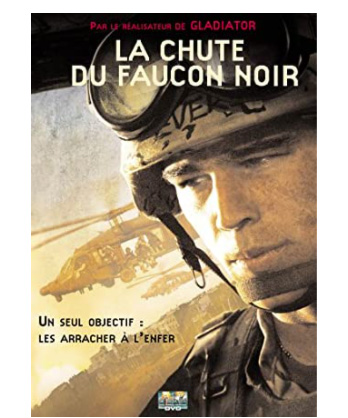
Black Hawk Down
Synopsis
In October 1993, American Rangers and Delta Force soldiers are sent into Mogadishu, Somalia, on what is supposed to be a quick mission to capture two lieutenants of a warlord. When two Black Hawk helicopters are shot down, the operation spirals into a brutal, hours-long battle through the city's streets. Surrounded and outnumbered, the soldiers fight to survive and to leave no man behind. The film is an intense, immersive recreation of one of the most harrowing urban battles in modern American history.
The Making of the Film
Black Hawk Down is based on the 1999 book of the same name by journalist Mark Bowden, which chronicled the Battle of Mogadishu through interviews with participants. Producer Jerry Bruckheimer acquired the rights and brought in Ridley Scott to direct. Scott wanted to convey the chaos and confusion of the battle as experienced by the soldiers, rather than present a broad political analysis. The screenplay, by Ken Nolan, condensed a large cast of real people into a more manageable group of characters. The film was released in late 2001 and expanded nationwide in early 2002.
Reviews and Reception
Summary of Professional Reviews
Critics praised the film's technical mastery, particularly its visceral combat sequences, cinematography and sound design. Many admired the way it captured the confusion and horror of war. Some reviewers criticized the thin characterization and the limited perspective on the Somali people, who are largely portrayed as an anonymous mass.
Audience Reception
Audiences responded strongly, and the film was a commercial success. Veterans and military families often praised its authenticity, while others debated its portrayal of the conflict. It remains a landmark of modern war cinema.
Awards Won
The film won two Academy Awards, for Best Film Editing and Best Sound, and received nominations for Best Director and Best Cinematography. It was widely recognized for its technical excellence.
Filming Anecdotes
Director's Inspirations
Ridley Scott wanted to immerse the audience in the experience of the soldiers, using handheld cameras and rapid cutting to create a sense of chaos. He relied on the testimonies in Bowden's book to keep the story grounded in reality.
Production Difficulties
The movie was shot in Morocco, where parts of the city were transformed to resemble Mogadishu. Military helicopters and extensive pyrotechnics were used in the action sequences. The cast attended a military boot camp to prepare for the physical demands and to bond as a unit.
Anecdote About a Particular Scene
Tom Hardy made his film debut in Black Hawk Down in a small role as a young soldier. The film also features early appearances from a number of actors who would go on to become major stars, including Orlando Bloom and Eric Bana.
Themes Explored
Black Hawk Down is a study of brotherhood and the unwritten code that no soldier is left behind. It portrays the brutality and confusion of modern urban warfare, where the line between combatant and civilian is blurred. The film explores courage and fear, showing that heroism often comes in small moments of loyalty. It also touches on the limits of military power and the unintended consequences of intervention. Rather than glorifying war, it highlights its human cost.
Ending Explained
After a night of fighting, the surviving soldiers are rescued by a convoy and make a harrowing run, known as the Mogadishu Mile, to safety. The film acknowledges the heavy losses on both sides and ends with a somber quotation about war. The final scenes show the men grappling with the trauma of what they have experienced. The ending refuses to celebrate a victory, focusing instead on survival and remembrance.
Meaning of the Title
The title refers to the shooting down of the UH-60 Black Hawk helicopters, the event that turned a planned raid into a desperate battle. It also serves as a stark image of American military power brought low. The phrase "down" captures the sense of a fall from confidence to crisis.
Original Soundtrack
Hans Zimmer's score blends driving percussion, electronic textures and African-inspired vocals to match the film's intensity. The music underscores both the chaos of combat and the haunting sorrow of loss.
Similar Films
- Saving Private Ryan: a landmark portrayal of combat and sacrifice.
- We Were Soldiers: another drama about a real battle.
- Hurt Locker: a tense modern war thriller.
- Lone Survivor: a gritty story of survival and brotherhood.