

 Français
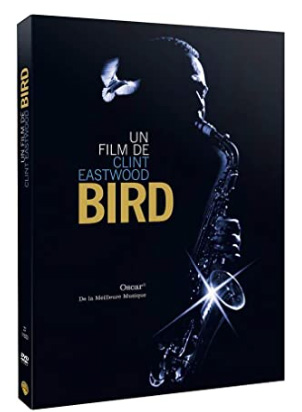
Bird
Synopsis
The film follows the life of Charlie Parker, the legendary jazz saxophonist whose extraordinary musical talent transformed modern jazz. Through a series of memories and shifting moments in time, it explores his rise from a young musician to one of the most influential artists of the twentieth century. Parker experiences professional triumphs alongside destructive personal struggles involving addiction, relationships and emotional instability. His complicated relationship with his wife Chan forms an important part of the story. The film portrays both the brilliance of his music and the personal cost of his turbulent life.
Film Origins
The screenplay for Bird was written by Joel Oliansky and originally developed several years before Clint Eastwood became involved. Producer Ray Stark acquired the script around the end of the 1970s, with Richard Pryor initially considered for a production centered on Charlie Parker. That version never came to fruition, and the screenplay remained unused for several years. Eastwood discovered the material and became deeply interested in bringing Parker's story to the screen. His fascination with jazz was not new: he had been an admirer of the music since his youth and had a particular interest in Parker's recordings. Eastwood saw the film as an opportunity to explore the relationship between artistic genius and personal destruction. He also wanted the music to play a central dramatic role rather than simply accompany the images. Forest Whitaker was selected to portray Parker, while Diane Venora played Chan Parker. The result was an unconventional musical biography that moves through memories and episodes rather than following a strictly chronological structure.
Critical Reception
Professional critics praised the film for its ambitious treatment of Charlie Parker's life and music. Forest Whitaker received particularly strong reviews for his sensitive and physically convincing portrayal of the saxophonist. Clint Eastwood's direction was also admired for its restraint and its willingness to let the music shape the narrative. Some reviewers considered the film overly long and found its fragmented chronology challenging. Nevertheless, many regarded it as one of the most serious and accomplished musical biographies of its period.
The film attracted audiences interested in jazz and in the life of one of its most influential musicians. Its success was supported by the strong reputation of Charlie Parker, whose recordings continue to reach listeners far beyond specialist jazz circles. Viewers particularly appreciated the film's attention to musical performance and its refusal to portray Parker as a simple heroic figure. The story also introduced aspects of his life to audiences unfamiliar with his biography. Its reputation has endured among admirers of both jazz and biographical cinema.
Bird received significant recognition during the awards season. Forest Whitaker won the Best Actor prize at the 1988 Cannes Film Festival for his performance. Clint Eastwood received the Golden Globe for Best Director, and the film won the Academy Award for Best Sound. These honors confirmed the film's artistic importance and helped establish Whitaker as an actor capable of carrying a demanding leading role. The soundtrack and the film's musical reconstruction also received considerable attention.
Behind the Scenes
Clint Eastwood's admiration for jazz was a major reason he accepted the project. He had seen Charlie Parker perform in Oakland in 1945 and remained fascinated by the musician's originality. Eastwood wanted to communicate the emotional force of Parker's music rather than reduce his life to a conventional sequence of biographical events. This personal connection gave the film a distinctive tone.
The screenplay had a complicated development history before Eastwood became involved. Richard Pryor had originally been associated with the project, but the planned production was abandoned. Eastwood later helped secure the screenplay for Warner Bros. through an arrangement involving another project. The production itself was relatively economical for a major biographical film, with filming taking place in Los Angeles, Stockton and studio locations.
One of the film's most distinctive technical decisions concerned the music. Rather than simply asking an actor to imitate Parker's saxophone playing, the filmmakers used recordings of the real musician. These performances were carefully restored and re-recorded with a new rhythm section to give them the sound and presence required for cinema. This approach allowed the audience to hear Parker's actual musical voice while watching Whitaker embody him on screen.
Forest Whitaker prepared extensively for the role, studying Parker's mannerisms, physical movements and personal history. He worked to reproduce the musician's distinctive posture and the way he held and played the saxophone. Diane Venora was cast as Chan Parker, whose relationship with the musician provides an emotional anchor throughout the story. Their performances helped make the film more than a simple celebration of musical genius.
Themes
The film explores the relationship between artistic brilliance and personal suffering. Charlie Parker possesses extraordinary musical imagination, yet his talent does not protect him from addiction, emotional instability or destructive relationships. His story raises difficult questions about the price of creative achievement and the myths that surround great artists. The film avoids presenting genius as an automatic guarantee of happiness or fulfillment.
Another central theme is the tension between freedom and self-destruction. Parker's music represents an extraordinary form of artistic independence, but his personal life is often marked by an inability to escape harmful patterns. His struggle to reconcile his creative identity with his responsibilities to others gives the story much of its emotional weight. Chan's presence highlights the impact of his choices on the people closest to him.
The film also examines memory and the nature of artistic legacy. Its non-linear structure reflects the way a life can be remembered through fragments, emotions and musical moments. Parker's recordings become a form of permanence that survives the instability of his personal existence. Ultimately, the film suggests that an artist's work can continue to inspire long after the individual has disappeared.
Ending Explained
The film does not conclude with a conventional triumph or a simple resolution of Charlie Parker's personal struggles. Instead, it leaves the audience with the lasting impression of a musician whose creative achievements were extraordinary but whose life was marked by repeated crises. Parker's death at a young age underlines the destructive consequences of his addiction and physical decline. The final movement emphasizes the contrast between the fragility of the man and the enduring power of his music. His recordings remain alive, carrying his influence into generations of musicians and listeners. The fragmented structure also suggests that no single event can fully explain a complex life. Eastwood presents Parker as both a flawed human being and a transformative artist. The ending therefore functions as a meditation on memory, loss and the immortality that art can sometimes achieve.
Meaning of the Title
The title Bird comes from Charlie Parker's famous nickname, which was often shortened from the name 'Yardbird'. The nickname became closely associated with his identity as a musician and with the revolutionary style of jazz he helped develop. It also suggests a figure defined by movement, freedom and restless creativity. By choosing this simple title, the film places Parker's artistic identity at the center of the story. It refers not only to the man himself but also to the musical legacy that made him an enduring figure.
Soundtrack
The music is one of the film's defining achievements. Rather than relying on a conventional newly performed imitation, the production uses Charlie Parker's original saxophone recordings, technically restored and re-recorded with a fresh rhythm section. Lennie Niehaus supervised the musical work, helping integrate Parker's performances into the film's dramatic structure. The soundtrack gives the audience direct access to the musician's distinctive sound and demonstrates why his playing transformed jazz. Its musical authenticity is essential to the film's emotional impact.
Similar Films
- Round Midnight (1986), a drama about a jazz musician struggling with addiction and personal decline.
- Ray (2004), a biographical portrait of another influential musician whose talent coexists with personal difficulties.
- Miles Ahead (2015), a stylized portrait of jazz innovator Miles Davis.
- La Vie en Rose (2007), a musical biography exploring the turbulent life of a celebrated artist.