

 Français
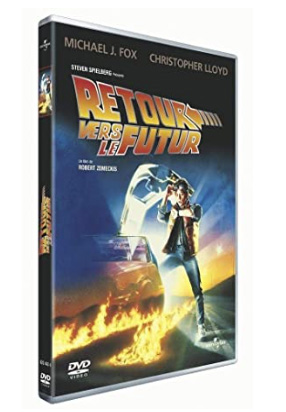
Back to the Future
Synopsis
Marty McFly is a teenager whose life changes dramatically when his eccentric friend, scientist Doc Brown, invites him to test an extraordinary invention. Using a modified DeLorean automobile as a time machine, Marty accidentally travels from 1985 to 1955. There he encounters his parents as teenagers and unintentionally interferes with the events that originally brought them together. With the help of the younger Doc Brown, Marty must repair the damage to the timeline and find a way to return to his own era before his existence disappears.
The film's origins
The original idea came from screenwriter Bob Gale, who wondered whether he would have become friends with his father if they had attended school together. This personal question inspired the concept of a teenager traveling into the past and encountering his parents at the same age. Gale and Robert Zemeckis developed the story together, combining family relationships, comedy and science-fiction adventure. Their first screenplay drafts underwent numerous revisions before the filmmakers settled on the central concept of the DeLorean time machine. The writers initially considered several unusual possibilities for the machine, including a refrigerator, before deciding that a car would provide a more dynamic and visually memorable solution. Steven Spielberg supported the project and helped bring it to the attention of Hollywood studios. After several rejections, Universal Pictures eventually agreed to finance the production. The film was conceived as a self-contained adventure, although its enormous success eventually inspired two sequels.
Critical reception and audience response
Professional reviews: Critics enthusiastically welcomed the film's combination of science fiction, comedy and adventure. Robert Zemeckis received praise for his precise direction and ability to maintain a complex narrative without sacrificing entertainment. Michael J. Fox and Christopher Lloyd were particularly celebrated for their performances and the extraordinary chemistry between their characters. Reviewers also appreciated the screenplay's clever use of time-travel paradoxes and its inventive visual details. The film is now widely regarded as one of the most accomplished science-fiction comedies ever produced.
Audience reception: The film became a major international success and finished 1985 as the highest-grossing film at the American box office. Audiences embraced Marty McFly, Doc Brown and the instantly recognizable DeLorean. Its mixture of humor, nostalgia, adventure and family drama appealed to several generations of moviegoers. The production developed an enduring cultural influence, with its characters, quotations and musical references becoming part of popular culture.
Awards: The film received four Academy Award nominations and won the Oscar for Best Sound Effects Editing. It was also nominated for Best Original Screenplay, Best Sound and Best Original Song for Huey Lewis and the News's The Power of Love. The song became a major commercial success and helped establish the film's musical identity. Its recognition extended beyond the Academy Awards, and the film has since been preserved in the United States National Film Registry.
Behind-the-scenes stories
Director's inspirations: Bob Gale's curiosity about his own family history provided the original emotional foundation of the screenplay. Robert Zemeckis wanted the film to combine a convincing science-fiction mechanism with an accessible coming-of-age story. He and Gale carefully constructed the relationships between the characters in 1955 and 1985 so that small changes in the past would produce visible consequences in the future.
Production challenges: The most famous production difficulty involved replacing Eric Stoltz, who had initially been cast as Marty McFly. After several weeks of filming, the filmmakers concluded that his interpretation did not match the intended comic tone. Michael J. Fox, who was originally unavailable because of his television commitments, eventually took over the role. The production schedule had to be reorganized around his existing work, creating an exceptionally demanding filming routine. The visual effects team also faced the challenge of presenting time travel in a convincing and memorable way.
Memorable scene: The clock tower sequence became one of the most recognizable moments in cinema history. Marty must use a precisely timed lightning strike to send the DeLorean back to 1985. The sequence combines practical effects, elaborate stunt coordination and a carefully constructed countdown. Its suspense comes from the fact that every small detail must happen at exactly the right moment.
Original casting: Michael J. Fox eventually replaced Eric Stoltz as Marty McFly. Christopher Lloyd was selected to play Doc Brown, while Lea Thompson portrayed Lorraine and Crispin Glover played George McFly. Thomas F. Wilson became the memorable antagonist Biff Tannen. Claudia Wells originally played Jennifer Parker, although Elisabeth Shue took over the role in the sequels.
Themes explored
The film explores family relationships through the unusual perspective of a teenager who meets his parents before they become adults. It examines the importance of personal choices and how apparently insignificant decisions can transform the future. Coming of age is another central theme, as Marty learns to take responsibility for his actions and confront the consequences of his behavior. The contrast between 1955 and 1985 allows the filmmakers to explore changing social attitudes, technology and popular culture. Friendship is embodied by the relationship between Marty and Doc, whose unlikely partnership becomes the emotional heart of the adventure. The story also examines confidence and self-belief, particularly through George McFly's gradual transformation. Ultimately, the film suggests that the future is not completely predetermined and that courage can change the course of a life.
Ending explained
After successfully bringing his parents together in 1955, Marty manages to return to 1985 just before the lightning strike destroys his opportunity to travel home. He discovers that his actions have transformed his family's future in unexpectedly positive ways. George has become a confident and successful writer, while Lorraine appears happier and more self-assured. Biff, previously a bully who dominated the family, now occupies a much less powerful position. Marty also discovers that Doc Brown has survived the events of the original timeline. Just as everything appears settled, Doc arrives with a warning about Marty's children and the future. The DeLorean becomes the vehicle for another adventure, setting up the sequel. The ending reinforces the idea that personal decisions can reshape family history and open unexpected possibilities.
Meaning of the title
The title Back to the Future describes Marty's central objective of returning to his original time after becoming trapped in the past. However, it also expresses the film's central paradox: the future can only be reached by understanding and changing the past. The title combines a straightforward adventure premise with a more philosophical reflection on time and personal identity. It emphasizes the relationship between generations and the consequences of decisions made long before someone is born. The word future also suggests opportunity, ambition and the possibility of personal transformation. Its apparent contradiction makes the title memorable and perfectly suited to the film's playful treatment of time travel.
Alan Silvestri composed the memorable orchestral score, giving the film a powerful musical identity. His energetic main theme combines heroic brass, sweeping strings and a strong sense of adventure. The score becomes particularly effective during the DeLorean sequences and the climactic race against the lightning strike. Huey Lewis and the News contributed two important songs, The Power of Love and Back in Time. The former became one of the film's defining musical signatures and received an Academy Award nomination. The soundtrack also includes period music that reinforces the contrast between 1955 and 1985. Silvestri's orchestral themes remain among the most recognizable film compositions of the 1980s.
Similar films
Back to the Future Part II continues Marty and Doc Brown's adventures through different versions of the future and past. Back to the Future Part III moves the characters into the American Old West. Bill & Ted's Excellent Adventure combines time travel, comedy and youthful adventure. The Time Machine explores the consequences of traveling through different historical periods. Groundhog Day offers another inventive exploration of time and personal transformation. The Terminator uses time travel as the foundation for a darker science-fiction story. Hot Tub Time Machine revisits the past through a humorous adventure involving modern characters. Peggy Sue Got Married also examines family history and the possibility of revisiting earlier stages of life. These films share the fascination with time, identity and the consequences of changing the past.