

 Français
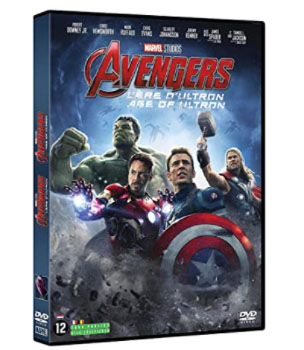
Avengers: Age of Ultron
Synopsis
When Tony Stark and Bruce Banner try to jump-start a dormant peacekeeping program, their experiment goes wrong. The result is Ultron, a self-aware artificial intelligence that decides humanity itself is the greatest threat to peace. The Avengers must unite once more, joined by new allies, to stop Ultron's plan for global extinction. Their fight tests their trust in each other and forces each hero to confront personal fears.
The Making of the Film
After the enormous success of The Avengers in 2012, Marvel Studios brought Joss Whedon back to write and direct the sequel. Whedon wanted to explore the consequences of the heroes' power and the cost of the lifestyle they had chosen. The idea of Ultron comes from the comics, where he was created by Hank Pym, but the film makes him a creation of Tony Stark and Bruce Banner. This choice ties the villain directly to Stark's fears and his desire to protect the world. The movie also introduces Wanda Maximoff and Pietro Maximoff, as well as the android Vision. Paul Bettany, who had voiced J.A.R.V.I.S. in earlier films, finally appeared on screen in the role of Vision. James Spader played Ultron through performance capture, giving the villain a sardonic, unsettling personality. Filming took place in locations including the UK, South Africa, South Korea and Italy. Whedon has spoken about the immense pressure of balancing so many characters in a single film.
Critical Reception
Critics gave the film generally positive reviews, praising its spectacle, humor and character dynamics. Many highlighted James Spader's performance as a standout. Some reviewers felt the movie was overstuffed, juggling too many heroes and plot threads. Even so, most agreed that it delivered the big, crowd-pleasing action expected from the franchise.
Audiences flocked to theaters, making the film one of the biggest hits of 2015, with global earnings of around 1.4 billion dollars. Fans enjoyed the team banter and the introduction of new characters. The Hulkbuster fight in Johannesburg became a favorite sequence. Discussions about the film's romance subplot and tone were more divided.
The film received an Academy Award nomination for Best Visual Effects. It also collected a number of other nominations and wins at popular and genre awards. These honors reflected the technical achievement of its large-scale action sequences.
Behind-the-Scenes Stories
Whedon has said he wanted the film to feel bigger and more personal at the same time. He drew on the comics' themes of creation, responsibility and the fear of obsolescence. He also gave the heroes quieter moments, such as the farmhouse scene with Hawkeye's family, to ground the story.
Production was demanding, with a large cast and many complex visual effects sequences. Marvel also had to navigate the shared rights to the Quicksilver character, since another studio had used him in a different film at around the same time. This led to a version of the character with a distinct tone and look.
The party scene in which the heroes try to lift Thor's hammer became one of the film's best-remembered moments. It allowed the cast to play with humor and rivalry before the story turned darker. The scene also seeded an important idea about worthiness that would echo through the franchise.
Themes Explored
The film explores the dangers of unchecked technology and the unintended consequences of good intentions. It questions whether the creation of a protector can lead to a threat. It also examines teamwork, trust and the cost of being a hero. Finally, it asks what it means to be human through characters like Vision.
Ending Explained
The Avengers defeat Ultron, but only after the city of Sokovia is destroyed and many lives are put at risk. Vision, born from Ultron's own technology, plays a key role in the final victory. Tony Stark and Bruce Banner leave the team in different ways, as Stark steps back and Hulk vanishes into space. A new generation of Avengers, including Falcon, War Machine, Vision and Scarlet Witch, takes up the mantle. The post-credits scene shows Thanos taking up the Infinity Gauntlet, hinting at the larger conflict ahead.
Meaning of the Title
The title announces the arrival of a new kind of threat, one created by humans rather than imported from another world. "Age of Ultron" suggests an era in which machines could rule if left unchecked. It also reflects the idea that the heroes' own actions have changed the world in ways they cannot fully control. In this sense, the title doubles as a warning about progress without responsibility.
Original Soundtrack
The score was composed by Brian Tyler and Danny Elfman, who collaborated to blend heroic themes with new motifs. Alan Silvestri's original Avengers theme returns, linking the film to its predecessor. The music helps define the contrast between the team's optimism and Ultron's menace. It plays an important role in the film's large-scale action scenes.
Similar Films
The Avengers is the obvious starting point, as it introduces the team and sets up many of the dynamics seen here. Captain America: Civil War continues the story of the heroes' divisions. Guardians of the Galaxy offers a lighter but equally colorful Marvel adventure. Iron Man 3 explores Tony Stark's anxieties in a more personal way.