

 Français
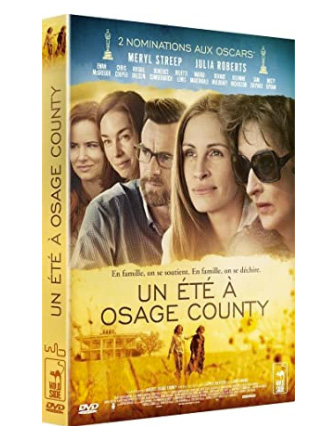
August: Osage County
Synopsis
When their alcoholic, pill-addicted patriarch Beverly Weston mysteriously vanishes from their sprawling Oklahoma home, his eccentric, dysfunctional family gathers back under one roof. The family is led by Violet, their sharp-tongued, cancer-stricken matriarch who spares no one from her vicious verbal abuse. As daughters, sisters, aunts, and cousins try to manage the family crisis, long-buried secrets, bitter resentments, and shocking betrayals explode during a tense family dinner. Stripped of pretense, each member must confront the generational trauma that defines their lives.
The Making of the Film
Adapted from Tracy Letts's Pulitzer Prize-winning 2007 Broadway play, the film adaptation was produced by George Clooney and directed by John Wells. Letts adapted his own stage play into a feature screenplay, condensing the massive theatrical narrative while preserving its razor-sharp dialogue. The production aimed to assemble a legendary ensemble cast capable of portraying the ferocious emotional intensity of the Weston family. Filming took place on location in rural Oklahoma to capture the stifling, oppressive summer heat.
Critical Reception
Critical reception for the film was generally positive, with reviewers praising the powerhouse lead performances of Meryl Streep and Julia Roberts, alongside the fierce screenplay. Critics lauded the movie for its unflinching, dark exploration of family dysfunction and generational trauma, though some felt it struggled to escape its theatrical stage origins. Both Streep and Roberts received Academy Award nominations for their stellar acting. Audiences appreciated the searing dramatic intensity and black comedy elements.
Filming Anecdotes
Meryl Streep and Julia Roberts engaged in intense, emotionally draining confrontation scenes, including a infamous physical dinner table brawl that took multiple days to film. Director John Wells rehearsed with the cast extensively like a theater troupe before rolling cameras to build authentic family friction. The production utilized an actual residential home in Pawhuska, Oklahoma, where the actors endured sweltering summer temperatures. Meryl Streep studied actual oral cancer treatments and mannerisms to portray Violet realistically.
Themes Explored
The film explores generational trauma, addiction, familial abuse, and the inescapable bonds of toxic family ties. It highlights the erosion of marital love, aging, and coping with terminal illness. Bitter sibling rivalry and buried childhood secrets drive the dramatic narrative. It also touches upon loneliness and rural isolation.
Ending Explained
It is revealed that Beverly committed suicide by drowning in the lake prior to the family gathering. One by one, the adult children abandon Violet as her cruelty alienates everyone around her, leaving her entirely alone in the massive Oklahoma house except for her loyal Cheyenne caregiver. Barbara drives away down the dusty Oklahoma road, finally breaking free from the generational cycle of abuse and trauma. The conclusion offers a bleak, realistic portrait of family estrangement.
Meaning of the Title
The title combines the month of August—representing the sweltering heat and oppressive atmosphere—with Osage County, Oklahoma, the rural setting of the family home. It highlights the geographical and temporal confinement of the characters. The name sets a heavy, dramatic tone for the family saga.
Gustavo Santaolalla composed an atmospheric acoustic guitar and orchestral score that captured the dusty, melancholic Americana vibe.
The Family Stone, Ordinary People, Carnage, Doubt