

 Français
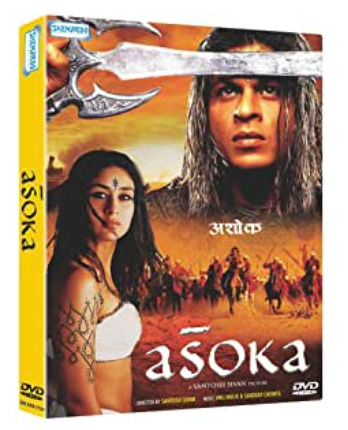
Asoka
Synopsis
Asoka tells the story of Prince Ashoka, a fierce young warrior of the Mauryan dynasty who rises from a troubled youth to become one of the most powerful emperors of ancient India. On the road to the throne, he falls in love with a mysterious woman named Kaurwaki and fights bitter battles against his own family. His conquest of the kingdom of Kalinga leaves him horrified by the carnage he has caused. The film follows his transformation from conqueror to a ruler devoted to peace.
The Making of the Film
Asoka is a historical epic about Emperor Ashoka the Great, who ruled much of the Indian subcontinent in the third century BCE. It was directed and photographed by Santosh Sivan, one of India's most celebrated cinematographers. Shah Rukh Khan, one of the biggest stars in Indian cinema, took on the title role and also helped bring the project to the screen as a producer. The story takes liberties with history, especially in its romantic subplot, but it builds on the famous legend of the emperor who renounced violence after the Kalinga war. The film was released in 2001 and was made in Hindi.
Reviews and Reception
Summary of Professional Reviews
Critics widely praised the film's sumptuous visuals, grand scale and Sivan's masterful cinematography. Opinions on the screenplay were more divided, with some finding the story overly melodramatic and others admiring its ambition. Shah Rukh Khan's performance was noted for taking him into a more serious, physical territory.
Audience Reception
The film did not perform well at the box office in India, despite the star power of its lead. Over time, however, it gained appreciation among viewers who valued its artistic ambition and visual beauty. It is now often seen as an underrated epic.
Awards Won
The film received recognition for its cinematography, costumes and production design at several Indian award ceremonies. Santosh Sivan's work in particular was widely celebrated as one of the film's great strengths.
Filming Anecdotes
Director's Inspirations
Santosh Sivan wanted to portray Ashoka as a complex, flawed human being rather than a distant monument of history. His background as a cinematographer shaped a film that is first and foremost visual, with rich colors and sweeping landscapes.
Production Difficulties
Staging large-scale battles and period settings required a huge cast and crew, as well as elaborate costumes and sets. The production also had to balance historical flavor with the demands of a mainstream Bollywood film, including music and romance.
Themes Explored
Asoka is a story about power, violence and the possibility of redemption. It explores how a ruthless young man learns, through horror and loss, to value compassion over conquest. The film also looks at love and duty, as Ashoka must choose between his personal happiness and his political ambitions. Family conflict and betrayal add to the drama, showing how the struggle for the throne tears relatives apart. Ultimately, it is about the moral awakening of a ruler and the birth of a philosophy of peace.
Ending Explained
After the devastating battle of Kalinga, Ashoka walks across the field of the dead and is overcome with remorse. He turns away from war and embraces the teachings of Buddhism, vowing to rule with compassion. The film concludes by suggesting that this change would guide his reign and leave a lasting legacy. The ending is a quiet, reflective counterpoint to the film's violent earlier scenes.
Meaning of the Title
The name Ashoka comes from Sanskrit and is usually understood to mean "without sorrow". The title therefore carries a poignant irony, since the emperor's path to peace is paved with suffering. It also points to the hope that, through his transformation, he might find release from grief.
Similar Films
- Jodhaa Akbar: another grand Indian historical epic.
- Bajirao Mastani: a lavish tale of war and forbidden love.
- Lagaan: a Bollywood period drama about resistance and unity.
- Gladiator: a Western epic about power, honor and vengeance.