

 Français
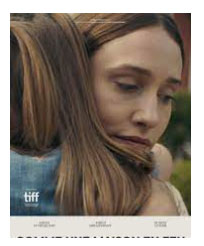
As in Heaven
Synopsis
Note: North American English title is As in Heaven. On a remote Danish farm in the late nineteenth century, a large, impoverished farming family gathers in joyful anticipation of a birth. Fourteen-year-old Lise, the eldest daughter, stands on the threshold of womanhood, caught between childhood and adult responsibilities. As her mother experiences grueling and dangerous labor complications, the household descends into hushed anxiety and prayer. Throughout the course of a single transformative day, Lise witnesses the brutal realities of rural life, faith, and female endurance.
The Making of the Film
Writer and director territories, and critically acclaimed filmmaker Terrain filmmaker... wait, writer and director Terrain... sorry, director and screenwriter Tea Lindeburg adapted Marie Dinesen's classic Danish novel A Childhood. The project was conceived as an immersive, visceral historical drama exploring nineteenth-century womanhood, faith, and familial sacrifice. Lindeburg drew inspiration from her own family history and historical accounts of rural Scandinavian domestic life. The production utilized natural lighting, period-accurate farmhouses, and intimate close-up framing to capture Lise's awakening.
Critical Reception
Critics offered overwhelming critical acclaim upon release, praising its astonishing realism, atmospheric tension, and profound thematic depth. Reviewers lauded Tea Lindeburg for directing a historical period drama that felt as breathless and urgent as an intense psychological thriller. The breakout performance of young actress Flora Ofelia Hofmann Lindahl received universal acclaim for carrying the emotional weight of the film. It established itself instantly as a masterpiece of modern Scandinavian cinema.
Audiences were deeply mesmerized and emotionally staggered by the raw, unvarnished depiction of nineteenth-century rural childbirth and faith. Viewers at international film festivals commended the haunting sound design and the exquisite period cinematography. It became an art-house favorite worldwide, resonating strongly with viewers interested in historical feminist narratives. Many praised its ability to turn a single domestic day into an epic spiritual journey of maturity.
As in Heaven won multiple major awards at international film festivals, including the prestigious Silver Shell for Best Director and Best Actress at San Sebastián. Its acclaim centered primarily on Tea Lindeburg's visionary direction and Flora Ofelia Hofmann Lindahl's astonishing lead performance. The screenplay received praise from dramatic writing guilds for its exquisite structural tension. These prestigious accolades cemented its legacy as a landmark achievement in Scandinavian historical drama.
Behind-the-Scenes Stories
Tea Lindeburg was heavily inspired by her great-grandmother's diaries and the silent sacrifices made by rural women in nineteenth-century Denmark. She wanted to expose the terrifying physical realities of childbirth and domestic servitude that were rarely discussed in historical literature. The visual style utilized natural sunlight streaming through dusty windows, hand-held camera movements, and immersive acoustic sound design. The director also drew from traditional Scandinavian folklore surrounding birth and mortality.
Recreating a stark, impoverished nineteenth-century Danish farm homestead on location required meticulous historical research and set design. The production team sourced authentic antique farming tools, wool textiles, and wooden kitchenware to ensure absolute period fidelity. Young lead actress Flora Ofelia Hofmann Lindahl underwent extensive historical immersion to understand the physical and emotional burden of a Victorian-era farm child. Despite the intense emotional nature of the labor scenes, the cast maintained a profoundly supportive and professional environment.
During the filming of the tense, hushed waiting sequences in the farmhouse kitchen, the ensemble cast maintained absolute silence between takes. Director Tea Lindeburg encouraged natural, unscripted family interactions around the dinner table to build authentic domestic friction. Crew members reported holding their breath during the harrowing labor sequences due to the raw emotional intensity in the room. The genuine vulnerability displayed by the young lead actress gave the production extraordinary emotional resonance.
Casting directors conducted an exhaustive search across Denmark to find a fresh-faced young actress who could anchor a demanding historical drama. Flora Ofelia Hofmann Lindahl was discovered and secured for the lead role of Lise, delivering a breathtaking breakout performance. Thure Lindhardt and Ida Dwinger were cast as the strict, hardworking parents, adding authentic generational weight. The supporting cast of younger siblings and pious relatives added vital domestic chaos.
Themes Explored
The film heavily explores the brutal physical realities of womanhood, motherhood, and childbirth in nineteenth-century rural society. It examines the heavy burden placed on eldest daughters in impoverished patriarchal households. Another core motif is the tension between religious fatalism, prayer, and modern medical necessity. It also touches upon the painful transition from the innocence of childhood to the sobering awakening of adult responsibility.
Ending Explained
Relying on the context of the narrative, the film concludes with the safe arrival of the newborn baby, though the traumatic ordeal permanently shatters the family's fragile innocence. Lise undergoes a profound spiritual and psychological transformation, stepping out of childhood and embracing the complex realities of womanhood. The final shots capture her looking out over the misty Danish fields with a solemn, independent maturity. This quiet, powerful finish emphasizes that her worldview can never be unwitnessed.
Meaning of the Title
The title refers directly to the traditional Christian Lord's Prayer phrase "on earth as it is in heaven," reflecting the deep religious fatalism of the rural Danish farming community. It evokes the desperate spiritual invocations whispered by the family during the medical crisis. The poetic phrasing sets a solemn, transcendent tone for the domestic tragedy. It encapsulates the clash between mortal suffering and divine faith.
Similar films include The Witch, Petite Maman, Portrait of a Lady on Fire, and The White Ribbon, which feature historical rural settings, atmospheric tension, and coming-of-age themes.