

 Français
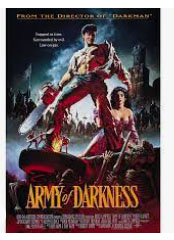
Army of Darkness
Synopsis
Transported through a time-space vortex back to medieval England in the year 1300 AD along with his car and chainsaw, modern-day department store employee Ash Williams is captured by Lord Arthur's forces and initially mistaken for an enemy spy. After proving his mettle by defeating a horrific deadite monster in a deep pit using his trusty Remington shotgun (his "boomstick"), Ash is hailed as a prophesied savior destined to retrieve the magical *Necronomicon Ex-Mortis* and vanquish the undead army. However, his arrogant bravado and careless recitation of the required magical incantation accidentally awaken an entire legion of skeletal warriors led by his own evil doppelgänger. Ultimately, this epic medieval horror-comedy adventure explores heroism, dark magic, and slapstick sword-and-sorcery chaos.
The Making of the Film
Director and co-writer Sam Raimi collaborated with co-writer Ivan Raimi to conclude their iconic Evil Dead trilogy with a grand, medieval fantasy adventure. The project was conceived as an epic swashbuckling comedy blending Ray Harryhausen-style stop-motion animation, horror tropes, and Looney Tunes slapstick. Raimi drew inspiration from classic fantasy adventure films like Jason and the Argonauts, Arthurian legends, and Mark Twain's A Connecticut Yankee in King Arthur's Court. The production prioritized massive desert soundstage sets, intricate stop-motion creature effects, and Bruce Campbell's charismatic comedic swagger.
Critical Reception
Critics offered mixed reviews upon release, praising its boundless imagination, spectacular stop-motion skeletal battles, and Bruce Campbell's hilarious comedic performance. Reviewers noted that Sam Raimi successfully transformed the franchise from indie splatter horror into a full-scale medieval fantasy slapstick comedy. Some film critics, however, felt that abandoning the claustrophobic terror of the cabin lessened its horror impact. Despite modest theatrical box office returns, the film achieved legendary cult classic status on home video and television.
Audiences adored the eccentric medieval adventure comedy, turning it into a massive cult favorite beloved for its endlessly quotable one-liners, creative monster effects, and charming arrogance of its protagonist. Viewers on home video platforms commended Bruce Campbell for his definitive comedic action-hero persona. It found a devoted, passionate fanbase among fantasy and horror enthusiasts alike. Many praised its unique blend of medieval swashbuckling and slapstick comedy.
Although major mainstream cinematic awards bypassed the fantasy comedy release, it earned recognition among Saturn Awards for Best Horror Film and established a permanent place in cult cinema history. Bruce Campbell's iconic performance received universal praise from genre fans. The film's stop-motion animation and practical creature effects were celebrated by animation guilds. These milestones helped cement its reputation as an immortal cult classic.
Behind-the-Scenes Stories
Sam Raimi was heavily inspired by classic Ray Harryhausen fantasy adventure epics and comic books, wanting to send his reluctant hero Ash on a grand medieval quest. He wanted to blend terrifying skeletal armies with elaborate Three Stooges-style physical comedy. The visual style utilized sweeping crane shots, dynamic stop-motion animation plates, and expressive medieval castle set designs. The director also worked closely with special effects master Tom Sullivan and stop-motion animators to bring the undead army to life.
Shooting on location across dusty desert soundstages and outdoor backlots in California presented exhausting heat and physical stunt challenges for the cast and crew. Bruce Campbell performed countless arduous sword fights and acrobatic stunts while wearing heavy medieval armor and wielding a heavy chainsaw prosthetic. The production experienced studio interference regarding the ending, leading to multiple alternative conclusions being filmed for theatrical and international releases. Despite rigorous technical demands, the technical crew successfully delivered a grand cinematic spectacle.
During the filming of the miniature windmill and army battle sequences, Bruce Campbell interacted entirely with invisible stop-motion skeletons and green-screen elements with absolute comedic conviction. Director Sam Raimi pushed every crew member to invent creative slapstick gags for the massive medieval battle climax. Crew members reported feeling amazed by the painstaking stop-motion animation work required for every skeletal movement. The profound dedication of the creative team gave the adventure comedy its timeless charm.
Casting directors brought back core creative forces to anchor the trilogy conclusion. Bruce Campbell returned as the ultimate reluctant hero Ash Williams, delivering a career-defining comedic performance. Embeth Davidtz was cast as the medieval love interest Sheila. The supporting cast featuring Marcus Gilbert and Richard Grove added stellar medieval gravitas.
Themes Explored
The film heavily explores medieval chivalry, time travel, and the clash between modern technology and ancient dark magic. It examines heroism, arrogance, redemption, and reluctant leadership. Another core motif is the Book of the Dead (Necronomicon) and undead armies. It also touches upon slapstick comedy, swashbuckling adventure, and doppelgänger rivalry.
Ending Explained
The theatrical ending concludes with Ash successfully defeating the skeletal army, drinking a magical potion that puts him into a century-long slumber, and waking up safely back in his modern retail job at S-Mart, where he casually recounts his medieval heroics to a co-worker before fighting off a stray deadite with a shotgun. The original director's cut featured a darker post-apocalyptic ending where Ash overslept and woke up in a ruined dystopian future. Both endings cemented his status as an immortal pop-culture icon. This surreal finish wraps up the trilogy with signature comedic flair.
Meaning of the Title
The title Army of Darkness refers directly to the massive, terrifying legion of skeletal warriors summoned by the Book of the Dead that Ash must lead medieval knights to defeat. It highlights the epic, high-fantasy shift in scale from the previous horror films. The dramatic phrasing sets a swashbuckling, adventurous tone for the fantasy comedy. It encapsulates the formidable supernatural enemy faced by the protagonist.
Similar films include The Evil Dead, Evil Dead II, Jason and the Argonauts, and BeastMaster, which feature medieval fantasy, stop-motion monster battles, and swashbuckling adventures.