

 Français
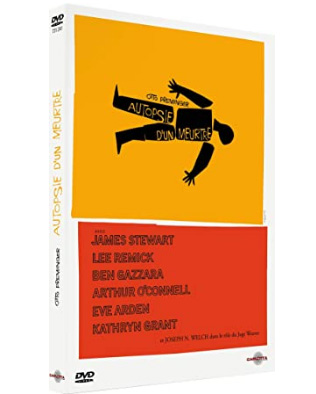
Anatomy of a Murder
Synopsis
Paul Biegler is a humble, jazz-loving small-town Michigan lawyer and former district attorney who takes on a controversial murder defense. He represents Army Lieutenant Frederick Manion, who admits to shooting a local bartender after his wife Laura was brutally raped. As Biegler prepares for trial, he must use all his legal cunning against a sharp state prosecutor to prove temporary insanity. The courtroom battle unfolds as a tense examination of evidence, marriage, and human morality.
The Making of the Film
Director and producer Otto Preminger adapted the film from the bestselling 1958 courtroom thriller novel written by Michigan Supreme Court Justice John D. Voelker under the pseudonym Robert Traver. Preminger fought against Hollywood censorship boards to keep explicit legal terminology regarding rape in the script. The production aimed for unprecedented realism by filming on actual Michigan locations.
Critical Reception
Critics universally acclaimed Anatomy of a Murder as a brilliant, sophisticated, and groundbreaking masterpiece of courtroom drama cinema. Reviewers praised Otto Premingers uncompromising direction, Duke Ellingtons innovative jazz score, and James Stewarts powerhouse lead performance. The film was celebrated for its mature handling of taboo subjects without violating dramatic integrity.
Public reception was phenomenal, making the courtroom thriller a major box-office blockbuster and a defining classic of American cinema. Audiences were captivated by the gripping trial mechanics, moral ambiguity, and stellar supporting turns by George C. Scott and Ben Gazzara. It remains an all-time great legal drama.
The film earned seven Academy Award nominations, including Best Picture, Best Actor for James Stewart, and Best Supporting Actor for George C. Scott. It won multiple New York Film Critics Circle awards. Its legal realism set a new standard for courtroom films.
Filming Anecdotes
Director Otto Preminger drew inspiration from real-life legal history and authentic courtroom procedures in Michigan. He chose to shoot entirely on location in Marquette, Michigan, bringing genuine small-town atmosphere to the production. His direction encouraged James Stewart to play the piano and lean into his folksy, unassuming persona.
Production went smoothly, though Premingers insistence on addressing taboo sexual themes in dialogue caused tension with conservative censorship offices. James Stewart studied real legal transcripts and consulted with author John D. Voelker to prepare for his defense arguments. George C. Scott made a sensational film debut as the aggressive opposing prosecutor.
A memorable sequence involves Biegler cross-examining the victim testimony through clever questioning regarding undergarments and physical evidence. The scene is a masterclass in courtroom strategy and tension building. Stewarts calm, methodical delivery anchors the dramatic stakes.
The casting process was meticulous, bringing together legendary talent for complex legal roles. James Stewart was the absolute first choice for the small-town lawyer, bringing instant credibility and charm. George C. Scott was cast after Preminger spotted him on the New York stage.
Themes Explored
The film explores justice, legal strategy, marital infidelity, trauma, and moral ambiguity in the judicial system. It highlights how the courtroom is a game of evidence rather than absolute truth. Human flaws complicate every legal defense.
NULL
Title Significance
The title refers metaphorically to the meticulous legal dissection of a murder case during trial proceedings, examining every piece of evidence like an autopsy. It highlights the analytical nature of the defense.
NULL
NULL
Similar Films
Other similar films include Witness for the Prosecution, 12 Angry Men, and Inherit the Wind.