

 Français
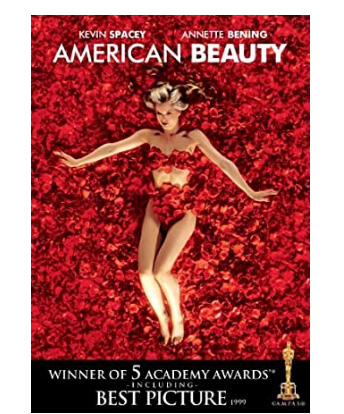
American Beauty
Synopsis
American Beauty follows Lester Burnham, a mid-life crisis-stricken suburban father who becomes infatuated with his teenage daughter's best friend. As Lester radically changes his lifestyle to reclaim his youth, his wife Carolyn struggles with her own career pressures and marital disillusionment. Their daughter Jane navigates adolescent angst alongside a mysterious, filming-obsessed neighbor boy named Ricky. Ultimately, the interconnected suburban lives unravel toward a sudden and tragic climax that exposes the dark underbelly of the American dream.
The Making of the Film
The original idea for American Beauty came to screenwriter Alan Ball in 1992 after he witnessed a plastic bag floating in the wind outside the World Trade Center, an image that deeply moved him and later inspired one of the film's most iconic scenes. Ball initially conceived the story as a stage play, reflecting his dark observations of suburban alienation and dysfunction. After struggling to mount it on stage, he adapted the material into a screenplay spec script in the late 1990s. Sam Mendes, renowned for his work in theater, was chosen to direct, bringing a meticulous visual eye that transformed Ball's biting satire into a cinematic masterpiece.
Critical Reception
Professional critics overwhelmingly praised American Beauty upon its release, lauding its razor-sharp satire, exceptional direction, and brilliant ensemble cast. Reviewers highlighted how the film brilliantly balanced dark comedy with profound emotional resonance, offering a scathing critique of modern materialism and repressed desires. The cinematography and musical score were also singled out for creating an atmosphere of unsettling suburban beauty.
The public embraced the film enthusiastically, turning it into both a critical darling and a major box-office success worldwide. Audiences connected deeply with the universal themes of mid-life awakenings and the longing for authenticity over societal conformity. Word-of-mouth propelled the movie's longevity in theaters long after its initial premiere.
The film dominated the 72nd Academy Awards, winning five Oscars including Best Picture, Best Director for Sam Mendes, Best Actor for Kevin Spacey, Best Original Screenplay for Alan Ball, and Best Cinematography for Conrad L. Hall. It also garnered numerous Golden Globes, BAFTA awards, and guild accolades, cementing its status as a defining cinematic milestone of the late twentieth century.
Filming Anecdotes
Director Sam Mendes drew heavily from his extensive background in theater, conducting extensive table reads and rehearsals with the cast before shooting a single frame of footage. He wanted the actors to fully understand the psychological undercurrents of their characters rather than relying purely on cinematic tricks. Visual inspirations were also pulled from classic photography and suburban advertisements to highlight the artificial perfection of the neighborhood.
Production faced minimal disruptions, though capturing the iconic plastic bag scene required meticulous planning and specialized wind machines to achieve the exact poetic effect envisioned by the director. The crew had to shoot several takes in shifting weather conditions to match the lighting across different sequences. Despite the tight schedule, the collaborative environment fostered high creative morale.
A memorable moment during production involved the famous rose petal fantasy sequences, which required specialized digital and physical effects to create the dreamlike visual texture. Kevin Spacey and Mena Suvari approached these intimate scenes with high professionalism, supported by an on-set intimacy coordinator to ensure a comfortable working atmosphere. These sequences became some of the most recognizable cinematic imagery of the decade.
Initially, several Hollywood heavyweights were considered for the lead role of Lester Burnham, including Tom Hanks, Kevin Costner, and Chevy Chase, but casting directors felt they carried too much conventional baggage. Sam Mendes ultimately fought for Kevin Spacey, believing his subtle blend of vulnerability and cynicism was irreplaceable. Similarly, actors like Kirsten Dunst and Sarah Michelle Gellar were approached for the role of Angela before Mena Suvari secured the part.
Themes Explored
The film deeply explores the illusion of the American dream, contrasting material wealth with profound spiritual emptiness and personal stagnation. It examines the suffocating nature of suburban conformity and the desperate urge to break free from societal expectations. Repressed sexuality, mid-life crises, voyeurism, and the quest for true beauty in mundane existence are woven intricately throughout the narrative.
Ending Explanation
The film concludes with Lester Burnham being fatally shot by Colonel Frank Fitts, who mistakenly believes Lester is romantically involved with his son Ricky. In his final moments, as his life flashes before his eyes, Lester experiences a profound epiphany of pure gratitude for the simple, beautiful moments of his existence rather than feeling regret. His voiceover narration reflects that despite the tragedy, the overwhelming beauty of the world makes it all worthwhile, suggesting that true freedom comes from genuine self-awareness and appreciation of life.
Title Significance
The title refers to the "American Beauty" variety of hybrid rose, which is meticulously cultivated and prized for its outward perfection by Carolyn Burnham in her suburban garden. Symbolically, the name mirrors the film's central critique of American society: an outer layer of flawless beauty masking decay, thorns, and underlying corruption.
Original Soundtrack
Thomas Newman composed the hypnotic and atmospheric original score, utilizing unconventional percussion, marimbas, and haunting orchestral arrangements that earned him an Academy Award nomination and perfectly captured the eerie, beautiful suburban atmosphere.
NULL
Similar Films
- Happiness (1998)
- The Ice Storm (1997)
- Magnolia (1999)
- Fight Club (1999)
- Revolutionary Road (2008)