

 Français
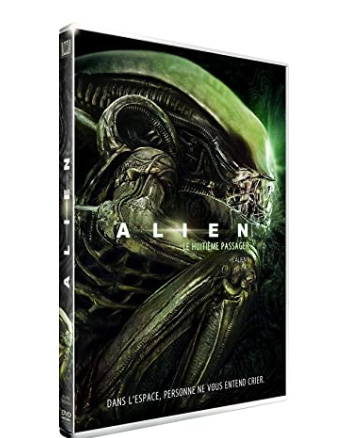
Alien
Synopsis
The crew of a commercial space tug, returning to Earth with a cargo refinery, is awakened from hypersleep by their ship's computer to investigate a mysterious distress signal originating from a desolate nearby planetoid. Landing on the rocky surface, a landing party discovers the wreckage of an alien spacecraft and a chamber filled with thousands of leathery egg-like pods. One crew member is attacked by a parasitic creature that latches onto his face, setting off a horrific chain of events. Once the parasite drops off, the crew thinks the danger has passed until a monstrous, acidic-blooded alien organism bursts from the man's chest and begins systematically hunting the terrified survivors through the claustrophobic corridors of the starship.
The Making of the Film
Conceived by screenwriters Dan O'Bannon and Ronald Shusett as a low-budget sci-fi horror film originally titled 'Star Beast', the project gained major momentum when 20th Century Fox acquired the script and increased the budget. Director Ridley Scott was brought on board, bringing a revolutionary visual eye that transformed the picture into a terrifying haunted-house thriller set in deep space. Surrealist artist H.R. Giger was hired to design the iconic creature, spaceship interiors, and alien eggs, creating a distinct, biomechanical nightmare aesthetic.
Critical Reception
Professional critics gave the film generally positive reviews upon release, though some initial reviewers dismissed it as a mere B-grade monster movie set in space. Over time, critical consensus underwent a massive reassessment, with modern film historians and critics hailing the movie as an undisputed masterpiece of science fiction and horror cinema. Critics praise its unmatched atmospheric tension, groundbreaking production design, and Sigourney Weaver's iconic portrayal of Ellen Ripley.
Audience reception was overwhelmingly terrified and electrified, turning the film into a massive global box office blockbuster that terrified moviegoers and launched a legendary multimedia franchise.
The film received critical accolades, winning the Academy Award for Best Visual Effects and earning nominations for its art direction, cementing its permanent legacy in film history.
Shooting Anecdotes
Director Ridley Scott drew inspiration from classic horror films like Jaws and 2001: A Space Odyssey, aiming to create a terrifying sense of realism by treating the spaceship as a working, industrial environment.
Production faced immense psychological and physical challenges, with Scott deliberately keeping the actors in the dark about specific jump scares—such as the iconic chestburster scene—to capture genuine, unscripted terror on their faces.
During the filming of the vents sequence, actor John Hurt endured hours inside a claustrophobic set while wearing uncomfortable prosthetic chest apparatuses designed for the creature emergence.
Before Sigourney Weaver was cast as Ellen Ripley, the role was written gender-neutral, and several actresses were considered before Weaver nailed the audition with her commanding screen presence.
Themes Explored
The unknown horrors of deep space, corporate greed over human life, survival instincts, body horror, and patriarchal vulnerability.
Explanation of the Ending
Ellen Ripley jettisons the monstrous alien into the cold vacuum of space from the escape shuttle and sets the self-destruct mechanism on the Nostromo. She records a final log entry before entering hypersleep with her cat, drifting alone into the cosmos while awaiting rescue.
Signification of the Title
The title refers to the titular hostile, extraterrestrial organism that threatens the lives of the human crew.
Original Soundtrack
Jerry Goldsmith's haunting, avant-garde orchestral score features eerie, atmospheric soundscapes that heighten the isolation and dread of deep space, though a portion of his score was controversially re-edited by the studio in the final cut.
The Thing, Aliens, Predator, Event Horizon