

 Français
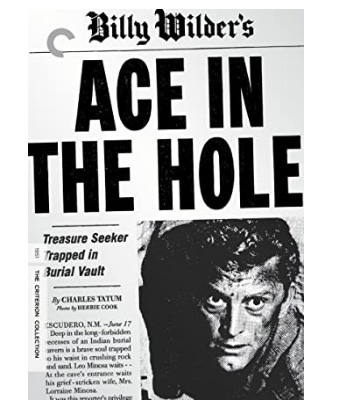
Ace in the Hole
Synopsis
Chuck Tatum is a cynical, disgraced former big-city journalist stranded in New Mexico who is desperate for a career comeback. While working at a small local newspaper, he discovers a local man trapped inside a collapsing ancient Indian cave. Recognizing the golden opportunity for a sensational national news story, Tatum ruthlessly manipulates the rescue efforts to prolong the spectacle and keep himself front page news. As a circus-like media carnival erupts around the cave site, Tatum pushes his manipulation to disastrous moral extremes.
The Making of the Film
Director and co-writer Billy Wilder drew direct inspiration from real-life historical news events, including the 1925 cave rescue of Floyd Collins and media exploitation cases. Wilder wanted to craft a biting, cynical critique of yellow journalism and public voyeurism. Paramount Pictures produced the film, which was originally released under the alternate title The Big Carnival.
Critical Reception
Critics gave the film mixed reviews upon its initial release, with many finding its cynical tone too harsh and misanthropic for mainstream audiences. Over subsequent decades, however, film historians and critics reappraised Ace in the Hole as a visionary, ahead-of-its-time masterpiece of media satire. Kirk Douglas performance was universally praised as one of the finest of his legendary career.
Public reception was initially poor, resulting in a disappointing box-office run that forced Paramount to re-release the film under a new title to recoup losses. Modern audiences and cinephiles have since embraced it as a chillingly prophetic look at sensationalist media culture. Its reputation has grown into that of an untouchable classic.
The film earned an Academy Award nomination for Best Writing, Story and Screenplay for Billy Wilder, Lesser Samuels, and Walter Newman. It received international recognition at the Venice Film Festival. Its legacy as a biting media satire remains unmatched.
Filming Anecdotes
Director Billy Wilder drew inspiration from classic newspaper noir films and real-life carnival media circuses. He chose authentic, scorching desert locations in New Mexico to create a harsh, unforgiving visual atmosphere that mirrored the characters ruthlessness. His direction pushed Kirk Douglas to play one of the most unapologetically unlikable protagonists in cinematic history.
Production went smoothly on location, though shooting under intense desert heat tested the physical endurance of the large cast of extras. Kirk Douglas brought relentless energy and sharp charisma to his portrayal of the opportunistic reporter. The construction of the massive circus-like carnival set required meticulous logistical planning.
A memorable sequence involves thousands of curious spectators turning the rescue site into a festive holiday carnival complete with tents, rides, and cotton candy. The scene brilliantly captures the horrific absurdity of public voyeurism and media exploitation. Douglas masterful performance anchors the madness.
The casting process was straightforward as Billy Wilder envisioned Kirk Douglas as the ultimate fast-talking, ruthless journalist. Douglas accepted the challenging role immediately, recognizing its unique moral complexity. Jan Sterling was chosen for her brilliant portrayal of the cynical, unfeeling wife.
Themes Explored
The film explores media sensationalism, public voyeurism, moral corruption, ambition, and exploitation of human tragedy. It highlights how society easily turns suffering into profitable entertainment. Cynicism and greed triumph over human empathy.
NULL
Title Significance
The title refers to an exclusive, hidden news story or advantage kept in reserve by a journalist to secure a career breakthrough. It highlights the cynical framing of exploiting a dying man for professional gain.
NULL
NULL
Similar Films
Other similar films include Network, Nightcrawler, and Sweet Smell of Success.