

 Français
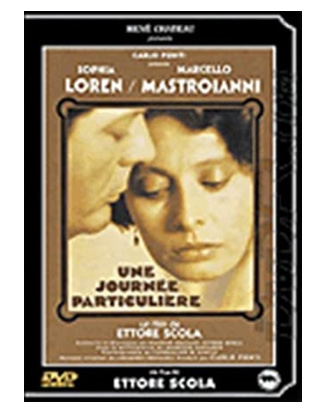
A Special Day
Synopsis
On May 6, 1938, Rome is almost empty as the entire city turns out for the parade celebrating Adolf Hitler's visit to Mussolini. In a large apartment building, a weary housewife named Antonietta is left alone at home with the household chores after her husband and six children leave for the festivities. She meets her neighbor Gabriele, a former radio announcer who has been dismissed from his job and is facing persecution by the regime. Over the course of a single day, the two lonely people forge an unexpected and touching bond.
The Making of the Film
A Special Day, originally titled Una giornata particolare, was directed by Ettore Scola, who co-wrote the screenplay with Ruggero Maccari and Maurizio Costanzo. The story is set during the real visit of Hitler to Rome in 1938, a moment when Fascist Italy was showing its power to the world. Scola wanted to tell the story of that historic day from the perspective of people who were left out of the celebrations. The film is an Italian-Canadian co-production and stars Sophia Loren and Marcello Mastroianni, who had made many films together. It was released in 1977 and quickly became a landmark of European cinema.
Reviews and Reception
Summary of Professional Reviews
Critics praised the film as a profound and moving drama, noting its delicate direction and powerful performances. Sophia Loren was applauded for her de-glamorized portrayal of an ordinary housewife, while Marcello Mastroianni was celebrated for his sensitive performance. Many reviewers highlighted how the film uses a single day and a single location to capture the effects of Fascism on everyday life.
Audience Reception
The film was a major success with audiences, particularly in Europe, and has remained a beloved classic. Viewers appreciate its human warmth and the touching connection between its two protagonists. It is often cited as one of the finest achievements of Italian cinema of the 1970s.
Awards Won
The film was nominated for two Academy Awards, for Best Foreign Language Film and Best Actor for Marcello Mastroianni. It won the Golden Globe for Best Foreign Language Film and the César Award for Best Foreign Film. These honors confirmed its international reputation.
Filming Anecdotes
Director's Inspirations
Ettore Scola was interested in showing how history is experienced by ordinary people, especially by those who are marginalized. He chose to tell the story within a single apartment building, using the confined space to reflect the oppressive atmosphere of the time.
Production Difficulties
The film was shot with a muted, almost monochrome color palette, designed to evoke the look of archival footage from the period. Sophia Loren was asked to appear without glamorous makeup, a major change for an actress known for her beauty. The tightly choreographed camera movements in the courtyard and the apartments required careful rehearsal.
Themes Explored
A Special Day is a story about loneliness, intolerance and the human need for connection. It portrays the quiet tragedy of two people who are overlooked by a society that glorifies power and conformity. The film also explores the oppression of the Fascist regime, particularly its treatment of women and homosexuals. Gabriele's status as a persecuted outsider contrasts with Antonietta's life as a woman trapped in her domestic duties. Above all, the film celebrates the fragile but powerful bond that can form between two lonely souls.
Ending Explained
By the end of the day, Gabriele is taken away by the authorities to be sent into internal exile because of his homosexuality and his opposition to the regime. Antonietta, who has been awakened by their brief connection, returns to her home, where her husband expects her to go back to her usual role. She picks up the book that Gabriele lent her and sits alone, as the radio continues to celebrate the regime. The ending is quiet and devastating, leaving a sense of loss and of a human connection cut short.
Meaning of the Title
The title refers to the day of Hitler's visit, which was a "special day" for the regime and its supporters. For Antonietta and Gabriele, however, it becomes special for a very different reason: it is the day they meet and recognize each other. The title thus highlights the contrast between public history and private experience.
Original Soundtrack
Armando Trovajoli's understated score supports the film's intimate mood. It is used sparingly, allowing the radio broadcasts of the parade to provide an ironic, oppressive background to the characters' story.
Similar Films
- Cinema Paradiso: another Italian classic about memory and human connection.
- The Conformist: Bertolucci's study of life under Fascism.
- Life Is Beautiful: a story of love and humanity during dark times.
- Two Women: another powerful film starring Sophia Loren.