

 Français
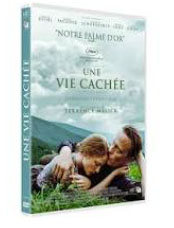
A Hidden Life
Synopsis
A Hidden Life follows Franz Jägerstätter, an Austrian farmer and devout Catholic living with his beloved wife Franziska and their three daughters in the idyllic alpine village of St. Radegund, leading a peaceful rural life tending their livestock and crops. When World War II erupts and the Nazi regime demands absolute allegiance from Austrian citizens, Franz refuses to swear a loyalty oath to Adolf Hitler, citing his deep Christian conscience and moral abhorrence of the regime's evil. Imprisoned and subjected to brutal torture and pressure from military authorities, Franz stands firm in his moral refusal, supported by his wife's unwavering spiritual love.
The Making of the Film
Written and directed by legendary auteur Terrence Malick, the film was based on the true historical letters exchanged between Franz and Franziska Jägerstätter, who were beatified by the Catholic Church. The inspiration stemmed from exploring individual moral conscience, faith, and silent resistance against totalitarian evil. The production utilized authentic alpine locations in South Tyrol and Austria, natural wide-angle lighting, and Malick's signature poetic camera movement.
Critical Reception
Critics universally lauded A Hidden Life as a transcendent masterpiece of spiritual cinema, praising its breathtaking natural cinematography, profound moral weight, and August Diehl and Valerie Pachner's stellar lead performances. Reviewers highlighted Malick's poetic, philosophical direction, returning to narrative coherence while maintaining his sublime visual lyricism. It achieved widespread critical acclaim.
Audiences responded with deep emotional reverence, moved by the quiet heroism of ordinary resistance.
The film earned numerous international critics' awards and nominations for its transcendent artistic achievement.
Behind-the-Scenes Stories
Terrence Malick drew heavy inspiration from the real historical letters of Franz and Franziska Jägerstätter archived in Austrian museums.
Shooting across authentic alpine locations in Austria and Italy required natural lighting setups without traditional artificial studio rigs.
During production, August Diehl and Valerie Pachner lived close to the farm settings to authentically portray rural Austrian farm life.
Casting August Diehl brought profound moral gravity and spiritual intensity to the conscientious objector role.
Themes Explored
The film explores conscientious objection, Nazi totalitarianism, Christian faith, moral conscience, rural Austrian life, and enduring marital love.
Ending Explained
The solemn, transcendent conclusion shows Franz facing execution by guillotine in a Berlin prison, remaining at peace with his faith while his legacy lives on through his wife.
Meaning of_the_Title
Reference to a famous quote by George Eliot cited in the film's epilogue, celebrating the profound impact of those whose lives remain hidden in everyday obscurity.
Original Soundtrack
The original musical score composed by James Newton Howard features soaring choral arrangements and melancholic violin melodies that elevate the spiritual tragedy.
Similar films include The Zone of Interest, Schindler's List, Sophie Scholl: The Final Days, and Silence.