

 Français
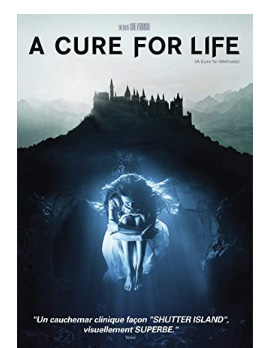
A Cure for Wellness
Synopsis
Lockhart, an ambitious young corporate executive, is sent by his company to retrieve a wayward CEO from an idyllic and mysterious wellness spa nestled deep in the Swiss Alps. Upon arrival, he discovers that the spa's miracle treatments are not what they seem, and the patients who check in rarely ever leave. When he suffers a mysterious leg accident and is forced to stay as a patient, he uncovers a terrifying century-old secret involving the facility's eerie director and a peculiar young girl named Hannah. As reality begins to unravel around him, Lockhart must race against time to escape the sinister medical nightmare.
The Making of the Film
Director Gore Verbinski and screenwriter Justin Haythe conceived the psychological horror film while discussing a desire to create an old-school, atmospheric gothic thriller reminiscent of classic Hammer horror films. The filmmakers wanted to explore modern corporate burnout and wellness obsession within a decaying, nightmarish European sanatorium setting. The production utilized stunning real-world locations including Hohenzollern Castle in Germany to construct the eerie spa environment. The script was crafted to build slow-burn psychological dread rather than rely on cheap jump scares.
Critical Reception
Professional reviews were mixed, with critics praising the film's stunning gothic cinematography, lavish production design, and ambitious creepy atmosphere. However, many reviewers found the excessively long runtime and bizarre, surreal plot twists in the final act alienating and convoluted. While some appreciated its bold commitment to old-school body horror, others felt the narrative collapsed under its own weirdness.
Public reception was divided; horror enthusiasts praised its unique visual style and unsettling vibe, but box office returns fell significantly short of expectations. Word-of-mouth remained mixed, establishing it as a polarizing cult film among admirers of eccentric genre cinema.
Awards recognition was minimal due to its poor commercial performance, though its technical design and cinematography received niche festival appreciation.
Shooting anecdotes
Director Gore Verbinski drew inspiration from classic gothic literature, German expressionist cinema, and psychological thrillers like 'Shutter Island' and 'The Shining'.
Production faced intense logistical challenges filming inside historic European castles and water tanks for the elaborate sensory deprivation tank sequences.
During a bizarre dental torture scene, Dane DeHaan performed physical stunt work to capture genuine claustrophobic terror under tight prosthetic constraints.
Initial casting sought actors who could embody eerie vulnerability and obsessive corporate ambition in a surreal setting.
Themes explored
The film explores corporate corruption, wellness obsession, bodily purity versus decay, madness, and dark historical secrets. It examines how greed and immortality experiments corrupt science. It also highlights psychological manipulation.
Explanation of the ending
The macabre climax reveals the shocking incestuous and immortal history of the spa director, leading to a fiery showdown where Lockhart destroys the facility and escapes with Hannah. It concludes on an unsettling, ambiguous grin from Lockhart, suggesting he has been permanently changed by his ordeal.
Meaning of the title
The title is a chilling ironic statement mocking the spa's fraudulent promise of healing, which actually serves as a prison for harvesting souls and bodies.
Shutter Island, The Ninth Gate, Crimson Peak, A Cure for Wellness