

 Français
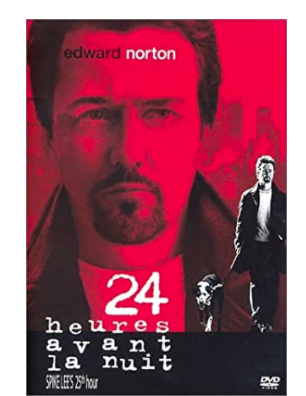
25th Hour
Synopsis
Monty Brogan, a charismatic Manhattan drug dealer, has only twenty-four hours left of freedom before beginning a mandatory seven-year prison sentence following a devastating conviction. As his final day unfolds, he reconnects with his estranged father, spends time with his loyal childhood best friends, and tries to figure out who betrayed him to the authorities. Wandering through the post-9/11 New York City landscape, Monty wrestles with deep regret, lost love, and the terrifying reality of his impending incarceration. This poignant drama explores urban alienation and guilt.
The Making of the Film
Based on David Benioff's acclaimed 2001 debut novel of the same name, Benioff was hired directly by producer Tobey Maguire to adapt his own book into a feature screenplay. Director Spike Lee embraced the project, seeing an opportunity to infuse the personal tragedy of the protagonist with the collective grief, anxiety, and tension of New York City in the immediate aftermath of the September 11 attacks. The production became one of the very first major feature films to explicitly incorporate the altered post-9/11 skyline of Manhattan into its narrative backdrop. Edward Norton championed the film and personally brought Spike Lee on board.
Critical Reception
Upon its release, 25th Hour received widespread critical acclaim, with many film historians and critics hailing it as one of Spike Lee's finest directorial masterworks and a defining film of the 2000s. Reviewers heaped praise on Edward Norton's complex, emotionally devastated lead performance, alongside powerhouse supporting turns from Philip Seymour Hoffman and Barry Pepper. Critics lauded the film for capturing the melancholic, fractured psychological spirit of New York City post-9/11. Though modest at the box office, its reputation has grown immensely over time.
Behind-the-Scenes Stories
Edward Norton famously pitched the inclusion of the iconic, profanity-laden mirror monologue where Monty insults every single demographic group in New York, which became the emotional centerpiece of the film. Spike Lee deliberately wove subtle visual and thematic nods to the September 11 attacks throughout the framing, including the Twin Towers memorial lights visible in the distance. The production utilized authentic local New York bars and clubs, lending a gritty urban authenticity to every scene. Terence Blanchard composed a haunting, melancholic jazz score that deeply enhanced the film's mournful atmosphere.
Themes Explored
The film explores profound guilt, regret, father-son relationships, and the painful process of reckoning with past life choices. It examines the emotional landscape of post-9/11 urban America, focusing on paranoia, societal fracture, and loss of innocence. Furthermore, it highlights loyalty, friendship, and the bitter inevitability of consequence.
Ending Explained
During the final car ride to the prison gates, Monty's father drives him through the snowy night while delivering a heartbreaking hypothetical monologue about escaping to a quiet western life instead of entering prison. In reality, Monty arrives at the penitentiary gates and steels himself to enter the brutal facility, accepting his punishment with quiet dignity. The film closes with haunting imagery of the New York skyline fading into darkness. The ending emphasizes bittersweet closure and inescapable reality.
Meaning of the Title
The English title 25th Hour refers to the mythical extra hour beyond the standard twenty-four hours in a day, representing Monty's final fleeting window of freedom and reflection before his imprisonment begins. It establishes a poignant, liminal temporal space where time seems suspended. The title sets a mournful, philosophical dramatic tone.
Terence Blanchard's magnificent, Grammy-nominated jazz orchestral score provides a haunting, melancholic sonic backdrop that captures the grief and mourning of post-9/11 New York.
Traffic, Mystic River, Magnolia, Good Time