

 Français
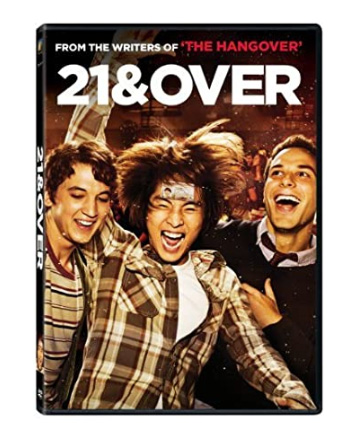
21 & Over
Synopsis
Jeff Chang s 21st birthday is supposed to be a simple celebration with his two childhood friends, Casey and Miller. However, the night quickly turns into a chaotic drinking marathon when the three friends decide to show Jeff what it means to finally be legally old enough to drink in the United States. The problem is that Jeff has an important medical school interview the following morning, arranged by his demanding father. As the night spirals out of control, Casey and Miller must find a way to get their heavily intoxicated friend home before his future is ruined.
The Making of the Film
The idea for 21 & Over came from writers Jon Lucas and Scott Moore, who wanted to explore the kind of reckless night that can transform a seemingly ordinary birthday into an unforgettable adventure. The two filmmakers were already known for writing The Hangover, which helped establish their interest in stories built around escalating consequences and friendship. Rather than simply repeating the structure of their earlier success, they focused this time on the symbolic importance of turning twenty-one in the United States. The legal drinking age provided a natural starting point for a comedy in which the characters could suddenly experience a new sense of freedom. The screenplay combines an exaggerated party story with a more personal coming-of-age narrative centered on Jeff Chang. His conflict with his father gives the film an emotional foundation beneath the deliberately outrageous humor. The production was directed by Jon Lucas and Scott Moore themselves, marking their transition from screenwriters to directors. The film was produced by David Hoberman, Ryan Kavanaugh, Todd Lieberman and Hugo Shong. 21 & Over was released in the United States on March 1, 2013, with a reported production budget of about $13 million.
Reviews and Reception
Professional Reviews:
Critics generally considered 21 & Over an uneven but energetic college comedy. Some reviewers appreciated the fast pace, the deliberately excessive situations and the chemistry between the three central characters. The film received particular credit from some critics for gradually revealing a more emotional story beneath its crude humor. Other reviewers felt that the screenplay relied too heavily on familiar party-comedy conventions and juvenile gags. On Metacritic, the film received a score of 34 out of 100 from 21 critics, placing it in the generally unfavorable category. Several reviews nevertheless acknowledged that the movie delivers the kind of outrageous entertainment its target audience was likely seeking.
Audience Reception:
The audience response was more mixed than overwhelmingly negative. Viewers who enjoyed broad college comedies often responded positively to the energetic performances and the increasingly absurd situations. The friendship between Casey, Miller and Jeff also gave the story a more accessible emotional dimension than a simple succession of party jokes. Other viewers criticized the excessive drinking, nudity and deliberately offensive humor. On Metacritic, the user score was listed at 5.4 out of 10 from 121 ratings. The film also developed a modest following among viewers looking for a straightforward early-2010s party comedy.
Awards:
21 & Over did not become a major awards contender and received little recognition from the principal film-award organizations. Available industry records list one win and one nomination, although the film is primarily remembered for its commercial genre appeal rather than its awards profile. Its strongest recognition came from audience interest in the comedy rather than from prestigious critical institutions. The movie remains more closely associated with the careers of its young cast and its writers-directors than with any major award campaign.
Filming Anecdotes
Director Inspirations:
Jon Lucas and Scott Moore brought to the project experience gained from writing The Hangover, but they approached 21 & Over with a different coming-of-age perspective. Their main inspiration was the cultural significance of a twenty-first birthday in the United States. The filmmakers used the legal drinking milestone as a framework for examining friendship, independence and the pressure to make important life choices. They deliberately pushed situations beyond realism in order to create the heightened tone expected from a modern college comedy. At the same time, they wanted Jeff to have a genuine emotional conflict rather than functioning only as the passive victim of the party. The relationship between Jeff and his father therefore became an important counterweight to the outrageous humor. The directors also structured the night as a series of increasingly complicated consequences. This allowed the comedy to keep escalating while moving the characters toward a personal confrontation.
Production Difficulties:
The production required the filmmakers to stage numerous crowded party sequences involving large groups of students, extras and complicated physical comedy. Several sequences also required careful coordination between actors, stunt performers, vehicles and campus locations. The movie moves rapidly from bars and fraternity-style parties to sorority houses, campus streets, a medical facility and a vehicle chase. Maintaining the visual continuity of a single chaotic night therefore required considerable logistical planning. The filmmakers also had to balance the intentionally outrageous behavior with the practical requirements of filming scenes involving alcohol and physical comedy. The production team worked with cinematographer Terry Stacey and editor John Refoua to maintain the fast rhythm required by the screenplay. Despite the low-to-moderate budget for a studio comedy, the film contains a substantial number of locations and large ensemble sequences. The final result depends heavily on precise timing between the performers and the editing of the increasingly frantic situations.
Particular Scene Anecdote:
One of the most memorable sequences involves Jeff becoming so intoxicated that his friends have difficulty even remembering where he lives. The attempt to return him home becomes the central running gag of the film and repeatedly sends the characters to completely wrong locations. The trio eventually becomes involved with a sorority initiation and is forced into an increasingly humiliating situation. Another major comic sequence occurs during the campus rally, where Randy becomes entangled in the chaos while Casey and Miller attempt to obtain information about Jeff. The film repeatedly transforms relatively simple objectives into increasingly ridiculous obstacles. The characters also become involved in a frantic pursuit involving Randy, his friends and the police. These scenes were designed to create a sense that the night was constantly getting worse rather than simply presenting disconnected party sketches. The physical comedy was therefore an important part of the film’s escalating structure.
Initially Considered Casting:
The principal cast ultimately consisted of Miles Teller as Miller, Skylar Astin as Casey and Justin Chon as Jeff Chang. Sarah Wright played Nicole, while Jonathan Keltz portrayed Randy and François Chau played Jeff’s father, Dr. Chang. Casting director Nancy Nayor was responsible for assembling the principal ensemble. The filmmakers needed three actors capable of creating a convincing long-term friendship while also having distinct personalities. Miles Teller brought an abrasive and reckless energy to Miller, while Skylar Astin gave Casey a more romantic and sympathetic dimension. Justin Chon had the particularly demanding task of playing Jeff as both physically incapacitated by alcohol and emotionally conflicted about his future. The supporting cast was built around the trio, with several performers contributing to the film’s campus and party atmosphere.
Themes Addressed
The central theme of 21 & Over is the transition from adolescence toward adulthood. Jeff reaches the legal drinking age, but the film makes clear that becoming legally responsible does not automatically mean becoming emotionally independent. Friendship is another major theme, particularly the complicated loyalty between people who have known each other since childhood. The film also examines parental expectations through Jeff’s relationship with his demanding father. Jeff is expected to become a doctor even though he is increasingly uncertain that medicine is the life he actually wants. Personal freedom is therefore presented alongside the anxiety that accompanies important adult decisions. Alcohol functions as both a source of comic chaos and a metaphor for temporary escape from responsibility. The story also explores romantic attraction through Casey and Nicole, whose relationship develops during the disorder of the night. Finally, the film suggests that genuine maturity requires accepting responsibility for personal choices rather than simply reaching a legally defined age.
Explanation of the Ending
The ending reveals that Jeff’s disastrous birthday ultimately becomes an important turning point in his life. After being rescued from the medical center, Jeff returns home with Casey and Miller and has only a short time to prepare for his medical school interview. His father arrives expecting him to continue along the predetermined path toward becoming a doctor. Instead of quietly accepting that future, Jeff finally confronts his father and admits that medicine is not what he wants for himself. This confrontation represents the most important act of maturity in the entire story. Jeff is no longer allowing his father to make every major decision on his behalf. His decision also unexpectedly earns the respect of Randy, who has his own complicated relationship with a domineering father. Meanwhile, Casey realizes that his feelings for Nicole are genuine and decides to pursue a relationship with her. Three months later, the friends have moved forward with their lives, with Jeff pursuing music and Casey dating Nicole while Miller begins considering university again. The conclusion therefore suggests that the chaotic birthday was valuable because it forced the three friends to confront who they actually wanted to become.
Meaning of the Title
The title 21 & Over refers directly to the legal drinking age in the United States. Turning twenty-one is presented as a major cultural milestone because it gives young adults legal access to alcohol. The film uses this milestone as the trigger for the entire story. Jeff’s friends see his birthday as an opportunity to celebrate freedom and adulthood with an extremely excessive night out. The ampersand in the title gives the phrase a playful and contemporary appearance that fits the film’s party-comedy tone. At the same time, the words have an ironic meaning because reaching twenty-one does not automatically make Jeff or his friends mature. The characters discover that freedom also involves consequences and difficult choices. Jeff in particular must learn that adulthood means deciding his own future rather than simply following his father’s expectations. The title therefore works both as a literal reference to the drinking age and as a humorous introduction to the film’s broader coming-of-age theme.
Original Soundtrack
The soundtrack of 21 & Over is particularly important to the film because music drives many of its party sequences and helps establish the energetic atmosphere of the story. The score was composed by Lyle Workman, while the soundtrack album was released digitally by Relativity Music Group shortly before the film reached theaters. The song selection mixes rock, alternative music, hip-hop and electronic tracks to accompany the increasingly chaotic night. Artists featured on the soundtrack include Langhorne Slim & The Law, Dropkick Murphys, Benny Benassi, The Naked and Famous and The Gaslight Anthem. Among the prominent tracks are The Way We Move, Going Out in Style, Almost Famous (21 & Over Mix), Control, Young Blood and Howl. The soundtrack was designed less as a traditional orchestral accompaniment and more as an extension of the party environment depicted on screen. Several songs are closely associated with specific sequences, including the opening night out and the final credits. The energetic musical selection contributes significantly to the film’s youthful, irreverent identity.
Similar Films
21 & Over can be compared with The Hangover because both films follow friends whose attempts to enjoy a night of partying turn into increasingly complicated disasters. Project X is another obvious comparison because it similarly focuses on young people, excessive partying and the consequences of a night that spirals out of control. Superbad shares the coming-of-age element and the focus on friendship during an important transition toward adulthood. American Pie also provides a comparable mixture of adolescent humor, sexuality, friendship and attempts to become more mature. Old School offers another parallel through its combination of adult irresponsibility, fraternity culture and broad comedy. Due Date shares the influence of Jon Lucas and Scott Moore through the filmmakers’ involvement with The Hangover franchise, although its road-movie structure is very different. The Night Before can also appeal to viewers who enjoy comedies built around one increasingly chaotic night. Finally, Booksmart offers a more modern and less crude variation on the idea of young people trying to experience everything before an important transition in their lives.