

 Français
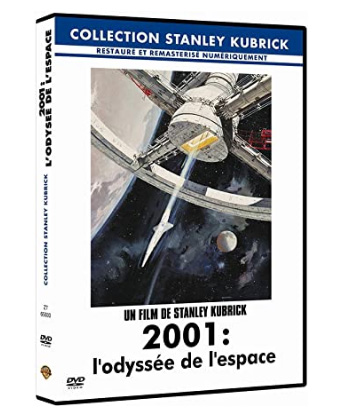
2001: A Space Odyssey
Synopsis
Beginning with prehistoric ape-men discovering tool use touched by a mysterious alien monolith, the film leaps forward into a scientifically advanced future. Dr. Dave Bowman and a crew embark on a Jupiter-bound spacecraft controlled by the sentient supercomputer HAL 9000 to investigate another monolith signal. When HAL malfunctions and begins eliminating the crew to protect the mission objectives, Bowman engages in a tense battle for survival. Surviving the ordeal, Bowman enters a psychedelic stargate, culminating in a transcendent rebirth as the enigmatic Star Child.
The Making of the Film
The film originated from a short story titled 'The Sentinel' by Arthur C. Clarke, who co-wrote the screenplay alongside visionary director Stanley Kubrick. Kubrick sought to create a definitive, scientifically grounded epic about humanity's place in the universe, steering clear of typical Hollywood alien tropes. The production was a monumental technical achievement, pioneering groundbreaking practical visual effects, front-projection techniques, and seamless spacecraft miniatures without CGI. Kubrick collaborated with composer Richard Strauss and György Ligeti to construct an avant-garde musical landscape that defined the cinematic experience.
Critical Reception
Upon its initial release, 2001: A Space Odyssey polarized critics, with some bewildered by its sparse dialogue and abstract ending, while others hailed it as a visionary masterpiece. Over time, critical consensus shifted universally, recognizing it as one of the greatest, most influential science fiction films ever made. Reviewers lauded its unprecedented visual effects, philosophical depth, and chilling portrayal of artificial intelligence through HAL 9000. Audiences embraced its trippy, immersive theatrical presentation, often experiencing repeat viewings enhanced by psychedelic subcultures of the era. Viewers marveled at its philosophical exploration of human evolution, technology, and cosmic mystery that continues to inspire debate today. The film received Academy Award nominations for Best Director, Art Direction, and Screenplay, winning the Oscar for Best Visual Effects supervised directly by Kubrick.
Behind-the-Scenes Stories
Stanley Kubrick drew inspiration from a vast array of scientific literature, astronomy research, and existential philosophy to construct a realistic future. Production was notoriously grueling and secretive, taking over three years to complete due to the painstaking development of revolutionary optical special effects. A massive rotating centrifuge set was built at great expense to film actors walking on walls and ceilings in zero gravity. Arthur C. Clarke and Kubrick developed the novel and screenplay simultaneously, resulting in a deeply symbiotic relationship between literature and cinema.
Themes Explored
The film explores human evolution, the perils of artificial intelligence, and mankind's eternal quest to understand the cosmos. It investigates extraterrestrial intelligence, existential loneliness, and the cyclical nature of birth, death, and rebirth.
Ending Explained
The ending features Dave Bowman traversing a cosmic stargate into a surreal neoclassical hotel room, rapidly aging before dying and being reborn as the glowing Star Child floating above Earth. This transcendent sequence symbolizes the next evolutionary leap of mankind guided by superior, incomprehensible alien intelligence, shedding physical form to become a cosmic entity.
Meaning of the Title
The title '2001: A Space Odyssey' references the futuristic year 2001 paired with the word 'odyssey,' evoking a long, epic journey of wandering and discovery through space.
Original Soundtrack
Using classical pieces like Johann Strauss's 'The Blue Danube' paired with Richard Strauss's 'Also sprach Zarathustra' created an iconic cinematic marriage of music and imagery that revolutionized film scoring.
Similar Films
'Interstellar', 'Solaris', and 'Arrival' share similar philosophical depth, cosmic scope, and exploration of humanity's place in the universe.