

 Français
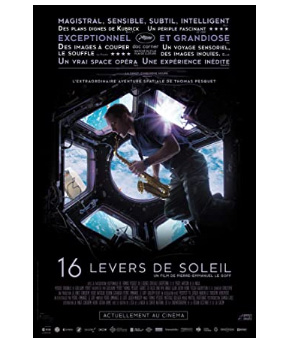
16 Sunrises
Synopsis
16 Sunrises is a breathtaking and poetic documentary directed by Pierre-Emmanuel Le Goff that follows French astronaut Thomas Pesquet during his historic six-month mission aboard the International Space Station. Orbiting four hundred kilometers above Earth, Pesquet shares stunning visual perspectives of our planet while reflecting on human fragility, environmental beauty, and isolation. Accompanied by the science fiction writings of Antoine de Saint-Exupéry, the film captures a rare philosophical journey through space. It offers an intimate glimpse into the profound psychological transformation experienced by those who gaze upon Earth from the cosmos.
The Making of the Film
Director Pierre-Emmanuel Le Goff conceived the documentary after following Thomas Pesquet's meticulous preparation and training for his European Space Agency mission named Proxima. The production collaborated closely with ESA and space agencies to equip Pesquet with specialized lightweight cameras capable of capturing high-definition footage in zero gravity. The filmmakers wanted to weave Pesquet's personal journal reflections with the literary spirit of Saint-Exupéry's 'The Little Prince'. The resulting project combines real space footage with terrestrial reflections on ecology and humanity.
Critical Reception
Professional critics greeted the film with warm critical acclaim, praising its breathtaking cinematography from orbit, poetic narration, and profound philosophical depth. Reviewers highlighted how the documentary successfully avoided dry scientific exposition, opting instead for a lyrical and contemplative meditation on human existence. Critics commended Thomas Pesquet's articulate and charismatic presence, which made the vast expanse of space feel deeply intimate and personal. It earned a stellar reputation among documentary enthusiasts.
Audiences responded with great enthusiasm, appreciating the stunning views of auroras, city lights at night, and the fragile blue atmosphere of Earth. Viewers of all ages were inspired by the educational and emotional resonance of the space voyage. Word-of-mouth recommendations sustained its popularity in European theaters and streaming platforms.
The film earned recognition at various documentary film festivals for its exceptional cinematography, environmental message, and inspiring direction.
Behind-the-Scenes Stories
Director Pierre-Emmanuel Le Goff drew inspiration from classic space exploration documentaries, Antoine de Saint-Exupéry's aviation literature, and orbital photography. Coordinating the recording of narration and high-definition footage required Thomas Pesquet to manage his demanding scientific schedule aboard the space station. During the filming of the orbital sunrise sequences, Pesquet utilized specialized camera equipment to track the rapid celestial transitions. Before launch, the director worked closely with Pesquet to outline the narrative themes focusing on environmental awareness.
Themes Explored
Space Exploration, Earth, Environment, Isolation, Philosophy, Humanity
Ending Explained
The poignant conclusion shows Thomas Pesquet returning safely to Earth, realizing that his perspective on our planet and its interconnected ecosystems has changed forever.
Meaning of the Title
The title refers to the unique astronomical fact that astronauts aboard the International Space Station witness sixteen sunrises and sunsets every single day due to their rapid orbit.
First Man, A Beautiful Planet, In the Shadow of the Moon, For All Mankind