

 Français
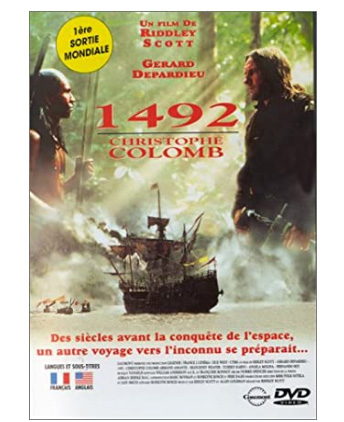
1492: Conquest of Paradise
Synopsis
Set in the late 15th century, Christopher Columbus is an ambitious Italian navigator with a daring, unorthodox vision to reach Asia by sailing west across the uncharted Atlantic Ocean. Backed by Queen Isabella of Spain after years of rejection, Columbus sets sail with three small ships—the Niña, the Pinta, and the Santa María—and miraculously makes landfall in the New World in 1492. However, his utopian dream of cultural exchange and exploration quickly unravels into violent colonization, native rebellion, greed among his crew, and political betrayal, leaving his legacy forever tarnished.
The Making of the Film
Director Ridley Scott conceived the historical epic to coincide with the quincentennial anniversary of Columbus's historic voyage. Scott wanted to capture the visual grandeur of exploration while presenting a nuanced, morally complex psychological portrait of an idealistic explorer whose utopian dreams devolved into colonial tragedy.
Critical Reception
Professional critics gave the film mixed reviews, praising its breathtaking cinematography, majestic production design, and Vangelis's legendary musical score, while criticizing its sluggish pacing and shallow character development.
The general public offered disappointing box office returns in America, though it achieved strong international appreciation, particularly in Europe.
The film received Golden Globe and Grammy nominations for Vangelis's magnificent musical score.
Behind-the-Scenes Stories
Director Ridley Scott drew inspiration from historical navigation logs, Renaissance art, and maritime archives. Production required constructing full-scale replica ships of Columbus's fleet and shooting on authentic Spanish and Costa Rican jungle locations.
During the filming of the arduous ocean crossing sequences, the cast and crew endured harsh weather conditions aboard the replica vessels.
Initially, various historical script treatments were evaluated before securing Gérard Depardieu for the lead navigator role.
Themes Explored
The film explores the clash of civilizations, exploration ambition, the tragedy of colonization, religious zeal, and historical legacy.
Ending Explained
The ending portrays an aging, disgraced Columbus stripped of his titles and living in poverty in Spain, reflecting nostalgically on his initial horizon-crossing dream before passing away.
Meaning of the Title
The title '1492: Conquest of Paradise' references the historic landing year and the ironic contrast between Columbus's initial utopian vision of an earthly paradise and the brutal conquest that followed.
Similar Films
The New World, The Mission, Apocalypto, Mutiny on the Bounty