

 Français
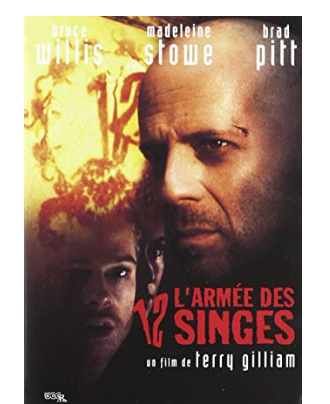
12 Monkeys
Synopsis
Set in a ruined post-apocalyptic future where a devastating man-made virus has wiped out the vast majority of human life and forced survivors to live underground, a convicted criminal is chosen to travel back in time. His mission is to gather information about the radical terrorist group known as the Army of the Twelve Monkeys believed to be responsible for releasing the pathogen. However, technical malfunctions repeatedly land him in the wrong years, leading authorities to institutionalize him in a psychiatric hospital where he meets a brilliant psychiatrist. As he navigates shifting timelines and his own sanity, he races to prevent the global catastrophe.
The Making of the Film
Director Terry Gilliam adapted the psychological sci-fi thriller from Chris Marker's acclaimed 1962 French short experimental film 'La Jetée'. The inspiration stemmed from Gilliam's fascination with memory, time travel paradoxes, and institutional paranoia. The production team aimed to construct a gritty, claustrophobic futuristic aesthetic utilizing industrial machinery and stark architecture. The script was carefully structured around non-linear timelines and psychological ambiguity.
Critical and Reception
Professional critics heaped widespread critical acclaim upon the film, praising its visionary direction, intricate plot, haunting atmosphere, and Brad Pitt's mesmerizing supporting performance. Audiences turned the sci-fi thriller into a successful global box-office hit. Brad Pitt earned an Academy Award nomination and a Golden Globe win for his eccentric portrayal of a mental patient. Today, it is universally celebrated as a masterpiece of time-travel cinema.
Filming Anecdotes
Director Terry Gilliam drew inspiration from film noir detectives, classic French experimental cinema, and industrial dystopias. Production faced intense logistical challenges shooting in Philadelphia and Baltimore during freezing winter weather conditions. During the asylum sequences, Brad Pitt underwent rigorous physical preparation to portray erratic mental instability authentically. The studio supported Gilliam's distinct visual style dominated by wide-angle lenses and asymmetrical framing.
Themes Explored
The film explores time travel paradoxes, memory, madness versus sanity, environmental collapse, and inevitability. It examines whether human history can be altered or if destiny is fixed. Paranoia and institutional control serve as central motifs. Additionally, viral apocalypse provides a chilling backdrop.
Explanation of the Ending
The narrative concludes with the time traveler realizing that the adult terrorist he pursued was never the true source of the virus, but rather a misguided animal rights activist, while the actual carrier is a corrupt scientist working for the plague-spreading organization. Mortally wounded by police at the airport while trying to stop the release of the pathogen, he dies in the arms of a young psychiatrist who witnesses his death, which she realizes she has been remembering in recurring childhood dreams ever since. The scientist boards the plane carrying the deadly virus to begin the global pandemic. The resolution provides a tragic, closed-loop temporal paradox.
Meaning of the Title
The title refers directly to the radical ecological terrorist organization suspected by future authorities of releasing the apocalyptic virus upon humanity. It signifies eco-terrorism, conspiracy, and mysterious subversion. The name creates an eerie and enigmatic hook for a sci-fi thriller. It captures the central mystery driving the protagonist's mission.
Original Soundtrack
The film features a haunting and eccentric musical score composed by Paul Buckmaster, incorporating prominent tango themes from Astor Piazzolla that lend a surreal, melancholic atmosphere to the time-travel narrative. Buckmaster's arrangements expertly mirror the psychological instability and tragic inevitability of the protagonist's journey. The striking musical choices enhance the industrial dystopian aesthetic. Critics and film score enthusiasts universally revere the soundtrack for its unique character.
There are no recent major developments or active news items regarding this film.