

 Français
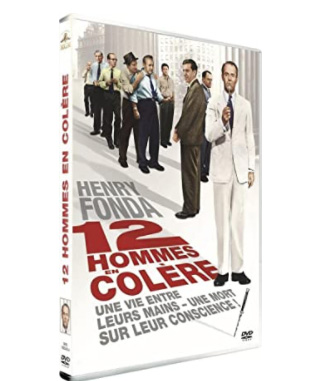
12 Angry Men
Synopsis
Following the closing arguments in a murder trial, a twelve-man jury is sent to deliberate on the fate of an impoverished Puerto Rican teenager accused of murdering his abusive father. An initial vote reveals an eleven-to-one consensus for a guilty verdict, which carries an automatic death penalty. However, juror number eight holds out, arguing that reasonable doubt demands a more thorough discussion. As tensions rise inside the sweltering jury room, personal prejudices, stubborn egos, and hidden biases are systematically dismantled through passionate debate.
The Making of the Film
The story originated as a teleplay written by Reginald Rose, broadcast live on CBS in 1954 to widespread critical acclaim. Henry Fonda saw the television production and recognized its immense theatrical potential, partnering with Rose to produce the feature film adaptation. Sidney Lumet, a celebrated television director making his feature film debut, was brought on board to direct the project. Rose drew inspiration from his own frustrating experience serving as a juror on a lengthy murder trial in Manhattan, prompting him to explore the psychological dynamics of collective decision-making.
Critical Reception and Reviews
Although the film was a modest box office disappointment upon its initial theatrical release, it quickly garnered immense critical acclaim and has since become universally recognized as a masterpiece of American cinema. Critics lauded its brilliant screenplay, taut direction, and phenomenal ensemble performances, particularly highlighting Henry Fonda and Lee J. Cobb. Over the decades, it has achieved legendary status in legal and educational circles, frequently cited as one of the greatest courtroom dramas ever made. It received three Academy Award nominations, including Best Picture, Best Director, and Best Adapted Screenplay.
Behind the Scenes Anecdotes
Director Sidney Lumet employed a clever visual technique, using lenses with progressively longer focal lengths and lowering the camera angles as the film progressed to create an increasingly claustrophobic atmosphere. To mirror the unbearable summer heat depicted in the script, the production team actually raised the temperature on the soundstage higher and higher each day, causing genuine exhaustion and frayed tempers among the actors. Henry Fonda and the rest of the cast spent weeks rehearsing in a closed room before shooting a single frame, building authentic chemistry and rhythm. Lee J. Cobb initially struggled with his emotionally draining climactic breakdown, requiring intense focus to deliver his powerful performance.
Major Themes Explored
The film deeply investigates the concept of reasonable doubt and the immense weight of civic duty within the judicial system. It serves as a masterclass in the psychology of prejudice, illustrating how personal trauma, racial bias, and class snobbery distort objective judgment. Moreover, it champions the courage of individual dissent against group conformity and the power of rational discourse.
Explanation of the Ending
The final scenes resolve the deadlock as the last stubborn juror, Juror No. 3, finally confronts his own projection of anger toward his estranged son and breaks down in tears, changing his vote to not guilty. With a unanimous verdict reached, the jurors quietly exit the courthouse into the rain, exhausted yet transformed by the grueling experience. Juror No. 8 and Juror No. 9 exchange names on the steps, marking a quiet moment of mutual respect born from a shared defense of justice.
Significance of the Title
The title 12 Angry Men refers directly to the dozen male jurors locked inside a stifling room, whose mounting frustration, exhaustion, and personal animosities fuel the dramatic conflict. The word 'angry' encapsulates the volatile emotional state of the room as entrenched opinions clash over life and death. It emphasizes the human element of a legal process presumed to be entirely cold and objective.
Anatomy of a Fall, To Kill a Mockingbird, Witness for the Prosecution, Judgment at Nuremberg